By: Bangkit Rahmat Tri Widodo
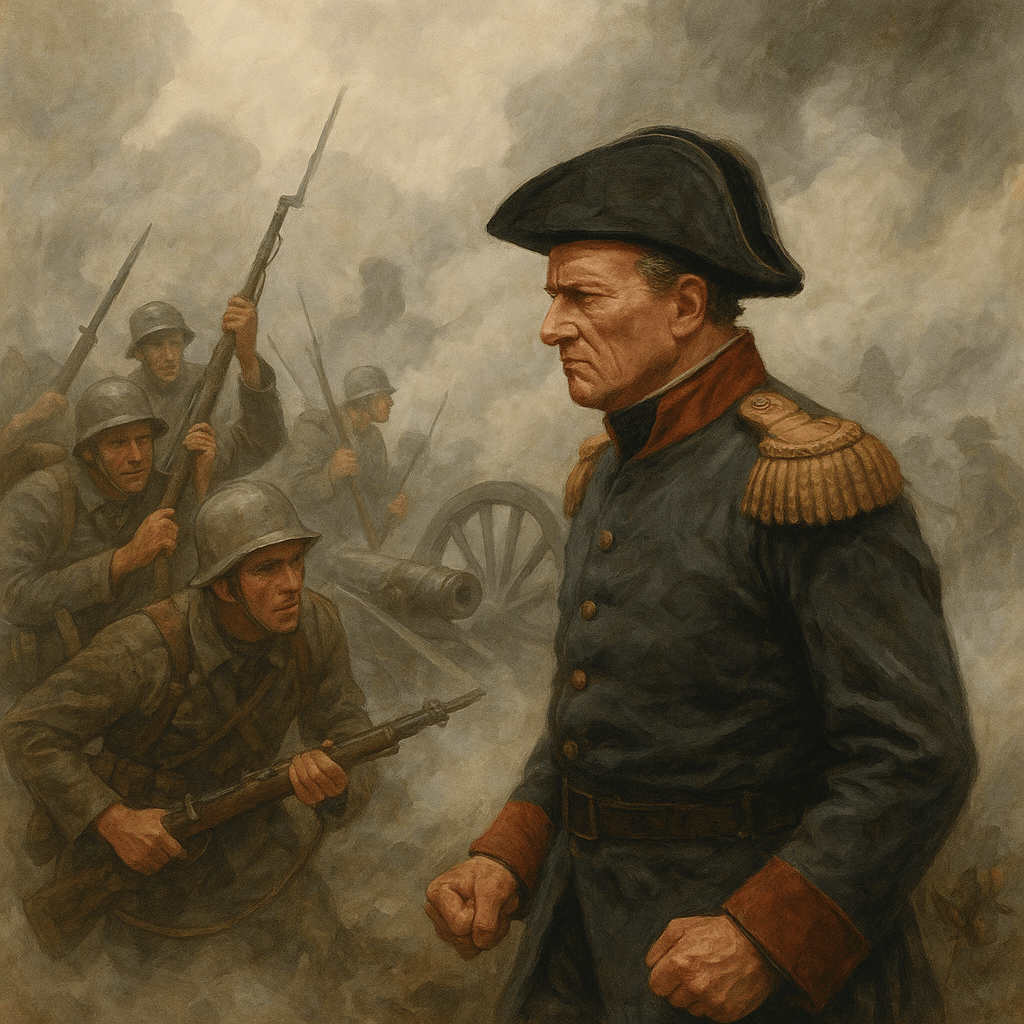
Carl von Clausewitz (1780–1831), a Prussian officer and classical military theorist, occupies a central position in the canon of war theory. His magnum opus On War (Vom Kriege), written in the aftermath of the Napoleonic Wars and published posthumously by his wife, Marie von Brühl, remains one of the most influential strategic texts in the history of military thought (Howard & Paret, 1984). Clausewitz conceived of war not merely as a technical activity reliant upon the calculation of forces, but rather as a multidimensional socio-political phenomenon in which psychological, moral, and political factors intersect with military aspects. This perspective set On War apart from the works of his contemporaries, which tended to emphasize technical and tactical dimensions alone.
Among the many concepts Clausewitz introduced, two stand out for their enduring theoretical significance: friction and the fog of war. The notion of friction refers to the multitude of minor and major obstacles that render the execution of military operations in reality far more difficult than their formulation on paper. The fog of war, meanwhile, captures the pervasive uncertainty surrounding decision-making in war, particularly the limitations of knowledge regarding the enemy, allies, and even one’s own forces (Clausewitz, 1976). Taken together, these concepts demonstrate that war can never be reduced to a linear process that is entirely predictable or controllable.
Philosophically, Clausewitz began from the premise that war is “a mere continuation of politics by other means” (Der Krieg ist eine bloße Fortsetzung der Politik mit anderen Mitteln). Yet he simultaneously underscored that politics cannot fully dictate the dynamics of war, owing to its inherently uncertain nature. Thus, friction and fog of war highlight the limitations of rationality in war: strategic plans that appear flawless in theory will inevitably confront the chaos, chance, and unpredictability of reality (Echevarria, 2007).
In modern military literature, Clausewitz’s insights remain critically important. Gray (1999) emphasizes that modern war, even when equipped with advanced technologies such as satellites, drones, and C4ISR systems, cannot escape either friction or fog of war. Indeed, contemporary conflicts reveal a paradox: technologies designed to reduce uncertainty often generate information overload, thereby intensifying the fog of war (Roxborough, 2002). In this sense, Clausewitz remains relevant not only for interpreting Napoleonic warfare but also for understanding asymmetric, hybrid, and cyber conflicts in the twenty-first century.
Accordingly, the study of friction and fog of war is not merely of historical interest; it carries significant applicability for contemporary military education, doctrine, and strategy. Friction reminds us that war always entails unforeseen obstacles that can only be managed through leadership, discipline, and adaptive readiness. The fog of war, in turn, underscores that military decisions are invariably made under conditions of incomplete information, thereby rendering moral courage and strategic intuition indispensable qualities for any commander.
Against this backdrop, the present study aims to examine the concepts of friction and the fog of war in Clausewitz’s thought more deeply, explore their interrelationship, and assess their relevance to the context of modern warfare. Through analytical discussion and the integration of historical and contemporary case studies, this work aims to demonstrate that Clausewitz’s intellectual legacy remains an irreplaceable lens for understanding the essence of war.
Friction: The Inescapable Obstacles of War
Within Clausewitz’s conceptual framework, friction stands out as one of his most famous yet most elusive notions. He famously described it as “the force that makes the apparently easy so difficult” (On War, Book I, Chapter VII) (Clausewitz, 1976). This definition underscores the reality that war never unfolds as planned. What appears simple in theory often proves extraordinarily difficult in practice due to unforeseen obstacles. Friction thus marks the essential distinction between the idealized rational calculation of war and its chaotic reality. If strategy were merely a mathematical exercise in balancing strengths and weaknesses, friction would be the disruptive variable that undermines such calculations. For Clausewitz, war is not a mechanical activity but a field of constant friction, where every operation may be altered at any moment.
The sources of friction are diverse and intrinsic to all forms of warfare. Human factors are paramount, for war is conducted by individuals who are susceptible to fear, exhaustion, misinterpretation, and limited technical competence. Morale exerts a powerful influence; troops with diminished spirit are more prone to disorganization and breakdown when confronted with adversity (Howard & Paret, 1984). Environmental conditions also play a decisive role. Clausewitz stressed that nature itself—weather, climate, terrain—often acts as a “second enemy” alongside the human adversary (Clausewitz, 1976). History provides stark examples, such as Germany’s failed Operation Barbarossa against the Soviet Union in 1941, which faltered not only due to Soviet resistance but also because of the extreme Russian winter (Roberts, 2011).
Organizational and logistical factors likewise generate friction. As Handel (2001) observes, the larger the military organization, the greater the probability of obstacles emerging from the complexity of command chains and the length of supply lines. Poor coordination between units, delayed resupply, and bureaucratic inefficiencies all erode operational effectiveness. Information is another integral component of friction. Clausewitz himself cautioned that in war, “false reports are everywhere” (Clausewitz, 1976), indicating that communication breakdowns, flawed intelligence, or delayed information can lead to misjudgments and even strategic catastrophe.
The defining features of friction are its universality, its cumulative nature, and its unpredictability. Gray (1999) underscores that friction is present in all wars, whether conventional or asymmetric. Minor issues can snowball into major problems; a single day’s delay in logistics, for example, may disrupt operational momentum for weeks. Moreover, friction cannot be forecast with precision, as it arises from the dynamic interplay of human, organizational, environmental, and enemy factors. Yet Clausewitz (1976) argued that while friction cannot be eliminated, it can be mitigated through readiness, discipline, and resilient leadership.
The means of addressing friction rest upon three pillars: experience, training, and leadership. Experience enables commanders to recognize recurring patterns of difficulty and to respond adaptively. Realistic training conditions troops to confront non-ideal circumstances, reducing the shock of actual adversity (Echevarria, 2007). Leadership, meanwhile, serves as the critical force that sustains morale, discipline, and cohesion in times of duress. Here, Clausewitz introduced the concept of military genius, a synthesis of intuition, courage, creativity, and moral strength, which allows a commander to transform friction from a liability into a strategic opportunity (Howard & Paret, 1984).
In the context of modern warfare, friction remains a highly relevant concept. Advances in military technology—from modern armored vehicles and precision-guided missiles to C4ISR networks—have expanded command capabilities, but they have not abolished battlefield obstacles. The Iraq War of 2003 illustrates this vividly: despite American technological superiority, logistical breakdowns, flawed intelligence regarding weapons of mass destruction, and unexpected guerrilla resistance prolonged the conflict and inflated its costs (Smith, 2005). Likewise, in the ongoing Russo-Ukrainian War, Russia’s failure to seize Kyiv swiftly reflects friction in the form of logistical dysfunctions, inter-service coordination failures, and low troop morale—demonstrating that even great powers remain vulnerable to these enduring dynamics (Kofman & Lee, 2022).
Thus, Clausewitz’s notion of friction illustrates that war is never a matter of numbers or rational strategy alone, but a perpetual struggle against inherent obstacles embedded in every military endeavor. Friction is universal, cumulative, unpredictable, and inescapable. Yet with experience, realistic training, and visionary leadership, it can be managed so as not to compromise operational effectiveness. For modern militaries, including the Indonesian National Armed Forces (TNI), this understanding is indispensable. In joint operations, border defense, and non-conventional missions alike, awareness of friction ensures that planning is grounded not in the illusion of certainty but in the preparedness to confront chaos.
Fog of War: The Veil of Uncertainty in Warfare
The term fog of war (Nebel des Krieges) is a metaphor introduced by Clausewitz to describe the persistent veil of uncertainty that envelops all forms of warfare. In On War, he observes that “three quarters of the factors on which action in war is based are wrapped in a fog of greater or lesser uncertainty” (Clausewitz, 1976, p. 117). This statement underscores that the majority of military decisions are made in conditions of incomplete, biased, or even erroneous information. It is this fog of war that makes warfare fundamentally different from the game of chess: on the chessboard, all information is perfectly visible and symmetrical, whereas in war, a commander operates with partial, fragile, and obscure knowledge.
The fog of war arises from the interaction of multiple, interwoven factors. Intelligence, often idealized as the cornerstone of strategic awareness, rarely delivers a comprehensive picture. Information about the enemy frequently arrives late, fragmented, or based on flawed assumptions—even in the era of satellites and drones. Political and cognitive biases further distort the interpretation of data, leading to misguided decisions (Handel, 2001). Long chains of command also amplify the distortion of communication. Orders that are clear at the strategic level may lose their meaning at the tactical level, especially when communication is disrupted by battlefield conditions or electronic warfare (Gray, 1999). Moreover, adversaries deliberately generate fog through deception. Military history is replete with examples of deception operations, ranging from camouflage and psychological warfare to Soviet-style maskirovka, all designed to mislead opponents into making poor decisions (Echevarria, 2007). Beyond these factors, war itself constitutes an arena of chaos in which social, political, and psychological dynamics interact in unpredictable ways. Clausewitz emphasized that uncertainty arises not only from the enemy but also from allies, civilian populations, and the inconsistencies of political leadership behind military operations (Clausewitz, 1976).
The fog of war possesses distinct characteristics that set it apart from mere “lack of data.” It is permanent, since uncertainty can never be eliminated, only reduced. It is asymmetrical because not all actors experience the fog to the same degree; those who adapt more effectively to informational challenges gain a strategic advantage. It is also dynamic, thickening or thinning as operations unfold. Strikingly, modern technology has produced a paradox: instead of lifting the fog, it often intensifies it through the phenomenon of information overload, where the sheer volume of data overwhelms decision-making processes (Roxborough, 2002).
In contemporary conflicts, the fog of war has not disappeared; rather, it has evolved. The twenty-first century’s information era is marked by data excess. Satellites, UAVs, and big data intelligence have dramatically expanded the volume of available information, but not its clarity. Commanders are often overwhelmed by the challenge of filtering relevant signals from vast amounts of data, paradoxically leading to slower decision-making. Roxborough (2002) aptly terms this phenomenon “cognitive overload.” Cyber warfare further adds a new dimension to the fog of war. Digital disinformation, deepfakes, and network sabotage create artificial realities that blur the line between fact and manipulation, making it ever harder for military leaders to discern the truth. In this context, adversaries not only conceal information but also actively fabricate convincing falsehoods (Libicki, 2007). The challenge grows even greater in conflicts against non-state actors. Insurgents, terrorists, and hybrid militias typically operate without clear command structures, blending into civilian populations and moving fluidly. The wars in Iraq and Afghanistan demonstrated how the United States, despite overwhelming technological superiority, repeatedly failed to identify and neutralize adaptive insurgent networks (Kilcullen, 2009).
The fog of war can be conceptualized as a spectrum ranging from informational scarcity to informational excess. At one end, uncertainty arises from minimal or delayed intelligence; at the other, it stems from overwhelming streams of unfiltered and unverifiable data. Both extremes are dangerous, for both obstruct timely and accurate decision-making. Military history provides vivid illustrations. The United States’ failure to interpret Japanese signals prior to the 1941 attack on Pearl Harbor reflected the perils of delayed intelligence. During the Gulf War of 1991, despite the coalition’s advanced satellite technologies, Iraq successfully concealed many of its Scud missile launchers (Freedman, 2013). In the ongoing Russo-Ukrainian War, contradictory claims from Russian, Ukrainian, and Western sources, compounded by the deluge of unverified information on social media, have further thickened the fog of modern conflict (Kofman & Lee, 2022).
Clausewitz emphasized that great commanders must possess the courage to act despite the uncertainty that surrounds them. As he wrote in On War, “the great uncertainty of all data in war is a peculiar difficulty, because all action must be planned on the basis of it” (Clausewitz, 1976). Leadership, therefore, becomes the decisive factor in navigating the fog of war. Strategic intuition enables a commander to discern patterns amidst partial information. Moral courage is required to take risks when certainty is unattainable. Operational flexibility allows for adjustments when new information emerges or circumstances shift abruptly. Thus, the fog of war is not merely a technical challenge but also a profound test of leadership.
In conclusion, the fog of war is one of Clausewitz’s most enduring concepts, encapsulating the uncertainty inherent in military information. It emerges from the limitations of intelligence, the distortion of communication, adversary deception, and the situational chaos inseparable from war. In the modern era, the fog has not lifted but has taken new forms through phenomena such as information overload and cyber warfare. Understanding the fog of war serves as a reminder that war can never be conducted with absolute certainty. Military strategy must always prepare for ambiguity, and only resilient, adaptive leadership can serve as the light to penetrate the fog.
The Relationship between Friction and the Fog of War
The concepts of friction and the fog of war, as articulated by Clausewitz, are closely interrelated and inseparable. While friction refers to the practical obstacles encountered in the execution of military operations, the fog of war denotes the pervasive uncertainty surrounding decision-making processes due to the inherent limitations of information. In other words, the fog of war is rooted in an epistemological condition—the incompleteness of knowledge—whereas friction manifests on the practical plane as the difficulties of execution in the field. In practice, the two are intertwined. Uncertainty in information amplifies the likelihood of new obstacles emerging on the battlefield, while unresolved obstacles further deepen the uncertainty of the situation, thereby thickening the fog of war (Handel, 2001). This dialectical relationship reinforces Clausewitz’s conviction that war can never be an arena of certainty, but rather a domain in which chance and probability dominate the unfolding of events (Clausewitz, 1976).
Clausewitz famously described war as a “realm of chance and probability,” in which coincidence becomes a strategic variable that cannot be ignored (Clausewitz, 1976). The fog of war renders the information available to commanders partial, biased, and often misleading, while friction ensures that even operational steps that appear straightforward in theory become difficult to implement in practice. Chance emerges from the unpredictable interaction of informational uncertainty and practical obstacles, producing both opportunities and disasters. A commander is thus compelled to navigate this probabilistic realm with courage, intuition, and flexibility. In this context, Clausewitz underscored the importance of military genius, understood as the fusion of strategic intuition, empirical experience, and moral courage that enables a leader to make decisions in the midst of pervasive uncertainty (Howard & Paret, 1984).
Analytically, the interaction between the fog of war and friction can be conceived as a cyclical process that recurs throughout the course of military operations. During the planning stage, the fog of war ensures that the information on which strategies are based remains partial, forcing commanders to design plans upon potentially flawed assumptions. In the execution stage, practical obstacles inevitably emerge, ranging from adverse weather and logistical shortcomings to low troop morale, each of which magnifies the risk of failure. These obstacles then generate feedback in the form of delayed, incomplete, or erroneous reports, which in turn exacerbate the fog of war. Such a cycle creates a feedback loop of uncertainty in which every military decision is clouded by doubt. From the perspective of the philosophy of knowledge, this dynamic resonates with Simon’s (1982) concept of bounded rationality, which posits that human decision-making is always constrained by limited information and cognitive capacity. It also aligns with complexity theory, which emphasizes that the interaction of variables in adaptive systems generates uncertainties that cannot be predicted through linear analysis (Gray, 1999).
Historical cases illustrate how the interplay of fog of war and friction decisively shapes outcomes. In Operation Barbarossa in 1941, Hitler and the Wehrmacht command underestimated Soviet capabilities due to misleading information fog. Once the invasion began, German forces encountered significant challenges, including Russia’s extreme winter conditions, overextended supply lines, and inadequate preparation of equipment, ultimately contributing to the operation’s failure (Roberts, 2011). The Vietnam War revealed a similar pattern. The United States failed to assess the capacity and strategy of the Viet Cong because of informational uncertainty, while on the ground, its troops contended with friction stemming from the tropical jungle terrain, disease, logistical constraints, and declining morale. These conditions rendered America’s material superiority ineffective in achieving strategic victory (Summers, 1995). More recently, the ongoing Russo-Ukrainian War, which began in 2022, demonstrates the same dynamic. Russia fatally misjudged both Ukrainian resistance and Western support, a manifestation of the fog of war, while its troops suffered from friction in the form of fierce resistance, disorganized logistics, poor inter-service coordination, and low morale, culminating in the failure of the intended lightning strike on Kyiv (Kofman & Lee, 2022).
These historical examples demonstrate that failing to comprehend the interaction between the fog of war and friction can result in strategic catastrophe. Clausewitz never treated the two concepts as independent entities; rather, he regarded them as mutually reinforcing dimensions of war’s inherent uncertainty. The fog of war generates epistemic limitations, while friction complicates execution in the field. Their dialectical relationship renders war a probabilistic enterprise, never entirely predictable or controllable. For this reason, military leaders must possess not only technical knowledge but also strategic intuition, adaptability, and moral courage in order to make effective decisions amid uncertainty. With such an understanding, a commander can navigate the fog of war and manage operational friction wisely, thereby retaining the ability to shape the course of war despite its irreducible unpredictability.
The Relevance of Clausewitz’s Concepts for Contemporary Warfare.
Clausewitz composed On War in the early nineteenth century, within the context of Napoleonic warfare characterized by mass maneuvers, large-scale infantry battles, and relatively rudimentary weaponry. Yet the essence of his reflections on friction and the fog of war remains relevant in the twenty-first century, when warfare has evolved into a multidimensional phenomenon encompassing interstate conventional conflict, asymmetric wars, hybrid operations, and cyber warfare waged in the digital domain. The development of communication technologies, satellites, sensors, and even artificial intelligence has not eliminated uncertainty as an inherent feature of war. On the contrary, as technology advances, the fog of war and practical friction become increasingly apparent as decisive factors in the conduct of military operations. Clausewitz thus demonstrates the enduring relevance of his thought, for war is always enveloped in uncertainty and marked by unforeseen obstacles (Clausewitz, 1976).
One defining characteristic of modern warfare is the increasing complexity of joint operations across multiple domains and multinational operations within coalition frameworks. Joint operations allow for the synchronization of land, sea, air, cyber, and even space power. Yet this very complexity also magnifies the potential for friction. Differences in doctrine, military culture, and command systems between services or coalition partners generate significant coordination problems. Political considerations, differences in security clearance, and a lack of mutual trust often hamper the flow of information between states. NATO’s Operation Allied Force in Kosovo in 1999 vividly demonstrated how divergent political objectives and the limitations of intelligence sharing compounded friction and thickened the fog of war, despite NATO’s military superiority (Smith, 2005).
Clausewitz’s concepts also find renewed relevance in asymmetric and hybrid warfare. Although he wrote within the framework of interstate conflict, his notions of friction and the fog of war help illuminate the challenges of dealing with non-state actors. In asymmetric warfare, the fog of war is intensified because identifying the enemy becomes exceedingly difficult. Insurgents blend into civilian populations, do not wear uniforms, and operate without formal military structures, leaving intelligence partial and biased (Kilcullen, 2009). At the same time, hybrid warfare demonstrates that operational obstacles are not limited to terrain or logistics but also stem from socio-political dimensions, issues of legitimacy, and the global contest of public opinion. The war in Afghanistan (2001–2021) provides a stark example. Although the United States and NATO enjoyed overwhelming technological superiority, they failed to overcome the fog of war surrounding the fluid Taliban network. They faced friction in the form of difficult mountainous terrain, declining troop morale, and diminishing domestic political support in Western states (Biddle, 2021).
Modern military technology is often presented as the solution to the fog of war. Satellites, UAVs, big data, and C4ISR systems are expected to provide commanders with near-perfect information. In reality, however, these advances create a new paradox. The vast volume of data often hinders decision-making due to the difficulty of filtering information for relevance (Roxborough, 2002). Furthermore, digital systems themselves are vulnerable. Adversaries may launch cyberattacks against communication networks, sowing confusion or even constructing false realities through digital disinformation (Libicki, 2007). Ultimately, technology provides only data; interpretation still requires human intuition. This is why Clausewitz’s concepts remain indispensable: war is never simply a matter of data, but of how commanders make decisions amid uncertainty. The Gulf War of 1991 revealed this paradox when Iraq successfully concealed many of its Scud missile launchers despite advanced U.S. satellite surveillance. Similarly, in the Russo-Ukrainian War since 2022, Western superiority in satellite intelligence has not dispelled the fog of war, which has been deepened by the flood of information on social media, digital propaganda, and the blurred realities of the battlefield (Kofman & Lee, 2022).
The twenty-first century has also introduced new dimensions of conflict in the realms of cyber and information warfare. Although Clausewitz could not have envisioned such forms of war, his frameworks of friction and fog of war nonetheless remain useful in analyzing them. In cyber operations, friction arises from technical vulnerabilities, network disruptions, and human error in system management. Simultaneously, the fog of war manifests in the difficulty of distinguishing real from fabricated attacks, delays in detection, and the inundation of digital propaganda. The Russo-Ukrainian conflict offers a contemporary illustration. Russia launched cyberattacks to paralyze Ukraine’s energy infrastructure in 2015 and 2017, while Ukraine and its Western allies countered through narrative warfare in global media to mobilize international support (Kofman & Lee, 2022). Thus, cyber and information dimensions extend the domains of fog and friction into wholly new arenas.
These dynamics carry important implications for modern militaries. First, friction cannot be eradicated, but forces can be trained to cope with non-ideal conditions through realistic exercises that emphasize improvisation and adaptation rather than rigid procedures. Second, the fog of war necessitates doctrines that are flexible and permit decentralized decision-making, such as the German tradition of mission command (Auftragstaktik), where field commanders are granted autonomy to improvise based on real-time circumstances (Echevarria, 2007). Third, leadership assumes paramount importance. Clausewitz emphasized the necessity of military genius, and in modern terms, this entails cultivating officers who possess strategic intuition, moral courage, and adaptive capacities in the face of partial information and operational friction. Fourth, technology must be regarded as an enabler rather than a substitute for leadership. Data still requires interpretation by experienced human judgment to be transformed into sound decisions.
Thus, Clausewitz’s relevance is reaffirmed within the dynamics of modern warfare. Friction and the fog of war persist, albeit in new forms shaped by technological development, joint operations, and asymmetric conflicts. These concepts remind us that war is not an arena of certainty, but of probability and uncertainty. Modern militaries that grasp Clausewitz’s insights will recognize that success lies not in eliminating friction and fog of war, but in managing them intelligently. Leadership, flexibility, and adaptability remain the essential resources for confronting the challenges of twenty-first-century conflict.
Strategic Implications for Modern Militaries
The concepts of friction and the fog of war articulated by Clausewitz, though born in the context of nineteenth-century warfare, retain profound implications for modern armed forces. The twenty-first century is marked by transformations in warfare characterized by advanced technological complexity, joint multi-domain operations, and multidimensional threats spanning land, sea, air, cyber, space, and the information domain. Yet contemporary studies and empirical cases confirm that uncertainty and obstacles persist as inherent features of all armed conflict. Modern militaries must therefore resist the illusion that technology can entirely eliminate the fog and friction of war. The central challenge lies instead in the adaptive capacity of military institutions to manage them intelligently (Gray, 1999; Smith, 2005).
Military education and training form the foundation for preparing forces to confront this reality. Clausewitz emphasized that experience and military genius are essential to overcoming friction and the fog of war (Clausewitz, 1976). In the modern context, this means military education must prioritize realistic, scenario-based training. Forces cannot rely solely on rigid procedures; they must be conditioned to operate in non-ideal conditions, including logistical failure, disrupted communications, or operations in challenging terrain. Scenario-based training enhances improvisation and mental readiness to face uncertainty. At the same time, developing situational awareness through critical analysis, data literacy, and tactical as well as strategic intelligence skills is essential to addressing informational fog. Equally important, the fog of war demands moral courage in decision-making under uncertainty. Strategic-level institutions such as Indonesia’s Sesko TNI play a vital role in cultivating officers who are not only intellectually capable but also morally courageous, prepared to act decisively amid risk and ambiguity (Echevarria, 2007).
Modern military doctrine must likewise adapt to the reality that strategic plans never unfold smoothly. The fog of war highlights that planning is always based on incomplete certainty, while friction underscores the inevitability of practical obstacles. Accordingly, doctrine must be flexible and allow for adaptation. A relevant approach is mission command (Auftragstaktik), which emphasizes assigning operational objectives without binding field commanders to rigid details. This model enables improvisation in response to real-time developments—a crucial approach in an era of fast-paced, dynamic conflict (Shamir, 2011). Joint operational doctrine must also account for friction stemming from inter-service cultural differences. Careful preparation is required to ensure the interoperability of platforms, command systems, and logistical integration, thereby minimizing these challenges. Moreover, doctrine must incorporate contingency planning to anticipate possible failures, including worst-case scenarios.
Leadership emerges as the most critical element in managing friction and the fog of war. Clausewitz insisted that war requires military genius, a synthesis of intuition, courage, and experience (Howard & Paret, 1984). In modern terms, leadership must encompass strategic intuition to discern broader patterns despite partial information, adaptability to revise plans rapidly in the face of friction, and effective communication skills. In the era of information warfare, communication must address not only the armed forces themselves but also domestic and international publics. As such, mastery of strategic communication has become integral to military leadership, particularly since the fog of war now extends into the domain of global public opinion (Freedman, 2013).
Modern military technology, while promising significant advantages, never entirely eliminates friction and the fog of war. Clausewitz reminds us that war is ultimately a clash of wills (Krieg ist ein Akt des Willens) (Clausewitz, 1976). Thus, war remains fundamentally a human endeavor, with technology serving only as an instrument. Technological friction—such as missile system failures, drone malfunctions, or operator errors—demonstrates that advanced equipment remains vulnerable to technical breakdowns and human error. Similarly, digital fog of war illustrates how big data and artificial intelligence can expand intelligence capacity while simultaneously creating risks of information overload and algorithmic bias (Roxborough, 2002). The key, therefore, lies in balancing machine intelligence with human judgment, ensuring that data is not merely accumulated as raw information but transformed into strategic knowledge.
For the Indonesian National Armed Forces (TNI), Clausewitz’s concepts hold particular strategic relevance in the complex Indo-Pacific environment. Indonesia’s geography as an archipelagic state presents significant logistical and communication challenges, making friction a permanent feature to be managed. Maritime tensions in the North Natuna Sea illustrate how the fog of war arises from overlapping and contested information regarding foreign vessel activity, particularly in grey-zone operations that exploit ambiguities in international law (Anwar, 2020). Furthermore, the battles of information waged on social media add a new layer of political and psychological fog that the TNI must confront. In the context of regional cooperation, TNI’s participation in ASEAN or UN-led multinational operations introduces challenges of cross-national coordination that risk producing friction in interoperability. Consequently, the development of adaptive capacity—through joint exercises as well as defense diplomacy—becomes essential to reducing these obstacles.
The strategic implications of Clausewitz for modern militaries, including the TNI, are thus clear. Military education and training must be realistic, doctrine must be flexible, leadership must be adaptive, and technology must be employed with the awareness that human agency remains the decisive factor in war. A profound understanding of friction and the fog of war provides the conceptual foundation for navigating the uncertain dynamics of the Indo-Pacific. As Clausewitz taught, the objective is not to eliminate the fog and friction of war but to prepare militaries capable of operating effectively amid these enduring realities.
Conclusion
The concepts of friction and the fog of war introduced by Clausewitz nearly two centuries ago remain foundational in understanding the nature of war. Although the historical, technological, and doctrinal contexts of warfare have undergone profound transformations since the Napoleonic era, the fundamental character of war as a phenomenon of uncertainty has not changed. Clausewitz insisted that war is not merely a material contest but a human struggle against practical obstacles and informational fog inherent in every conflict (Clausewitz, 1976).
The meaning of friction lies in its assertion that real war is always filled with impediments that make the realization of strategic plans exceedingly difficult. These impediments arise from human vulnerability, environmental conditions, organizational limitations, logistical shortcomings, and misinformation. Clausewitz demonstrated that even the simplest actions can become complicated when situated in the reality of war, as minor frictions accumulate into significant barriers capable of altering the course of operations (Howard & Paret, 1984). These obstacles are universal, cumulative, and unpredictable. Thus, the solution is not to eliminate friction but to manage it through experience, discipline, realistic training, and resilient, visionary leadership (Echevarria, 2007).
By contrast, the fog of war highlights the limits of information in military decision-making. Partial, biased, or erroneous information generates ambiguity that permeates all warfare. Clausewitz observed that the majority of factors in war are always enveloped by a fog of uncertainty (Clausewitz, 1976). In the modern era, although technologically advanced intelligence capabilities have expanded through satellites, UAVs, big data, and artificial intelligence, the fog of war has not disappeared. Instead, new paradoxes emerge in the form of information overload and digital information warfare, which exacerbate rather than diminish uncertainty (Roxborough, 2002; Libicki, 2007). This reality underscores that strategic leadership must be prepared to make decisions in conditions of enduring fog.
The relationship between friction and fog of war is dialectical. The fog of information complicates operational execution, while practical obstacles on the battlefield deepen informational uncertainty. This interaction situates war within a realm of chance and probability where coincidence, opportunity, and risk dominate rather than certainty (Clausewitz, 1976). It follows that only leadership endowed with strategic intuition, high adaptability, and moral courage can navigate such circumstances.
The enduring relevance of Clausewitz is demonstrated across diverse case studies, from Germany’s failure in Operation Barbarossa and the difficulties faced by the United States in Vietnam, to the experiences of the Gulf and Iraq wars, and the contemporary conflicts in Afghanistan and Ukraine. These cases consistently reveal that even the most advanced technologies cannot eliminate friction and the fog of war. Instead, joint operations, asymmetric conflicts, and cyber warfare add new layers of operational friction and informational fog (Smith, 2005; Kilcullen, 2009; Kofman & Lee, 2022). Consequently, modern militaries must prepare through education emphasizing realistic training, the development of flexible doctrine that enables improvisation, the cultivation of leadership willing to take risks under uncertainty, and the integration of technology with human intuition.
For the Indonesian National Armed Forces (TNI), an understanding of friction and the fog of war is essential for navigating the increasingly complex Indo-Pacific security environment. Indonesia’s archipelagic geography generates significant logistical frictions, while maritime security dynamics in the North Natuna Sea give rise to intricate informational fog, particularly through grey-zone operations that exploit ambiguities in international law (Anwar, 2020). Information warfare in social media further thickens the political and psychological fog of conflict that TNI must anticipate. In multinational operations with ASEAN or the United Nations, TNI also faces coordination frictions that can only be mitigated through the development of interoperability and robust defense diplomacy.
Ultimately, Clausewitz teaches that war is a phenomenon that transcends rational calculation. It is an interaction of physical, moral, psychological, and political forces that is always suffused with uncertainty. By understanding and internalizing the concepts of friction and the fog of war, modern militaries can move beyond the illusion of certainty and instead cultivate adaptive capacities to survive and prevail amid the inevitable fog and friction of war. As Clausewitz emphasized, “war is a continuation of politics by other means,” but politics pursued through war can succeed only if leaders are able to manage the fog and friction inseparable from the very essence of war itself.
References
Anwar, D. F. (2020). Indonesia’s vision as the world maritime fulcrum: Contested identity and implications for regional order. Asia Policy, 27(1), 99–116. https://doi.org/10.1353/asp.2020.0006
Biddle, S. (2021). Nonstate warfare: The military methods of guerrillas, warlords, and militias. Princeton University Press.
Clausewitz, C. von. (1976). On War (M. Howard & P. Paret, Eds. & Trans.). Princeton University Press.
Echevarria, A. J. (2007). Clausewitz and contemporary war. Oxford University Press.
Foucault, M. (1977). Discipline and punish: The birth of the prison. Pantheon.
Freedman, L. (2013). Strategy: A history. Oxford University Press.
Gray, C. S. (1999). Modern strategy. Oxford University Press.
Handel, M. I. (2001). Masters of war: Classical strategic thought (3rd ed.). Frank Cass.
Howard, M., & Paret, P. (1984). Carl von Clausewitz: On War. Princeton University Press.
Kilcullen, D. (2009). The accidental guerrilla: Fighting small wars in the midst of a big one. Oxford University Press.
Kofman, M., & Lee, R. (2022). Russian military performance in Ukraine: A preliminary assessment. War on the Rocks. https://warontherocks.com
Libicki, M. (2007). Conquest in cyberspace: National security and information warfare. Cambridge University Press.
Roberts, G. (2011). Stalin’s wars: From World War to Cold War, 1939–1953. Yale University Press.
Roxborough, I. (2002). Information overload in modern warfare. Armed Forces & Society, 28(4), 557–575. https://doi.org/10.1177/0095327X0202800404
Shamir, E. (2011). Transforming command: The pursuit of mission command in the U.S., British, and Israeli armies. Stanford University Press.
Simon, H. A. (1982). Models of bounded rationality. MIT Press.
Smith, R. (2005). The utility of force: The art of war in the modern world. Penguin.
Summers, H. G. (1995). On strategy: A critical analysis of the Vietnam War. Presidio Press.
 Pemikiran Kebangsaan
Leave a comment