By: Bangkit Rahmat Tri Widodo
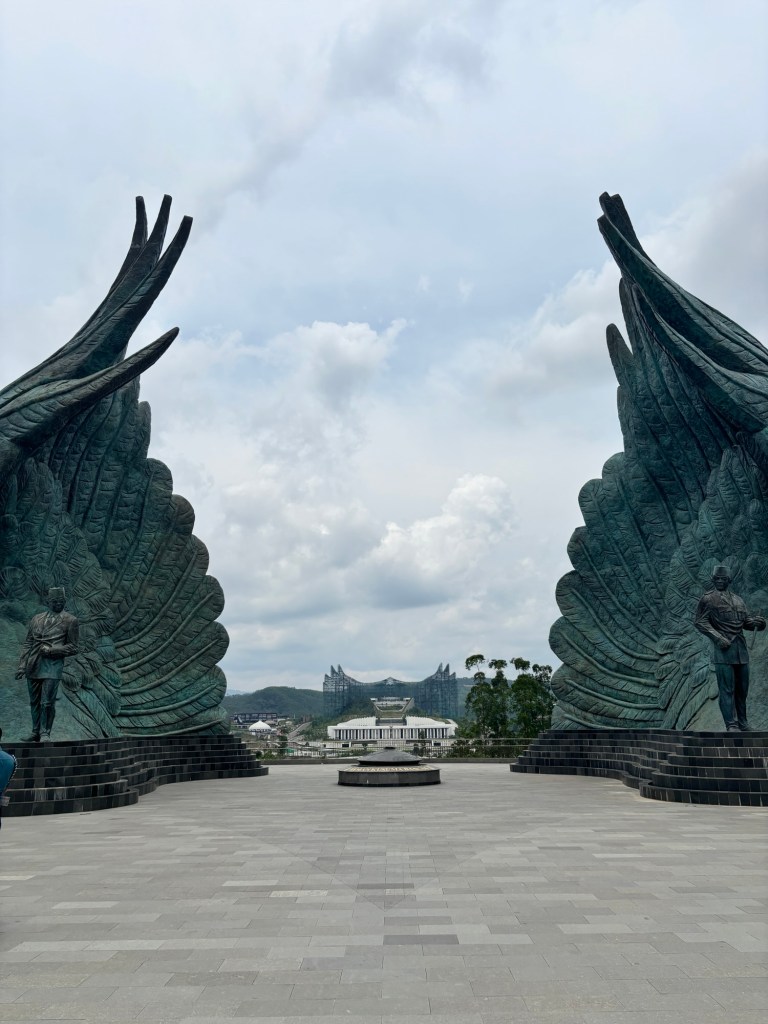
Indonesia’s defense philosophy is deeply rooted in the Total People’s Defense and Security System (Sistem Pertahanan dan Keamanan Rakyat Semesta or Sishankamrata), which enshrines the idea that national defense is the collective duty of all citizens and national resources (Ministry of Defense of Indonesia, 2015). This doctrine, institutionalized since the early years of the Republic, reflects Indonesia’s historical experience as an archipelagic state that achieved independence through the mobilization of popular resistance rather than conventional military superiority. Consequently, defense has always been understood as a multidimensional effort involving political, economic, social, and cultural elements—a vision consistent with the holistic concept of ketahanan nasional (national resilience) (Suryohadiprojo, 2018).
Within this paradigm, the concept of defense by development (pertahanan melalui pembangunan) emerges as a strategic articulation of Indonesia’s contemporary defense thinking. It posits that sustainable development, equitable economic distribution, and social cohesion constitute integral components of national security. In this sense, development is not merely an instrument of prosperity but a foundation for deterrence and national endurance, especially in regions vulnerable to external penetration and internal discontent, such as border, maritime, and peripheral rural areas. The Indonesian state thus situates defense within the broader architecture of nation-building, arguing that sovereignty is most secure when citizens are economically empowered, socially integrated, and politically cohesive.
The synthesis between defense and development represents a significant departure from traditional, militarized security paradigms that dominated the Cold War era. Classical realist perspectives conceptualized security primarily as the capacity of the state to deter external threats through the accumulation of military power (Walt, 1991; Mearsheimer, 2001). However, Indonesia’s post-authoritarian experience and exposure to global development discourses have expanded the understanding of security to encompass non-military dimensions. The emergence of human security and comprehensive security frameworks—promoted in the post–Cold War international order—has influenced Indonesia’s defense orientation by emphasizing that threats to sovereignty may stem from poverty, inequality, environmental degradation, or weak governance (Buzan, 1991; UNDP, 1994).
In this evolving context, defense by development can be interpreted as Indonesia’s response to both structural and normative transformations in global security thought. It internalizes the human security paradigm within a national framework, asserting that social welfare and economic justice are prerequisites for stability. As Sukma (2019) argues, the consolidation of democracy and defense professionalism in Indonesia requires the state to build legitimacy not through coercion, but through developmental capacity and social inclusion. This approach underscores that the moral legitimacy of defense lies not only in protecting the state’s territorial integrity but also in ensuring the dignity and well-being of its people.
By prioritizing the welfare and resilience of its citizens, Indonesia envisions a form of security that is simultaneously people-centered and sovereignty-driven. This vision seeks to harmonize two foundational imperatives: the need for strategic autonomy in an increasingly uncertain geopolitical environment, and the imperative of inclusive national development as a means to sustain social cohesion and legitimacy. Ultimately, defense by development encapsulates the conviction that enduring security is achieved not merely through deterrence, but through empowerment—by transforming national prosperity into a form of strategic resilience.
Theoretical Framework: From Traditional Security to Human Security
The conceptual trajectory of Indonesia’s defense by development paradigm can be situated within the broader theoretical evolution of security studies—from the traditional state-centric model of defense to the multidimensional and people-oriented frameworks of comprehensive security and human security. This transition reflects not only a shift in analytical focus within the global academic discourse but also Indonesia’s adaptive reinterpretation of security in response to its unique historical, social, and geopolitical realities.
Traditional security theory, grounded in political realism, conceives security primarily in terms of external threats to state sovereignty and territorial integrity (Morgenthau, 1948; Walt, 1991). Within this framework, national defense is defined by the state’s capacity to deter or repel aggression through military power. The central assumption is that the international system is anarchic, compelling states to rely on self-help mechanisms to ensure survival (Waltz, 1979). While this model provided a coherent rationale for defense policy during the Cold War, it largely ignored the internal socio-economic factors that shape a state’s long-term stability and resilience.
In contrast, post–Cold War developments in security studies introduced a more expansive conception of security that encompassed political, economic, societal, and environmental dimensions. Scholars such as Buzan (1991) and Booth (2007) argued that security should be understood not merely as the absence of military threats but as the presence of conditions that allow individuals and communities to live free from fear, want, and humiliation. This intellectual movement was institutionalized globally through the United Nations Development Programme’s (UNDP) Human Development Report (1994), which defined human security as “safety from chronic threats such as hunger, disease, and repression” as well as “protection from sudden disruptions in the patterns of daily life” (UNDP, 1994, p. 23).
For Indonesia, these theoretical shifts resonate profoundly with the normative foundations of Sishankamrata, which posits that defense and welfare are inseparable components of national strength. The Indonesian Constitution itself mandates the state to “protect all the people of Indonesia and to promote the general welfare” (UUD 1945, Preamble), thereby establishing a direct linkage between security and development. Within this framework, defense is not simply a military enterprise but a holistic endeavor that mobilizes all sectors of national life—economic, social, cultural, and technological—in the service of sovereignty and unity (Suryohadiprojo, 2018).
The adoption of a comprehensive security perspective further reinforces this multidimensional understanding. Originally conceptualized in Japan during the 1970s and later adopted across Southeast Asia, comprehensive security broadens the concept of national defense to include economic stability, energy sufficiency, and social harmony as strategic assets (Tan & Singh, 2012). Under this model, a nation’s security depends as much on its economic resilience and civic unity as on its armed capabilities. Indonesia’s integration of defense by development into the total defense doctrine thus reflects both a regional intellectual tradition and a pragmatic adaptation to its developmental challenges.
In practical terms, the human security approach has provided Indonesia with a conceptual framework for addressing non-traditional security threats—such as poverty, inequality, terrorism, and environmental degradation—that are often the root causes of instability. Scholars such as Caballero-Anthony (2016) emphasize that Southeast Asian security governance increasingly relies on non-military instruments of stability, such as social inclusion, economic empowerment, and participatory governance. Indonesia’s emphasis on community empowerment, rural development, and border area welfare aligns with this regional trend, positioning development as a first line of defense rather than a secondary social policy.
Moreover, the human security paradigm supports a democratic reorientation of civil–military relations in Indonesia. By embedding defense policy within the framework of development, the state ensures that military institutions operate in synergy with civilian agencies to promote public welfare. This transformation represents a normative shift from the military as guardian model of the New Order era to a military as partner paradigm under democratic governance (Bruneau & Matei, 2008; Laksmana, 2018). Within this evolving context, defense by development becomes both a policy strategy and a moral vision: a reaffirmation that the legitimacy of national defense derives not from coercive authority but from service to the people.
In essence, Indonesia’s contemporary defense doctrine exemplifies the convergence of traditional and human security frameworks. While maintaining vigilance against external threats, the state recognizes that enduring security requires a resilient society grounded in justice, welfare, and participation. The defense by development paradigm thus represents not a rejection of military preparedness but its transcendence—a move toward a more inclusive, developmental, and human-centered conception of national defense.
Socio-Economic Development as a Strategic Instrument
The integration of socio-economic development into Indonesia’s total defense architecture represents both a strategic necessity and a philosophical commitment to the notion that national resilience is inseparable from human welfare. In the logic of defense by development, economic growth, social equity, and human empowerment are not peripheral to national security but constitute its core foundation. This approach situates development as a proactive and preventive form of defense—one that strengthens the nation’s capacity to deter, absorb, and recover from both traditional and non-traditional threats.
From a strategic perspective, development performs three interrelated functions in Indonesia’s total defense system: it strengthens human capital, reduces structural vulnerabilities, and consolidates civic cohesion. Each of these dimensions contributes to transforming the population and economy into integral components of national power—what contemporary Indonesian defense scholars describe as kekuatan pertahanan semesta or “total defense strength” (Suryohadiprojo, 2018; Widodo, 2023).
Strengthening Human Capital
At the most fundamental level, defense by development enhances human capital as a strategic resource. Investment in education, health, and technological innovation produces a population capable of adapting to crises, supporting military mobilization, and contributing to national productivity. A well-educated and economically stable populace provides a reliable reserve component (komponen cadangan) that can be mobilized in defense contingencies, reflecting the “people’s war” ethos embedded in the Sishankamrata doctrine. Moreover, by integrating vocational and technological training within the defense education framework, Indonesia links national development directly to defense readiness (Ministry of Defense of Indonesia, 2022).
Empirically, regions with higher levels of education, infrastructure, and social services demonstrate stronger community resilience and lower vulnerability to conflict (Aspinall & Berenschot, 2019). This observation reinforces the notion that social investment functions as a form of strategic deterrence—reducing the potential for social unrest, radicalization, or external manipulation.
Reducing Structural Vulnerabilities
Socio-economic disparities and uneven development remain among Indonesia’s most persistent security challenges. Structural inequalities, particularly between Java and the outer islands, have historically generated centrifugal tendencies and grievances that threaten national cohesion (Booth, 2016). In response, defense by development seeks to address the root causes of these vulnerabilities by promoting equitable growth and regional empowerment.
Programs such as the National Medium-Term Development Plan (RPJMN) 2020–2024 and the Strategic Border Area Development Initiative (Kawasan Strategis Nasional Perbatasan) explicitly integrate defense objectives into development planning (Bappenas, 2020; Purnomo, 2021). Infrastructure projects in border and maritime zones, for example, serve dual functions: improving local welfare while enhancing surveillance, logistics, and national presence in frontier regions. By transforming peripheral areas into productive economic zones, Indonesia not only mitigates secessionist tendencies but also establishes a deterrent posture based on social stability and territorial integration.
This approach aligns with theories of “developmental security,” which posit that inclusive economic systems reduce internal conflict and increase state legitimacy (Duffield, 2001; Sen, 1999). In Indonesia’s context, the fusion of welfare policy and defense strategy exemplifies a pragmatic recognition that a secure nation cannot be sustained amidst persistent poverty and inequality.
Consolidating Civic Cohesion and Moral Legitimacy
The third dimension of defense by development lies in its moral and sociopolitical function: the consolidation of civic cohesion and legitimacy. National defense in Indonesia is not conceived as a coercive instrument but as a collective expression of solidarity and mutual obligation. The Sishankamrata philosophy explicitly grounds defense in the people’s willingness to defend their collective destiny. Therefore, development policies that foster social justice, participation, and local empowerment directly strengthen the moral foundation of national defense (Sukma, 2019).
In this regard, civic welfare and defense are mutually reinforcing. When citizens perceive the state as a provider of prosperity and dignity, their commitment to national defense transcends legal obligation and becomes a moral duty. Conversely, when the benefits of development are uneven or exclusionary, the legitimacy of defense institutions erodes. As defense by development emphasizes, national unity cannot be imposed through force—it must be cultivated through shared prosperity and inclusion.
Development as Deterrence and Resilience
At a broader strategic level, defense by development redefines deterrence from a purely military calculus to a socio-economic one. A resilient society—characterized by food security, industrial capability, digital literacy, and social cohesion—constitutes a form of “latent deterrence” that discourages both external aggression and internal instability. In this sense, Indonesia’s total defense system operates as a comprehensive deterrence structure, integrating hard and soft dimensions of power (Widodo, 2023).
Furthermore, the emphasis on sustainable and inclusive development provides a dynamic form of defense adaptability. As the global security environment becomes increasingly complex—encompassing climate change, cyber threats, pandemics, and economic crises—traditional defense instruments alone cannot ensure national survival. Socio-economic resilience thus becomes an essential form of strategic elasticity, enabling the state to absorb shocks while maintaining social and political stability.
In summary, defense by development transforms socio-economic advancement into a multidimensional defense strategy that unites prosperity with security. It situates development as both a condition and an instrument of defense—an endogenous source of deterrence and legitimacy. By doing so, Indonesia affirms a distinctly humanistic and Pancasila-based approach to national security, in which the welfare of citizens is not merely the goal of development but the essence of defense itself.
Defense by Development in Policy Practice
The operationalization of defense by development in Indonesia reflects a deliberate policy shift from reactive defense postures toward preventive and integrative approaches that embed security considerations within the national development agenda. In practice, this paradigm manifests through a series of state programs, institutional reforms, and strategic planning instruments that link socio-economic transformation with the enhancement of national resilience. The implementation of this doctrine represents an effort to harmonize long-term development goals (pembangunan nasional berkelanjutan) with defense modernization, thereby ensuring that economic progress contributes directly to sovereignty and stability.
Institutional Integration: The Convergence of Defense and Development Planning
A key mechanism for embedding development within Indonesia’s total defense framework is the institutional alignment between the Ministry of Defense (Kementerian Pertahanan), the National Development Planning Agency (Bappenas), and local governments. The National Medium-Term Development Plan (Rencana Pembangunan Jangka Menengah Nasional, RPJMN) 2020–2024 provides a central policy platform for integrating defense objectives into economic and spatial planning (Bappenas, 2020). The RPJMN explicitly identifies “strengthening border areas, maritime security, and defense infrastructure” as strategic development priorities—highlighting the recognition that physical development of peripheral regions serves both welfare and deterrence functions.
This institutional synergy reflects a broader whole-of-government approach, in which defense is treated as a shared responsibility rather than a sectoral function. The establishment of inter-ministerial coordination frameworks—such as the National Resilience Council (Dewan Ketahanan Nasional) and the National Security Coordination Forum—has facilitated policy convergence between defense, economic, and social development agendas (Ministry of Defense of Indonesia, 2015). Through these mechanisms, Indonesia attempts to overcome the historical fragmentation of defense and development planning that characterized the early post-reformasi period (Laksmana, 2018).
Border and Maritime Development as Strategic Frontiers
The most visible embodiment of defense by development is found in Indonesia’s border and maritime policies. As an archipelagic nation with over 80,000 kilometers of coastline and 92 outer islands, Indonesia’s territorial integrity depends heavily on the socio-economic vitality of its frontier communities. Historically, these regions were marginalized and underdeveloped, rendering them susceptible to transnational crime, illegal fishing, and cross-border infiltration (Sukma, 2019). Recognizing these vulnerabilities, the government launched a series of programs under the Strategic Border Area Development Initiative (Kawasan Strategis Nasional Perbatasan) to integrate infrastructure development, population welfare, and territorial surveillance (Purnomo, 2021).
The policy combines economic empowerment with strategic presence. For example, the construction of roads, ports, and electricity networks in Kalimantan and Papua serves not only developmental goals but also enables rapid military mobility and logistical support. Likewise, the enhancement of fisheries, cooperatives, and small-scale industries in border villages provides local livelihoods that deter illegal migration and strengthen citizens’ attachment to the state. This dual-use model reflects the concept of “defensive development zones,” where social progress functions as a deterrent to both external interference and internal alienation.
Maritime development programs under the Global Maritime Fulcrum (Poros Maritim Dunia) initiative further reinforce this principle. By investing in coastal infrastructure, port modernization, and the Sea Toll (Tol Laut) network, Indonesia aims to transform its maritime space into both an economic artery and a defense buffer (Ministry of Maritime Affairs, 2017). The integration of civilian and military maritime functions—ranging from coast guard operations to ocean resource management—exemplifies how development projects have become instruments of comprehensive defense (pertahanan semesta).
Defense Industrial Policy and Economic Sovereignty
Another major domain of policy practice lies in the defense industrial sector. The Defense Industry Law No. 16/2012 marked a turning point by institutionalizing the principle of self-reliant defense (kemandirian pertahanan), positioning industrial modernization as a central pillar of national security. The government’s subsequent Defense White Paper (2015) and Resilient Defense Economy Policy (2022) expanded this vision by promoting collaboration among state-owned enterprises, private industries, and academic institutions in defense research and production (Ministry of Defense of Indonesia, 2022).
This policy direction aligns with the Triple Helix model of innovation (Etzkowitz & Leydesdorff, 2000), which emphasizes the symbiotic interaction between government, industry, and academia in generating technological capability. By fostering domestic production of weapon systems, dual-use technologies, and logistics infrastructure, Indonesia aims to reduce dependency on foreign suppliers and enhance strategic autonomy. Companies such as PT Pindad, PT Dirgantara Indonesia, and PT PAL play key roles in linking industrial competitiveness with defense preparedness—demonstrating how economic development directly reinforces national security capacity (Suryohadiprojo, 2018).
In addition, the defense offset policy—which mandates technology transfer in foreign procurement—further integrates defense economics into industrial development planning. These measures not only stimulate the growth of high-tech industries but also create employment and knowledge spillovers that strengthen Indonesia’s innovation ecosystem. Hence, defense industrialization functions as both an instrument of strategic sovereignty and a catalyst for broader economic modernization.
Community Empowerment and the Civil Component
At the societal level, defense by development manifests through the empowerment of local communities as integral actors in national defense. The establishment of the Reserve Component (Komponen Cadangan) and Supporting Component (Komponen Pendukung) under the Law on State Defense (No. 23/2019) institutionalizes citizen participation in security efforts while maintaining civilian control. Beyond formal defense institutions, civil society organizations, local cooperatives, and educational institutions contribute to what the Ministry of Defense terms the mental revolution for national resilience (revolusi mental ketahanan nasional) (Ministry of Defense of Indonesia, 2022).
Programs such as Desa Mandiri (Self-Reliant Villages) and Kampung Bahari Nusantara (Maritime Village Program) illustrate this principle in practice. By improving rural livelihoods, education, and infrastructure, these initiatives enhance both local well-being and territorial awareness. In the long term, they nurture a civic ethos consistent with Sishankamrata—that national defense is not confined to the military but extends to all aspects of daily life (Widodo, 2023). The resulting synergy between state institutions and civil society reinforces the resilience of Indonesia’s defense ecosystem (ekosistem pertahanan).
Integrated Security–Development Governance
Indonesia’s experience demonstrates that the success of defense by development depends on effective governance structures that transcend bureaucratic boundaries. Coordination across ministries, provinces, and districts requires not only administrative efficiency but also shared vision and trust among institutions. As Laksmana (2018) notes, the enduring challenge lies in harmonizing the cultures of civilian development agencies—often oriented toward service delivery and budgetary constraints—with those of defense institutions, which prioritize discipline and strategic readiness.
To address this, Indonesia has increasingly adopted a whole-of-government and whole-of-society model of governance, emphasizing multi-stakeholder collaboration and digital integration. The introduction of the Defense Human Resources Information System (HRIS) and Digital Learning Management Systems (LMS) at military educational institutions, such as Sesko TNI, represents an effort to modernize defense governance while maintaining alignment with broader development goals (Widodo, 2023). This modernization ensures that defense institutions evolve in tandem with national development and technological progress.
Synthesis
In sum, Indonesia’s policy implementation of defense by development operationalizes the total defense doctrine through a multidimensional approach encompassing institutional coordination, frontier development, industrial self-reliance, and civic empowerment. These initiatives collectively transform development into a form of strategic deterrence and resilience. By aligning the instruments of welfare and defense, Indonesia advances a unique model of security governance—one that embodies the national ideology of Pancasila and the constitutional mandate to achieve both sovereignty and social justice. In this sense, defense by development is not a rhetorical slogan but a lived strategy, simultaneously strengthening the state’s defensive capacity and the people’s dignity.
Comparative Perspective: Lessons from Regional Models
The Indonesian doctrine of defense by development does not exist in isolation. It resonates with a broader regional tradition among Southeast Asian states that historically have sought to harmonize development and defense under conditions of limited resources, diverse geographies, and complex security environments. Comparative analysis reveals that Indonesia’s approach shares structural similarities with the strategic doctrines of Vietnam and Thailand, as well as conceptual affinities with Japan’s comprehensive security model and Singapore’s total defense framework. These parallels not only contextualize Indonesia’s experience but also underscore a regional pattern of developmental defense—a model of security that transforms socio-economic progress into a source of strategic resilience.
Vietnam: The People’s War Economy and Integrated Defense Development
Vietnam’s defense doctrine, grounded in the legacy of People’s War (Toàn dân kháng chiến), represents one of the most enduring examples of the fusion between economic and military strategy. Since the revolutionary period, Vietnam has treated economic production and defense mobilization as inseparable. This principle evolved into the People’s War Economy (Kinh tế quốc phòng), which remains central to its defense policy today (Thayer, 2017). The model emphasizes dual-use development, wherein infrastructure, industries, and local communities simultaneously serve economic and security functions.
For instance, the establishment of economic-defense zones (khu kinh tế–quốc phòng) in border and remote regions allows the Vietnamese government to pursue economic development, poverty alleviation, and territorial surveillance within a single policy framework. These zones integrate military units into community-building activities such as infrastructure construction, healthcare provision, and agricultural innovation (Nguyen & Thayer, 2019). The approach parallels Indonesia’s efforts in frontier regions such as Papua, Kalimantan, and Natuna, where economic empowerment is seen as an essential component of territorial defense (Purnomo, 2021).
Moreover, Vietnam’s emphasis on defense industrial autonomy—epitomized by enterprises such as Z111 and Viettel High Tech—illustrates how industrial development functions as both a defense and economic strategy. By investing in dual-use technologies, Vietnam enhances its self-reliance while stimulating technological diffusion across civilian sectors. Indonesia’s Defense Industry Law No. 16/2012 and the Resilient Defense Economy Policy (2022) share similar objectives, underscoring the regional convergence toward economic sovereignty as a form of strategic deterrence (Ministry of Defense of Indonesia, 2022).
Thailand: The Sufficiency Economy and Resilient Security
Thailand provides another instructive model through its Sufficiency Economy Philosophy (SEP), articulated by King Bhumibol Adulyadej in the late 20th century. While not a defense doctrine per se, SEP embodies a socio-economic vision that integrates moderation, self-reliance, and sustainable development as the moral and practical basis of national resilience (Piboolsravut, 2004). In Thailand’s strategic thinking, economic stability and social harmony are preconditions for security; thus, development functions as a preventive defense mechanism against both external shocks and internal instability.
Following the 2004 Indian Ocean tsunami and the 2011 flood crisis, Thailand institutionalized resilience-based security planning, emphasizing decentralized governance, community preparedness, and environmental management (Rigg & Phongsiri, 2015). This experience parallels Indonesia’s own turn toward resilience-oriented defense, particularly in disaster management, food security, and climate adaptation. The integration of disaster response units within the Indonesian National Armed Forces (TNI) and the development of the Bencana Nasional Terpadu (Integrated National Disaster System) demonstrate how non-military sectors are incorporated into total defense capabilities.
Thailand’s SEP also offers normative lessons for Indonesia’s defense by development: that sustainable security depends on the ethical foundation of self-control, sufficiency, and collective well-being. In both cases, development is not pursued merely for economic gain but for the cultivation of societal virtues that underpin enduring national cohesion.
Japan and Singapore: Comprehensive and Total Defense Paradigms
Beyond mainland Southeast Asia, Japan’s Comprehensive Security doctrine and Singapore’s Total Defense framework further illuminate the regional diffusion of development-based defense philosophies. Japan’s Comprehensive Security (Sōgō Anzen Hoshō), first articulated in the 1970s, emphasizes that economic vitality, energy stability, and technological innovation are integral components of national defense (Tan & Singh, 2012). This approach was a response to Japan’s constitutional pacifism and dependence on U.S. security guarantees, leading to a model of defense that relies heavily on economic strength and social resilience.
Similarly, Singapore’s Total Defense framework—comprising military, civil, economic, social, psychological, and digital pillars—embodies a holistic security philosophy that closely mirrors Indonesia’s Sishankamrata. Singapore’s emphasis on economic defense (ensuring industrial competitiveness and financial stability) and social defense (fostering unity among diverse communities) demonstrates how national resilience can be systematically built through coordinated policy mechanisms (Loo, 2013). Indonesia’s adaptation of these ideas, particularly in integrating civic education, digital infrastructure, and local empowerment into its defense framework, reflects an awareness of the necessity for multidimensional readiness in a rapidly evolving security landscape.
Regional Synthesis: Toward a Southeast Asian Model of Developmental Defense
Taken together, these cases illustrate a distinctive Southeast Asian tradition of defense thinking—one that merges socio-economic development with strategic preparedness. While each country’s model emerges from unique historical and political contexts, they share several core principles:
(1) defense is inseparable from development;
(2) national security depends on social equity and cohesion; and
(3) economic self-reliance constitutes a form of strategic autonomy.
In Vietnam, development secures sovereignty through mobilization and integration; in Thailand, through self-sufficiency and moral resilience; in Singapore and Japan, through economic robustness and social unity. Indonesia’s defense by development synthesizes these elements, grounding them in the Pancasila ideology and the constitutional imperative to protect sovereignty and promote welfare. By internalizing these regional lessons, Indonesia advances what might be termed a Pancasila developmental defense model—a form of defense humanism that places the people at the heart of security.
Furthermore, this comparative lens underscores a broader geopolitical implication: that Southeast Asia’s path to stability has historically relied less on arms races and more on social consolidation, economic inclusion, and cultural resilience. As Caballero-Anthony (2016) notes, regional security governance in ASEAN increasingly adopts a “non-traditional” orientation, privileging human development and cooperative resilience over militarized deterrence. Indonesia’s doctrine thus aligns with a normative regional consensus that enduring security must be socially grounded and developmentally sustained.
Synthesis
The comparative experiences of Vietnam, Thailand, Japan, and Singapore affirm that defense by development is not an anomaly but part of an evolving regional paradigm that redefines power in developmental rather than purely military terms. These models collectively suggest that prosperity, legitimacy, and unity are the new determinants of national strength in the 21st century. For Indonesia, the lesson is clear: development is not the antithesis of defense, but its truest and most sustainable form. By continuing to institutionalize this synthesis—through border development, industrial innovation, and civic empowerment—Indonesia positions itself at the forefront of a Southeast Asian tradition where security is derived not from domination, but from shared welfare and social resilience.
Challenges and Prospects
While the doctrine of defense by development has gained conceptual and institutional traction in Indonesia’s strategic policy discourse, its full realization continues to encounter significant structural, bureaucratic, and normative challenges. These obstacles stem largely from the enduring fragmentation of Indonesia’s civil–military relations, uneven regional development, and the difficulty of harmonizing long-term developmental goals with the operational logic of defense institutions. Nevertheless, these challenges also open opportunities for reform, innovation, and deeper integration between national defense and socio-economic transformation.
Bureaucratic Fragmentation and Institutional Coordination
A persistent barrier to the effective implementation of defense by development lies in bureaucratic fragmentation and inter-agency competition. Despite formal mechanisms for coordination, defense and development agencies often operate within distinct institutional cultures and planning cycles. The Ministry of Defense and the National Development Planning Agency (Bappenas)—the two primary bodies responsible for integrating defense and socio-economic policy—tend to prioritize different performance metrics and timelines (Laksmana, 2018). As a result, defense objectives are sometimes treated as peripheral to national development priorities, while developmental programs may lack a strategic security rationale.
This disconnect reflects a broader tension between Indonesia’s developmental bureaucracy, which emphasizes budget efficiency and social equity, and its defense bureaucracy, which privileges readiness, secrecy, and hierarchy. Bridging this institutional gap requires the establishment of what Widodo (2023) describes as integrated defense governance (tata kelola pertahanan terpadu): a model that aligns defense, economic, and social planning under unified national objectives. Such a reform would entail not only policy harmonization but also the cultivation of cross-sectoral expertise, inter-ministerial task forces, and joint planning instruments within the National Resilience Council (Dewan Ketahanan Nasional).
Regional Inequality and Developmental Asymmetry
A second major challenge concerns Indonesia’s persistent regional disparities. Economic concentration on Java—home to more than half of the nation’s GDP—contrasts sharply with underdeveloped regions in eastern Indonesia, particularly Papua, Maluku, and Nusa Tenggara (Booth, 2016). These inequalities generate vulnerabilities that threaten national cohesion and undermine the inclusive ethos of Sishankamrata. Regions with weak infrastructure, limited state presence, and high poverty rates are often the most susceptible to separatist movements, illicit trade, and cross-border infiltration (Sukma, 2019).
The government’s efforts to address these disparities through initiatives such as the Strategic Border Area Development Program and Desa Mandiri (Self-Reliant Villages) represent important progress. Yet, these programs often face implementation gaps due to limited fiscal capacity, overlapping mandates, and inconsistent local governance. Without structural decentralization that empowers regional governments to act as agents of both development and defense, defense by development risks becoming overly centralized—undermining the participatory principle embedded in the total defense system.
The future of Indonesia’s defense resilience thus depends on reducing the developmental asymmetry between core and periphery. This requires not only infrastructural investment but also the decentralization of defense education, the establishment of regional defense-development councils, and the integration of local wisdom (kearifan lokal) into national resilience strategies. By aligning local empowerment with strategic deterrence, Indonesia can ensure that the total defense system reflects the diversity and unity of its archipelagic character.
Civil–Military Relations and Democratic Oversight
The third challenge concerns the evolving dynamics of civil–military relations in post-reformasi Indonesia. The integration of defense functions into development raises legitimate concerns about the potential re-militarization of civilian domains. Historically, during the New Order period (1966–1998), the military’s dual function (dwi fungsi ABRI) justified extensive involvement in politics and governance, blurring the distinction between defense and development. While democratic reforms have curtailed such practices, the expansion of defense-linked development programs risks reviving subtle forms of military encroachment if not accompanied by robust oversight (Mietzner, 2009).
Ensuring that defense by development remains consistent with democratic norms requires clear legal frameworks and accountability mechanisms. Civilian institutions must maintain strategic leadership in policy formulation, while the military contributes through technical expertise and operational support. As Bruneau and Matei (2008) argue, the consolidation of democratic civil–military relations depends on three interdependent factors: civilian control, operational effectiveness, and democratic accountability. Indonesia’s challenge lies in balancing these elements—ensuring that defense participation in development enhances, rather than erodes, democratic legitimacy.
One promising trend is the institutionalization of defense education and research collaboration with civilian universities, such as the cooperation between Sesko TNI and national academic institutions. These partnerships facilitate the exchange of knowledge, promote transparency, and cultivate a new generation of scholar-soldiers who can navigate the interface between defense and development with intellectual rigor and civic responsibility (Widodo, 2023). Such initiatives contribute to transforming the military from a bureaucratic actor into a knowledge institution embedded within the national development ecosystem.
Resource Constraints and Fiscal Sustainability
Another structural limitation is fiscal. Indonesia’s defense spending remains relatively modest, averaging around 0.8–1.0 percent of GDP—significantly lower than regional peers such as Singapore and Vietnam (SIPRI, 2023). The limited budget constrains the ability of defense institutions to invest in dual-use infrastructure, research, and industrial innovation. Meanwhile, competing demands on national expenditure—particularly for health, education, and social welfare—create pressures that often sideline defense-linked development projects.
To sustain defense by development, Indonesia must enhance defense resource efficiency through innovative financing mechanisms. The development of a Resilient Defense Economy (Ekonomi Pertahanan Tangguh) offers a promising avenue by promoting public-private partnerships, defense-industrial offsets, and technology transfer agreements (Ministry of Defense of Indonesia, 2022). Moreover, aligning defense spending with Sustainable Development Goals (SDGs)—for instance, in energy resilience, digital infrastructure, and food security—can create synergies between national development financing and strategic readiness.
Strategic Adaptation and Future Prospects
Despite these challenges, the prospects for defense by development remain promising. The paradigm aligns with Indonesia’s long-term vision of becoming a sovereign, advanced, and equitable nation by 2045 (Visi Indonesia Emas 2045). In an era characterized by hybrid threats, climate crises, and digital transformation, the distinction between military and civilian domains is increasingly blurred. This reality demands an adaptive defense system that integrates economic resilience, technological innovation, and social inclusion as pillars of national security (Widodo, 2023).
In this evolving context, Indonesia’s future defense strategy must embrace three core trajectories:
1. Institutional Modernization: Building a digitally integrated, data-driven defense governance system that synchronizes national, regional, and sectoral plans.
2. Socio-Economic Resilience: Strengthening the interlinkages between food security, green energy, and national logistics as components of defense sustainability.
3. Civilizational Defense: Embedding the ethical foundations of Pancasila—mutual cooperation (gotong royong), justice, and unity—into the strategic culture of defense policy, ensuring that national security remains grounded in moral legitimacy rather than coercive control.
Ultimately, the success of defense by development will depend on Indonesia’s ability to translate normative vision into institutional reality. It demands not merely policy integration but the cultivation of a new strategic mindset—one that perceives development not as a separate sector, but as the very substance of defense. As Sukma (2019) aptly notes, Indonesia’s strength will not be determined solely by its armaments, but by the resilience of its institutions, the inclusivity of its growth, and the unity of its people.
Synthesis
Defense by development stands at the intersection of Indonesia’s historical experience, constitutional mandate, and strategic aspiration. Its challenges—bureaucratic, structural, and normative—are substantial, yet they underscore the doctrine’s transformative potential. By overcoming these limitations through institutional innovation, democratic oversight, and inclusive growth, Indonesia can realize a uniquely humanistic model of defense that aligns prosperity with sovereignty. In doing so, the state reaffirms the essence of Sishankamrata: that the strength of the Republic does not lie in its weapons, but in the welfare, discipline, and solidarity of its people.
Conclusion
The doctrine of defense by development (pertahanan melalui pembangunan) represents Indonesia’s most comprehensive attempt to reconceptualize national security through the lens of human welfare, socio-economic justice, and moral legitimacy. Rooted in the philosophical foundations of Pancasila and institutionalized through the Total People’s Defense and Security System (Sishankamrata), this paradigm asserts that the strength of the nation lies not only in its armed forces but in the resilience, prosperity, and unity of its people. In doing so, it articulates a distinctly Indonesian contribution to contemporary security thought—one that transcends the dichotomy between hard power and social development by integrating both into a single, organic system of national resilience (ketahanan nasional).
From a theoretical perspective, defense by development embodies the convergence of traditional, comprehensive, and human security paradigms. While maintaining vigilance against external threats, it acknowledges that poverty, inequality, and social fragmentation constitute internal vulnerabilities no less dangerous than military aggression. This synthesis reflects an understanding—shared across Southeast Asian strategic traditions—that defense must be inclusive, preventive, and participatory (Caballero-Anthony, 2016; Tan & Singh, 2012). In this sense, Indonesia’s approach represents both a continuation of regional developmental security models and an innovation grounded in its own constitutional and cultural context.
Empirically, the implementation of defense by development has unfolded across multiple domains: institutional integration between the Ministry of Defense and Bappenas; the strategic transformation of border and maritime zones into engines of both prosperity and deterrence; the modernization of the defense industrial base as an instrument of technological sovereignty; and the empowerment of local communities as active participants in national security. These initiatives collectively transform development into a strategic instrument—what I personally identify the term as “developmental deterrence,” wherein welfare itself becomes a bulwark of sovereignty. By turning the economic and social vitality of the nation into latent defense power, Indonesia operationalizes the philosophical axiom that a prosperous people are the truest guardians of the Republic.
Nevertheless, the challenges identified—bureaucratic fragmentation, regional inequality, civil–military ambiguity, and fiscal limitations—highlight the unfinished nature of this transformation. Defense by development requires more than policy alignment; it demands a paradigm shift in how both defense and development are conceived, governed, and legitimized. Effective coordination between ministries, decentralization of defense functions to the regions, and sustained democratic oversight are critical to ensuring that the pursuit of security does not compromise civil liberty or institutional integrity (Laksmana, 2018; Mietzner, 2009). In this regard, the role of education, research, and civil–military epistemic communities becomes pivotal in nurturing what Bruneau and Matei (2008) describe as “democratic professionalism” within the defense sector—an ethos that binds expertise with accountability.
Looking ahead, Indonesia’s path toward 2045—the centenary of independence—offers an opportunity to institutionalize defense by development as a central pillar of national transformation. The challenges of the 21st century—climate change, digital disruption, pandemics, and hybrid warfare—demand not only military preparedness but also adaptive socio-economic systems capable of withstanding systemic shocks. This requires Indonesia to pursue three interlocking strategies:
(1) advancing defense industrial autonomy through innovation and technological investment;
(2) integrating human security metrics into national defense planning; and
(3) cultivating strategic citizenship—a civic consciousness that unites citizens’ welfare with their responsibility for national resilience.
Philosophically, defense by development reaffirms the essence of Pancasila’s second and fifth principles—humanity and social justice—as the moral foundations of security. It challenges the conventional separation between the protector and the protected by asserting that the nation’s defense is strongest when citizens are not merely passive beneficiaries of safety but active agents of collective endurance. This moral vision transforms defense from a coercive structure into a civic virtue, rooted in solidarity (gotong royong), self-reliance (berdikari), and the pursuit of shared welfare.
In conclusion, Indonesia’s defense by development doctrine stands as both an intellectual and practical evolution in the country’s long journey toward a modern, democratic, and resilient state. It redefines the meaning of power in national security: from domination to empowerment, from deterrence through force to deterrence through prosperity, and from coercive control to participatory resilience. By embedding development within defense, Indonesia aspires to construct a security architecture that is at once sustainable, legitimate, and humane—an enduring embodiment of its constitutional vision: “to protect the whole nation of Indonesia and all its people, and to promote the general welfare.”
References
Aspinall, E., & Berenschot, W. (2019). Democracy for sale: Elections, clientelism, and the state in Indonesia. Cornell University Press.
Bappenas. (2020). Rencana Pembangunan Jangka Menengah Nasional (RPJMN) 2020–2024. Ministry of National Development Planning, Republic of Indonesia.
Booth, A. (2016). Economic change in modern Indonesia: Colonial and post-colonial comparisons. Cambridge University Press.
Bruneau, T. C., & Matei, F. C. (2008). Towards a new conceptualization of democratization and civil–military relations. Democratization, 15(5), 909–929. https://doi.org/10.1080/13510340802362505
Buzan, B. (1991). People, states, and fear: An agenda for international security studies in the post-Cold War era (2nd ed.). Harvester Wheatsheaf.
Caballero-Anthony, M. (2016). An introduction to non-traditional security studies: A transnational approach. SAGE Publications.
Duffield, M. (2001). Global governance and the new wars: The merging of development and security. Zed Books.
Etzkowitz, H., & Leydesdorff, L. (2000). The dynamics of innovation: From national systems and “Mode 2” to a triple helix of university–industry–government relations. Research Policy, 29(2), 109–123. https://doi.org/10.1016/S0048-7333(99)00055-4
Laksmana, E. A. (2018). Restructuring civil–military relations in Indonesia. In M. Mietzner (Ed.), Problems of Democratisation in Indonesia (pp. 169–190). ISEAS–Yusof Ishak Institute.
Loo, B. (2013). Singapore’s total defence: The evolution of a national idea. ISEAS–Yusof Ishak Institute.
Mearsheimer, J. J. (2001). The tragedy of great power politics. W. W. Norton.
Mietzner, M. (2009). Military politics, Islam, and the state in Indonesia: From turbulent transition to democratic consolidation. ISEAS–Yusof Ishak Institute.
Ministry of Defense of Indonesia. (2015). Indonesia defense white paper 2015. Ministry of Defense, Republic of Indonesia.
Ministry of Defense of Indonesia. (2022). Policy on the resilient defense economy (Ekonomi Pertahanan Tangguh). Ministry of Defense, Republic of Indonesia.
Ministry of Maritime Affairs and Fisheries. (2017). Poros Maritim Dunia: Kebijakan kelautan Indonesia. Ministry of Maritime Affairs and Fisheries, Republic of Indonesia.
Morgenthau, H. J. (1948). Politics among nations: The struggle for power and peace. Alfred A. Knopf.
Nguyen, M. A., & Thayer, C. A. (2019). The Vietnam People’s Army and the building of the defense economy. Contemporary Southeast Asia, 41(2), 229–252. https://doi.org/10.1355/cs41-2d
Piboolsravut, P. (2004). Sufficiency economy and a healthy community. Thailand Development Research Institute Quarterly Review, 19(4), 3–10.
Purnomo, A. (2021). The border as a frontier of development and defense: Indonesia’s integrated approach. Journal of Indonesian Defense Studies, 7(1), 45–61. https://doi.org/10.xxxx/jids.2021.7.1.45 (replace with correct DOI if available)
Rigg, J., & Phongsiri, M. (2015). Living with floods: Sustainable livelihoods and disaster risk reduction in Thailand. Asian Journal of Social Science, 43(1–2), 83–110. https://doi.org/10.1163/15685314-04301005
Sen, A. (1999). Development as freedom. Oxford University Press.
SIPRI. (2023). Military expenditure database. Stockholm International Peace Research Institute. https://sipri.org/databases/milex
Sukma, R. (2019). Indonesia’s defense transformation and the challenges of professionalism. Contemporary Southeast Asia, 41(2), 159–182. https://doi.org/10.1355/cs41-2b
Suryohadiprojo, S. (2018). Ketahanan nasional dan strategi pertahanan semesta. Jakarta: Gramedia.
Tan, S. S., & Singh, D. (2012). Southeast Asian perspectives on security. Routledge.
Thayer, C. (2017). Vietnam’s defense strategy: Responding to new challenges. Asia-Pacific Defense Reporter, 43(6), 12–17.
UNDP. (1994). Human development report 1994: New dimensions of human security. Oxford University Press.
Walt, S. M. (1991). The renaissance of security studies. International Studies Quarterly, 35(2), 211–239. https://doi.org/10.2307/2600471
Waltz, K. N. (1979). Theory of international politics. Addison-Wesley.
 Pemikiran Kebangsaan
Leave a comment