“Soldier, scholar, and statesman in the making, bridging service and scholarship, dedicated to leading Indonesia toward strength, unity, and a prosperous future.”
SIKAP VIETNAM TERHADAP INDONESIA DAN OPTIMALISASI COMPREHENSIVE STRATEGIC PARTNERSHIP
Oleh: Center for Analysis and Applying Geospatial Information
Gambar 1. Simulasi Model Banjir
Banjir besar yang melanda wilayah Sumatera pada akhir November 2025 telah menjadi salah satu bencana hidrometeorologis paling mematikan dalam sejarah Indonesia modern. Laporan resmi Badan Nasional Penanggulangan Bencana mencatat sedikitnya 836 korban jiwa, ratusan orang dinyatakan hilang, serta lebih dari 3,3 juta penduduk terdampak oleh banjir dan longsor yang menerjang provinsi Aceh, Sumatera Utara, dan Sumatera Barat. Angka ini tidak hanya menunjukkan skala kerusakan fisik yang masif, tetapi juga menggambarkan adanya kerentanan struktural yang telah berkembang dalam waktu lama pada lanskap ekologis Sumatera.
Kejadian ini bukan sekadar akibat presipitasi ekstrem yang dipicu oleh Siklon Senyar, suatu fenomena meteorologis yang dapat menimbulkan curah hujan lebih dari 300 mm per hari. Sebaliknya, bencana ini merupakan hasil interaksi kompleks antara faktor alam dan faktor antropogenik, khususnya praktik alih fungsi lahan secara luas yang menurunkan kapasitas infiltrasi tanah dan meningkatkan run-off permukaan. Dalam konteks hidrologi DAS, kombinasi hujan ekstrem, deforestasi, peningkatan sedimentasi, serta berkurangnya daya tampung sungai dan danau menjadikan banjir 2025 sebagai bencana ekologis yang terakselerasi oleh aktivitas manusia.
Informasi geospasial dalam dokumen tersebut menyediakan fondasi empiris bagi analisis kausal yang lebih dalam, menunjukkan bagaimana perubahan tutupan lahan antara 2017 hingga 2025 menghasilkan pola spasial yang bertepatan dengan lokasi-lokasi banjir terbesar. Citra satelit sebelum dan sesudah kejadian, peta tematik curah hujan harian, serta hasil pengolahan Digital Elevation Model dalam mode 3D menunjukkan hubungan langsung antara degradasi lingkungan di hulu DAS dengan dampak destruktif di wilayah hilir. Kayu-kayu gelondongan dalam jumlah besar yang ditemukan menumpuk di danau-danau dan terbawa arus banjir memperkuat dugaan adanya pembalakan atau konversi hutan yang tidak terkendali, meskipun pemerintah awalnya menyatakan bahwa kayu tersebut berasal dari pohon tumbang akibat longsor.
Analisis awal geospasial dalam dokumen ini menyimpulkan bahwa banjir 2025 tidak dapat dikategorikan sebagai natural disaster murni. Bencana ini lebih tepat dipahami sebagai human-exacerbated disaster, di mana cuaca ekstrem hanya menjadi pemicu, sementara besarnya kerusakan merupakan perwujudan dari fragilitas ekologis yang diciptakan oleh praktik manusia. Pandangan ini selaras dengan teori kontemporer tentang compound hazards yang menyatakan bahwa interaksi antara eksposur iklim ekstrem dan kerusakan ekologi dapat melahirkan dampak bencana yang jauh melampaui kapasitas masyarakat dan infrastruktur untuk menghadapi ancaman tersebut.
Tulisan akademik ini bertujuan untuk mengembangkan analisis komprehensif mengenai faktor penggerak banjir Sumatera 2025, meninjau kembali bukti geospasial , dan menyusun argumentasi ilmiah mengenai hubungan struktural antara deforestasi, degradasi hidrologi, dan intensifikasi risiko bencana. Pendekatan ini diperlukan untuk memahami bagaimana bencana serupa dapat diantisipasi di masa depan melalui kebijakan tata guna lahan, rehabilitasi DAS, dan pemutakhiran sistem peringatan dini yang berorientasi pada data spasial.
Tulisan ini juga mengisi kekosongan penting dalam literatur kebencanaan Indonesia yang sering kali berfokus pada respons pascabencana, tetapi belum sepenuhnya menelaah dinamika kausal yang berakar pada perubahan ekologis skala luas. Dengan merangkai temuan geospasial secara sistematis, analisis ini berupaya membangun pemahaman integratif dan ilmiah mengenai kompleksitas bencana ekologis abad ke-21, khususnya dalam konteks Indonesia sebagai negara megadiverse yang rentan terhadap tekanan pembangunan.
Kerangka Teoretis
Kerangka teoretis yang digunakan untuk membaca bencana banjir Sumatera 2025 menempatkan dinamika hidrologi, perubahan tutupan lahan, dan kapasitas daya tampung alamiah sebagai pusat analisis. Dalam konteks ini, mekanisme dasar siklus air, mulai dari presipitasi, infiltrasi, run-off, hingga daya tampung, tidak hanya dipandang sebagai fenomena fisik, tetapi juga sebagai proses ekologis yang sangat dipengaruhi oleh aktivitas manusia. Banjir tidak dapat dijelaskan hanya melalui parameter meteorologis, melainkan harus dipahami sebagai akibat dari perubahan struktural pada lanskap yang memodifikasi perilaku hidrologi secara sistemik.
Secara teoritis, setiap sistem Daerah Aliran Sungai (DAS) bekerja berdasarkan keseimbangan antara air yang jatuh dari atmosfer, air yang diserap ke dalam tanah, dan air yang dialirkan menuju sungai, danau, atau cekungan lainnya. Dalam kondisi normal, hutan berfungsi sebagai regulator utama yang mampu menyerap antara 70–80% presipitasi. Kemampuan ini menjaga agar run-off tetap rendah dan memperlambat aliran permukaan sehingga sungai tidak menerima limpasan air secara tiba-tiba. Ketika tutupan hutan hilang, struktur tanah kehilangan kemampuan menahan dan menyimpan air, sehingga tingkat infiltrasi menurun drastis. Akibatnya, proporsi air yang mengalir sebagai run-off dapat meningkat dua hingga tiga kali lipat dibandingkan kondisi berhutan.
Penurunan infiltrasi ini secara langsung mengubah profil hidrologi DAS. Air yang tidak dapat masuk ke dalam tanah akan bergerak cepat menuruni lereng, memperbesar debit sungai dalam waktu singkat, serta meningkatkan potensi banjir bandang dan longsor. Teori hidrologi menunjukkan bahwa deforestasi, terutama di hulu DAS, menyebabkan peningkatan energi kinetik aliran permukaan, menambah erosi, serta membawa sedimen ke saluran air. Sedimentasi tersebut mengurangi kapasitas tampung sungai dan danau, membuatnya lebih rentan meluap meskipun presipitasi tidak berada pada kategori ekstrem. Kondisi inilah yang tampak dalam sebagian besar wilayah terdampak banjir 2025, sebagaimana divisualisasikan dalam peta, citra satelit, dan model elevasi 3D.
Selain mekanisme hidrologis, teori land-use change hydrology menjelaskan bahwa perubahan jenis penggunaan lahan, baik menjadi perkebunan sawit, area pertambangan, maupun lahan terbuka, menghasilkan koefisien run-off yang lebih tinggi. Lahan-lahan tersebut tidak memiliki struktur akar maupun penutup tanah yang memadai, sehingga kehilangan fungsi hidrologi untuk menyerap air. Pola alih fungsi lahan di Aceh, Sumatera Utara, dan Sumatera Barat dari tahun 2017 hingga 2025 secara konsisten memperlihatkan peningkatan area non-hutan di lokasi-lokasi yang kemudian mengalami banjir besar. Korelasi spasial ini tidak bersifat kebetulan; secara teoretis, degradasi tutupan lahan di hulu merupakan determinan utama meningkatnya risiko banjir di hilir.
Kerangka teoretis lain yang relevan adalah konsep compound hazards, yakni kondisi ketika satu jenis bahaya diperparah oleh faktor bahaya lain sehingga dampaknya menjadi berlipat. Dalam kasus Sumatera, presipitasi ekstrem akibat Siklon Senyar bukanlah fenomena tunggal. Ia bertemu lanskap yang telah kehilangan daya pulih ekologis akibat alih fungsi lahan. Interaksi ini menciptakan bencana yang jauh lebih parah daripada jika salah satu faktor bekerja sendirian. Cuaca ekstrem memperbesar run-off, sementara hilangnya hutan menghilangkan kapasitas alam untuk memperlambat, menyaring, atau menahan aliran air. Kombinasi antara infiltrasi minim, run-off tinggi, sedimentasi, dan daya tampung sungai yang berkurang menjadikan banjir 2025 sebagai contoh klasik dari hazard amplification yang dipicu oleh aktivitas manusia.
Selain itu, temuan mengenai kayu-kayu gelondongan yang terbawa banjir membuka dimensi teoritis tambahan mengenai debris flow dynamics. Dalam literatur geomorfologi, keberadaan material kayu dalam jumlah besar dapat meningkatkan daya rusak banjir karena menambah massa, momentum, dan tekanan hidrolik. Dalam dokumen, gambar dan peta memperlihatkan bagaimana log kayu memenuhi sungai dan danau, memperkuat indikasi bahwa banjir membawa bukan hanya air dan lumpur, tetapi juga produk dari pembukaan hutan. Secara teoretis, debris semacam ini dapat bertindak sebagai “breaker” yang menghancurkan bangunan, menjebol jembatan, dan menutup aliran sungai, sehingga tekanan air meningkat sebelum akhirnya meledak dalam bentuk banjir bandang dengan energi penghancur yang lebih besar.
Kerangka teoretis yang dipaparkan di atas membentuk landasan ilmiah untuk memahami mengapa banjir Sumatera 2025 tidak dapat dipandang sebagai peristiwa alamiah semata. Interaksi antara proses hidrologi, perubahan ekologis, dan dinamika spasial menunjukkan bahwa bencana tersebut sepenuhnya berada dalam logika socio-environmental disaster, di mana sistem sosial dan ekonomi berperan aktif dalam menciptakan kondisi yang memperbesar dampak bahaya alam. Penjelasan ini membuka jalan bagi analisis empiris lebih mendalam pada bagian berikutnya mengenai bagaimana bukti geospasial mendukung pemahaman teoretis tersebut.
Metodologi Analisis Geospasial dan Hidrologis
Metodologi yang digunakan untuk menganalisis banjir Sumatera 2025 menggunakan pendekatan terpadu yang menggabungkan analisis citra satelit, data curah hujan harian, penelusuran historis perubahan tutupan lahan, pemodelan hidrologi berbasis DAS, serta interpretasi spasial terhadap fenomena debris flow. Pendekatan ini bersifat multidisipliner, memadukan geografi fisik, teknik hidrologi, ilmu lingkungan, dan teknologi geospasial modern. Pemilihan metodologi ini mencerminkan kebutuhan untuk memahami bencana tidak hanya sebagai kejadian titik (event-based), tetapi sebagai hasil interaksi temporal antara cuaca ekstrem dan dinamika ruang-lingkungan yang berubah secara gradual akibat aktivitas manusia.
Analisis dimulai dengan penggunaan citra satelit resolusi menengah dan tinggi untuk menilai kondisi permukaan bumi sebelum dan sesudah kejadian banjir. Citra-citra ini, memperlihatkan tingkat kerusakan fisik, penyebaran lumpur, perubahan alur sungai, dan tumpukan kayu yang terbawa arus banjir. Citra satelit tanggal 30 November 2025 menunjukkan bahwa kawasan permukiman di Sumatera Barat dan Aceh mengalami kehancuran struktural yang meluas, dengan bangunan roboh dan tertimbun material tanah.
Gambar 2. Citra Satelit Lhoksukon Tanggal 30 November 2025
Dokumentasi visual tersebut menjadi basis awal untuk memastikan bahwa intensitas kejadian tidak hanya dipicu oleh air, melainkan oleh kombinasi air, sedimen, dan material kayu yang bergerak sebagai massa terpadu.
Pengolahan data curah hujan dilakukan dengan menggunakan lapisan spasial dari satelit NOAA untuk tanggal 23, 24, dan 25 November 2025. Setiap hari menunjukkan pola presipitasi ekstrem hingga sangat ekstrem di wilayah Sumatera Barat, Sumatera Utara, dan Aceh.
Peta curah hujan tersebut menunjukkan intensitas warna dan nilai presipitasi yang menandakan curah hujan antara 150–300 mm hingga lebih dari 300 mm, sebuah kategori yang secara meteorologis dapat diklasifikasikan sebagai extreme precipitation event. Penggunaan data NOAA memungkinkan representasi spasial curah hujan yang lebih akurat dibandingkan pengamatan berbasis titik seperti stasiun BMKG, sehingga memberikan gambaran rinci tentang wilayah yang menerima beban air terbesar selama periode kritis.
Metodologi berikutnya melibatkan pembuatan peta temporal perubahan tutupan lahan, suatu teknik yang sangat penting dalam memahami evolusi kerusakan ekologis. Dalam dokumen, setiap provinsi terdampak diwakili oleh beberapa sampel wilayah yang dianalisis untuk tahun-tahun berbeda: 2017, 2019, 2020, 2021, 2022, 2023, 2024, dan 2025. Peta-peta ini disusun melalui interpretasi data citra Landsat atau Sentinel—meskipun sumber teknisnya tidak dirinci dalam PDF—namun pola warnanya menunjukkan klasifikasi antara tutupan hutan dan non-hutan. Penggunaan metode temporal ini menghasilkan pemahaman historis tentang bagaimana hutan digantikan oleh perkebunan sawit, tambang, dan lahan terbuka. Transisi spasial tersebut menjadi variabel penjelas utama dalam analisis hubungan antara degradasi lingkungan dengan intensitas banjir.
Pemodelan hidrologis dilakukan menggunakan pendekatan berbasis Daerah Aliran Sungai (DAS), dengan memanfaatkan Digital Elevation Model (DEM) untuk merekonstruksi alur aliran air dari hulu ke hilir. Dalam dokumen, hal ini ditampilkan dalam bentuk peta 3D yang memperlihatkan topografi, alur sungai, dan lokasi-lokasi alih fungsi lahan yang berada di hulu DAS. Pemetaan 3D tersebut memberikan visualisasi yang sangat kuat tentang bagaimana air dari curah hujan ekstrem bergerak melalui lereng dan lembah, serta bagaimana deforestasi pada bagian hulu secara langsung memengaruhi kecepatan dan volume run-off menuju kawasan hilir. Analisis spasial tersebut menunjukkan bahwa lokasi banjir paling parah justru terletak pada hilir DAS yang hulu-nya telah mengalami degradasi tutupan lahan signifikan.
Metode lain yang digunakan adalah spatial overlay analysis antara tiga lapisan data: lokasi banjir, lokasi alih fungsi lahan, dan lokasi temuan kayu gelondongan. Pendekatan ini memperlihatkan pola korelasi spasial yang konsisten, yakni bahwa titik-titik banjir besar selalu berada di bawah jalur aliran air dari kawasan yang mengalami deforestasi. Overlay tersebut juga menghubungkan keberadaan kayu gelondongan dengan area yang mengalami konversi hutan, memberikan indikasi kuat bahwa kayu tersebut bukan berasal dari pohon tumbang alami, melainkan dari aktivitas pembukaan lahan. Pendekatan ini merupakan contoh klasik penerapan forensic GIS untuk mengidentifikasi potensi aktivitas ilegal atau tidak terkontrol yang berkontribusi pada bencana.
Selain itu data presipitasi, koefisien infiltrasi berdasarkan jenis lahan, koefisien run-off berdasarkan jenis tanah, geometri sungai, kapasitas daya tampung, serta DEM untuk pemodelan aliran air juga digunakan. Meskipun pemodelan kuantitatif belum disajikan, data tersebut penting untuk mengonfirmasi hipotesis awal dan untuk menentukan sejauh mana alih fungsi lahan memperbesar dampak banjir. Dengan demikian, metodologi yang ditawarkan tidak hanya bersifat deskriptif, tetapi juga membuka ruang untuk verifikasi ilmiah melalui pemodelan numerik.
Secara keseluruhan, kombinasi analisis citra, data curah hujan, klasifikasi tutupan lahan, pemetaan 3D DAS, dan overlay spasial memberikan basis metodologis yang solid untuk mengkaji hubungan kausal antara cuaca ekstrem dan kerusakan lingkungan. Pendekatan geospasial yang digunakan memungkinkan pembacaan bencana secara holistik, dimana menjelaskan bukan hanya apa yang terjadi, tetapi mengapa hal tersebut terjadi dan bagaimana struktur lanskap memperbesar dampaknya. Metodologi ini menjadi fondasi bagi bagian berikutnya, yang akan menguraikan temuan empiris secara lebih rinci serta membangun argumen ilmiah mengenai faktor penggerak banjir Sumatera 2025.
Temuan Empiris Utama
Temuan empiris yang tersaji memberikan gambaran komprehensif mengenai bagaimana kombinasi antara cuaca ekstrem, kerusakan ekologis, dan dinamika hidrologi bekerja secara simultan menciptakan bencana berskala besar. Setiap lapisan data geospasial dalam dokumen tersebut memperkuat hubungan kausal antara presipitasi ekstrem dan alih fungsi lahan, di mana degradasi ekologis menjadi katalis utama yang mengubah hujan lebat menjadi banjir besar dan longsor yang mematikan. Temuan ini bukan hanya bersifat deskriptif, tetapi menyusun sebuah narasi ilmiah yang memperlihatkan keterkaitan spasial, temporal, dan mekanistik antara fenomena yang tampak terpisah namun sesungguhnya saling bergantung.
Temuan pertama yang paling mencolok adalah intensitas dan distribusi presipitasi ekstrem yang dipicu oleh Siklon Senyar. Data satelit NOAA yang dianalisis untuk tanggal 23, 24, dan 25 November 2025 menunjukkan akumulasi hujan dalam kategori ekstrem (150–300 mm) hingga sangat ekstrem (>300 mm) di berbagai wilayah Aceh, Sumatera Utara, dan Sumatera Barat.
Gambar 3. Citra Satelit NOAA Tanggal 23 November 2025Gambar 4. Citra Satelit NOAA Tanggal 24 November 2025Gambar 5. Citra Satelit NOAA Tanggal 25 November 2025
Pada 23 November, hujan sangat ekstrem terdeteksi di Semenanjung Malaysia dan wilayah Mentawai, sementara 24 November memperlihatkan pola intensitas yang meluas ke Sumatera Barat dan sebagian Sumatera Utara. Pada 25 November, curah hujan sangat ekstrem terkonsentrasi di Aceh, menjadikan provinsi ini episentrum banjir besar. Secara ilmiah, curah hujan sebesar itu, terutama dalam rentang waktu tiga hari berturut-turut, cukup untuk menimbulkan banjir, tetapi skala kerusakan yang terjadi mengindikasikan adanya faktor tambahan yang memperburuk dampaknya. Data presipitasi ini menjadi dasar untuk memahami potensi beban air yang masuk ke dalam sistem DAS.
Temuan kedua terkait perubahan tutupan lahan memperlihatkan pola degradasi ekologis jangka panjang yang mengurangi kapasitas hidrologi DAS. Peta temporal tutupan lahan untuk wilayah Aceh menunjukkan bahwa pada 2019 kawasan tersebut masih didominasi oleh tutupan hutan.
Gambar 6. Peta Temporal Tutupan Lahan Wilayah Aceh Tahun 2019
Namun, pada 2021 mulai muncul area non-hutan dan pada 2023 serta 2025 area tersebut berkembang semakin luas.
Gambar 7. Peta Temporal Tutupan Lahan Wilayah Aceh Tahun 2021Gambar 8. Peta Temporal Tutupan Lahan Wilayah Aceh Tahun 2023Gambar 9. Peta Temporal Tutupan Lahan Wilayah Aceh Tahun 2025
Transisi spasial dari hutan ke non-hutan ini mengindikasikan bahwa infiltrasi menurun secara signifikan dan run-off meningkat dalam jumlah besar.
Pola temporal serupa ditemukan pada wilayah Sumatera Utara dengan perbedaan bahwa sebagian alih fungsi lahan di Sumatera Utara tampaknya telah terjadi sejak 2017.
Gambar 10. Peta Temporal Tutupan Lahan Wilayah Sumatera Utara Tahun 2017Gambar 11. Peta Temporal Tutupan Lahan Wilayah Sumatera Utara Tahun 2020Gambar 12. Peta Temporal Tutupan Lahan Wilayah Sumatera Utara Tahun 2021Gambar 13. Peta Temporal Tutupan Lahan Wilayah Sumatera Utara Tahun 2022Gambar 14. Peta Temporal Tutupan Lahan Wilayah Sumatera Utara Tahun 2023Gambar 15. Peta Temporal Tutupan Lahan Wilayah Sumatera Utara Tahun 2024Gambar 16. Peta Temporal Tutupan Lahan Wilayah Sumatera Utara Tahun 2025
Temuan ini memperlihatkan bahwa kerusakan ekologis bukan fenomena mendadak, melainkan proses akumulatif yang menurunkan daya lenting hidrologis DAS selama satu dekade terakhir. Secara empiris, temuan tersebut menguatkan hipotesis bahwa alih fungsi lahan adalah faktor struktural yang memperbesar risiko banjir besar.
Temuan ketiga berasal dari model 3D DAS yang divisualisasikan. Model ini menampilkan topografi dan struktur hidrologi yang mengarahkan aliran air dari hulu ke hilir.
Gambar 17, 18, 19, dan 20. Peta 3D Lokasi Banjir, Kayo Gelondongan versus Alih Fungsi Lahan Aceh
Peta 3D untuk Aceh menunjukkan bahwa titik-titik banjir besar berlokasi tepat di hilir DAS yang hulu-nya mengalami alih fungsi lahan.
Gambar 21 dan 22. Peta 3D Preliminary Analysis Driving Forces Banjir Aceh
Distribusi spasial ini bukan kebetulan; hubungan tersebut merupakan mekanisme ilmiah yang telah teruji dalam literatur hidrologi, di mana gangguan terhadap tutupan lahan di hulu meningkatkan potensi banjir di hilir.
Pada Sumatera Barat, pola yang sama muncul, menunjukkan bagaimana pembukaan lahan di wilayah bergunung memperbesar kecepatan dan volume run-off, sehingga memperpendek waktu respon banjir (lag time).
Gambar 23, 24, 25 dan 26. Peta 3D Preliminary Analysis Driving Forces Banjir Sumatera Barat
Di Sumatera Utara, kondisi yang lebih parah tampak karena beberapa titik alih fungsi lahan berada di lereng yang curam, menjadikan aliran permukaan lebih agresif dan rentan menciptakan longsor. Secara keseluruhan, model ini memberikan bukti visual bahwa struktur lanskap memperkuat efek presipitasi ekstrem melalui mekanisme hidrologi yang telah terdokumentasi dengan baik.
Gambar 27, 28, 29, dan 30. Peta 3D Preliminary Analysis Driving Forces Banjir Sumatera Utara
Temuan keempat dan paling signifikan secara sosial adalah keberadaan kayu gelondongan dalam jumlah besar di sungai, danau, dan area banjir. Foto dan dokumentasi drone menunjukkan tumpukan kayu yang memenuhi badan air dan bahkan menghalangi aliran sungai. Temuan ini sangat penting karena memberikan indikasi bahwa deforestasi bukan hanya meningkatkan run-off, tetapi juga menciptakan debris load yang bergerak bersama arus banjir. Kayu-kayu ini memiliki dampak destruktif besar: mereka dapat menghantam bangunan, menjebol jembatan, menutup saluran air, dan meningkatkan tekanan hidraulik hingga melampaui kapasitas struktur buatan maupun alami.
Temuan dokumenter memperlihatkan bahwa kayu gelondongan banyak ditemukan di area yang bertepatan dengan titik alih fungsi lahan, menguatkan dugaan bahwa kayu tersebut berasal dari aktivitas pembukaan lahan, bukan tumbangan alami. Secara empiris, temuan ini menunjukkan dimensi baru bencana, yaitu bahwa banjir 2025 juga merupakan bencana geomorfologis berbasis debris flow.
Temuan kelima adalah overlay spasial antara tiga kategori data: lokasi banjir, lokasi alih fungsi lahan, dan keberadaan kayu gelondongan. Overlay ini secara konsisten menunjukkan korelasi kuat di berbagai provinsi terdampak. Hubungan ini diperkuat dengan tabel identifikasi entitas yang diduga terlibat dalam alih fungsi lahan, yang memuat sekitar 50 titik dengan indikasi kepemilikan oleh perusahaan perkebunan sawit atau tambang.
Tabel 1, 2, 3, 4 dan 5. Tabel Identifikasi Entitas
Walaupun tabel tersebut bukan bukti final keterlibatan hukum, secara ilmiah ia menciptakan pola korelasional yang sangat kuat untuk menjadikan alih fungsi lahan sebagai variabel independen yang berpengaruh signifikan terhadap terjadinya banjir besar. Dari perspektif geospasial, pola korelasi yang berulang lintas wilayah memperlihatkan bahwa perubahan tutupan lahan adalah faktor determinan, bukan anomali.
Temuan empiris terakhir menyangkut kapasitas daya tampung sungai dan danau. Hal ini menunjukkan bahwa sedimentasi akibat alih fungsi lahan secara signifikan mengurangi kemampuan sungai untuk menahan volume air tambahan dari presipitasi ekstrem. Ketika infiltrasi rendah dan run-off tinggi, beban air yang masuk ke sungai meningkat drastis. Jika kapasitas tampung telah berkurang karena sedimentasi, maka air akan meluap dengan cepat, menciptakan banjir yang sulit dikendalikan. Mekanisme inilah yang tampak pada berbagai DAS terdampak, di mana sungai tidak mampu menampung limpasan air sehingga meluber ke permukiman. Secara ilmiah, kondisi tersebut menegaskan bahwa penurunan kapasitas daya tampung bukan hanya efek samping deforestasi, tetapi variabel kritis dalam memperparah bencana.
Secara keseluruhan, temuan empiris memberikan gambaran kuat bahwa banjir Sumatera 2025 merupakan hasil interaksi antara presipitasi ekstrem dan kerusakan ekologis yang telah berkembang bertahun-tahun. Setiap data, mulai dari curah hujan, perubahan tutupan lahan, model DAS, hingga keberadaan kayu gelondongan, secara konsisten menunjuk pada satu kesimpulan: banjir 2025 tidak dapat diklasifikasikan sebagai bencana alam murni, melainkan sebagai bencana ekologis yang diperkuat oleh aktivitas manusia.
Analisis dan Interpretasi
Analisis banjir Sumatera 2025 hanya dapat dipahami secara utuh apabila setiap temuan empiris dibaca dalam kerangka hubungan kausal yang saling berinteraksi. Banjir bukan terjadi secara tiba-tiba, melainkan melalui mekanisme bertingkat yang melibatkan presipitasi ekstrem sebagai pemicu dan degradasi ekologis sebagai penguat. Dalam perspektif epidemiologi bencana, presipitasi ekstrem dapat dianalogikan sebagai exposure, sementara kerusakan lingkungan adalah vulnerability amplifier. Ketika keduanya bertemu, dampak bencana menjadi eksponensial. Bagian analisis ini berfokus pada penjelasan mengapa banjir ini berskala sangat besar dan bagaimana setiap faktor saling mengkonstruksi satu sama lain hingga menghasilkan bencana multi-dimensi.
Analisis pertama berkaitan dengan peran presipitasi ekstrem dalam menguji kapasitas sistem hidrologi. Data NOAA menunjukkan wilayah Sumatera menerima hujan ekstrem lebih dari 300 mm dalam satu hari, angka yang berada jauh di atas ambang batas daya tampung alami kebanyakan DAS di kawasan tropis. Secara ilmiah, hujan dengan intensitas seperti itu secara natural akan menimbulkan banjir lokal di daerah dataran rendah. Namun, intensitas bencana 2025 jauh melampaui konsekuensi yang dapat dijelaskan oleh hujan ekstrem saja. Fenomena ini menunjukkan bahwa presipitasi yang tinggi tidak bekerja dalam ruang ekologis yang sehat, tetapi dalam lanskap yang sudah kehilangan kemampuan penyerapannya akibat deforestasi dan alih fungsi lahan. Hujan ekstrem menjadi bencana ekstrem ketika jatuh pada ekosistem yang melemah.
Analisis kedua berfokus pada deforestasi sebagai faktor pengurang kapasitas infiltrasi. Peta perubahan tutupan lahan 2017–2025 menunjukkan bahwa wilayah yang mengalami banjir besar adalah wilayah yang juga mengalami percepatan konversi hutan ke non-hutan. Hutan memiliki kemampuan unik memperlambat aliran air dan meningkatkan penyerapan melalui sistem akar yang dalam dan struktur organik tanah yang kompleks. Ketika hutan digantikan dengan perkebunan monokultur atau area terbuka, kemampuan tanah untuk menyerap air menurun tajam. Secara hidrologis, deforestasi menurunkan infiltrasi hingga lebih dari 50%, sehingga air hujan tidak lagi masuk ke lapisan tanah secara bertahap, melainkan langsung mengalir sebagai run-off. Tingginya run-off inilah yang menjadi faktor kritis dalam mempercepat aliran air menuju sungai dan sebagai akibatnya meningkatkan debit secara tiba-tiba. Dengan kata lain, deforestasi menciptakan kondisi di mana setiap hujan ekstrem siap menjadi banjir ekstrem.
Analisis ketiga masuk pada tingkat dinamika DAS yang menunjukkan bahwa gangguan di hulu menciptakan dampak di hilir. Model 3D dalam dokumen menunjukkan bahwa sebagian besar titik banjir terletak pada hilir DAS yang hulu-nya mengalami kerusakan ekologis. Secara hidrologis, hal ini sesuai dengan teori flow accumulation, di mana setiap alih fungsi lahan di hulu mengalirkan beban air dan sedimen ke satu titik kumpul yang berada di hilir. Ketika beberapa titik alih fungsi lahan terjadi dalam waktu hampir bersamaan atau mencakup area yang luas, efek kumulatifnya sangat besar. DAS menerima beban air yang lebih cepat dan lebih banyak dibandingkan kondisi normal, sementara kapasitas sungai untuk menampung limpasan telah menurun akibat sedimentasi. Sistem hidrologi dalam kondisi seperti ini berada pada titik jenuh sebelum hujan ekstrem terjadi, sehingga tambahan air dari presipitasi ekstrem hanya mendorongnya melewati ambang bencana.
Analisis keempat yang sangat penting adalah mekanisme debris flow yang mengubah banjir konvensional menjadi banjir bandang destruktif. Dokumentasi drone memperlihatkan kehadiran kayu gelondongan dalam jumlah besar di badan sungai, danau, dan jalur banjir. Kehadiran kayu dalam jumlah ini mengindikasikan aktivitas pembukaan lahan, bukan sekadar tumbangan alami akibat longsor. Dalam geomorfologi, keberadaan kayu besar yang bergerak bersama aliran air meningkatkan momentum dan tekanan hidraulik banjir. Kayu yang tersangkut dapat menciptakan bendungan sementara (temporary blockage), menyebabkan akumulasi tekanan air di belakangnya. Ketika bendungan runtuh secara tiba-tiba, energi pelepasan air menjadi destruktif dan tidak proporsional dengan volume air itu sendiri. Fenomena ini sangat terlihat pada banjir Sumatera 2025, di mana beberapa foto menunjukkan jembatan dan infrastruktur besar hancur akibat hantaman kayu, bukan air semata. Dengan demikian, alih fungsi lahan tidak hanya memperbesar run-off, tetapi juga menyediakan material fisik yang memperbesar kekuatan destruktif banjir.
Analisis kelima mengarah pada konsep sediment-induced capacity reduction yang menjelaskan bagaimana pengurangan kapasitas sungai dan danau akibat sedimentasi menyebabkan banjir terjadi lebih cepat dan lebih luas. Ketika erosi meningkat di wilayah yang mengalami alih fungsi lahan, sedimen terbawa air menuju sungai. Sedimentasi kronis yang terjadi bertahun-tahun menyebabkan pendangkalan, mengurangi kapasitas sungai dalam menyalurkan volume air. Dengan kapasitas yang terbatas, sungai meluap bahkan sebelum puncak presipitasi terjadi. Citra satelit setelah kejadian memperlihatkan banyak sungai di Sumatera dalam kondisi keruh pekat, dengan sedimen terlihat mengambang dan menutupi sebagian jalur aliran air. Hal ini konsisten dengan teori hidrologi yang menyatakan bahwa banjir bukan hanya akibat volume air, tetapi interaksi antara volume air, kapasitas saluran, dan waktu respons sistem.
Analisis keenam berkaitan dengan fenomena compound hazard, yaitu amplifikasi risiko ketika beberapa faktor risiko bekerja bersamaan. Dalam kasus ini, interaksi antara presipitasi ekstrem, deforestasi, sedimentasi, dan debris flow tidak berdiri sendiri. Mereka saling memperkuat dan menciptakan efek sinergis yang jauh lebih besar dibandingkan kontribusi masing-masing faktor secara terpisah. Presipitasi ekstrem mempercepat run-off, deforestasi meningkatkan volume run-off, sedimentasi mengurangi kapasitas tampung sungai, sementara debris flow meningkatkan daya rusak. Interaksi ini menjadikan banjir Sumatera 2025 bukan sekadar bencana hidrometeorologis, tetapi bencana ekologi-hidrologis yang kompleks dan multidimensional.
Dengan demikian, analisis ini menunjukkan bahwa banjir Sumatera 2025 tidak dapat dijelaskan melalui pendekatan yang parsial. Setiap elemen dalam sistem, mulai dari curah hujan, tutupan lahan, struktur DAS, kondisi sungai, hingga keberadaan material kayu, terhubung dalam satu jaringan hubungan kausal. Pemahaman ini penting dalam merumuskan intervensi kebijakan yang tidak hanya berfokus pada mitigasi bencana, tetapi juga pada restorasi ekologis, pengendalian tata guna lahan, dan pengawasan aktivitas ekonomi di hulu DAS.
Diskusi
Diskusi ini berfokus pada implikasi ilmiah, kebijakan, dan lingkungan dari temuan empiris dan analisis yang telah diuraikan sebelumnya. Banjir Sumatera 2025 bukan hanya sebuah peristiwa hidrometeorologis, tetapi sebuah krisis ekologis yang mencerminkan kegagalan struktural dalam tata kelola lingkungan dan penggunaan lahan. Dengan demikian, diskusi ini memosisikan bencana tersebut sebagai titik balik penting untuk menilai ulang paradigma pembangunan dan pengelolaan sumber daya alam di Indonesia.
Implikasi ilmiah pertama berkaitan dengan pemahaman tentang hubungan antara curah hujan ekstrem dan kondisi ekologis yang telah terdegradasi. Meskipun hujan ekstrem merupakan faktor pemicu yang tidak dapat dikendalikan, kerusakan ekologis yang memperbesar dampaknya adalah hasil dari keputusan dan aktivitas manusia. Temuan geospasial memperlihatkan hubungan yang konsisten antara deforestasi hulu DAS dan tingkat keparahan banjir di hilir. Hal ini memperkuat teori hidrologi yang menyatakan bahwa hutan bukan hanya komponen estetis atau konservasional, melainkan struktur biofisik yang memiliki fungsi fundamental dalam menjaga stabilitas sistem hidrologi. Degradasi hutan menyebabkan sistem DAS kehilangan sifat regulatifnya, sehingga setiap energi hidrometeorologis yang masuk ke sistem diproses secara lebih cepat, lebih agresif, dan lebih destruktif. Dengan demikian, bencana ini menegaskan urgensi integrasi eco-hydrology sebagai pendekatan ilmiah dalam perencanaan wilayah.
Implikasi ilmiah kedua adalah pengakuan bahwa bencana yang terjadi merupakan contoh klasik dari compound hazard. Dalam literatur akademik, konsep ini menggambarkan situasi ketika dua atau lebih bahaya saling berinteraksi dan memperkuat dampak satu sama lain. Dalam kasus Sumatera 2025, presipitasi ekstrem, deforestasi, sedimentasi, dan debris flow saling berkelindan dan menghasilkan dampak yang jauh lebih besar daripada efek individual masing-masing faktor. Temuan ini memiliki implikasi penting bagi pengembangan model prediksi banjir, yang tidak lagi cukup mengandalkan data curah hujan dan topografi, tetapi juga harus memasukkan variabel ekologis dan sosial secara sistemik. Model prediksi masa depan membutuhkan integrasi data multi-lapis seperti tingkat tutupan lahan, tingkat erosi, kepadatan vegetasi, manajemen hutan, dan indikator kesehatan DAS. Pendekatan multi-risiko inilah yang menjadi fondasi kajian kebencanaan modern.
Implikasi kebijakan pertama mengarah pada perlunya reformasi mendasar dalam tata kelola hutan dan DAS. Temuan dokumen menunjukkan bahwa lebih dari 50 titik diduga merupakan lokasi alih fungsi lahan oleh entitas korporasi. Meskipun daftar tersebut belum dapat dijadikan bukti hukum yang final, pola spasial menunjukkan hubungan kuat antara lokasi alih fungsi dan dampak banjir. Hal ini mengindikasikan adanya kelemahan pengawasan dan penegakan hukum terhadap aktivitas pembukaan lahan. Dengan demikian, kebijakan yang diperlukan bukan hanya pengetatan perizinan, tetapi juga sistem pengawasan berbasis geospasial yang bekerja secara real-time. Teknologi satelit dan pemetaan digital saat ini dapat menyediakan peringatan dini terhadap aktivitas deforestasi yang mencurigakan, sehingga negara tidak lagi bersikap reaktif, tetapi proaktif dalam melindungi ekosistem vital.
Implikasi kebijakan kedua berkaitan dengan manajemen DAS yang memerlukan pendekatan lintas sektor. Banjir 2025 memperlihatkan bagaimana aktivitas ekonomi di hulu dapat menghasilkan kerugian sosial, ekonomi, dan ekologis di hilir. Karena DAS tidak mengenal batas administratif, kebijakan tata ruang dan kehutanan tidak boleh dibatasi oleh batas provinsi atau kabupaten, tetapi harus berbasis unit ekologi yang sebenarnya: DAS. Pengelolaan DAS membutuhkan koordinasi antara Kementerian Lingkungan Hidup dan Kehutanan, Kementerian ESDM, Kementerian Pertanian, pemerintah daerah, dan sektor swasta. Jika tidak, aktivitas sektoral yang bekerja secara parsial akan terus merusak integritas ekologis DAS, sehingga risiko bencana akan meningkat setiap tahun.
Implikasi kebijakan ketiga terkait dengan kapasitas mitigasi bencana. Banjir 2025 menunjukkan bahwa sistem peringatan dini saat ini belum mengintegrasikan variabel kerusakan ekologis dalam memprediksi risiko. Sistem peringatan dini Indonesia masih sangat bergantung pada parameter meteorologis (curah hujan, angin, tekanan udara), padahal risiko banjir tidak hanya ditentukan oleh hujan, tetapi oleh kondisi ekosistem yang menjadi tempat jatuhnya hujan. Oleh karena itu, integrasi data geospasial dalam sistem peringatan dini merupakan langkah yang tidak dapat ditunda. Sistem harus mampu memetakan wilayah dengan kapasitas infiltrasi rendah, wilayah rentan run-off, wilayah berisiko debris flow, dan wilayah dengan sedimentasi tinggi. Dengan demikian, peringatan banjir menjadi lebih akurat, kontekstual, dan berbasis pada realitas ekologis.
Implikasi lingkungan yang paling jelas adalah bahwa banjir 2025 menunjukkan dampak ekologis jangka panjang yang akan terus terasa dalam beberapa dekade ke depan. Kerusakan hutan dan sedimentasi tidak hanya meningkatkan risiko banjir, tetapi juga mengganggu produktivitas tanah, mempercepat degradasi ekosistem sungai, serta mengancam keanekaragaman hayati. Kehancuran fisik wilayah permukiman mungkin dapat dipulihkan dalam beberapa tahun, tetapi pemulihan ekologis memerlukan waktu jauh lebih lama. Selain itu, keberadaan kayu gelondongan dalam jumlah besar menunjukkan bahwa tekanan terhadap hutan telah mencapai titik krisis yang memerlukan intervensi restoratif skala besar. Tanpa pemulihan ekologis yang dilakukan secara sistematis, seluruh sistem DAS di Sumatera akan tetap berada dalam kondisi rapuh dan rentan terhadap bencana serupa di masa depan.
Namun, diskusi ini juga mengangkat implikasi etis dan sosial. Alih fungsi lahan yang masif sering kali terkait dengan kepentingan ekonomi skala besar, sementara dampaknya justru dirasakan oleh masyarakat kecil di hilir. Ketimpangan ekologis ini memperlihatkan bagaimana keputusan ekonomi dapat menghasilkan beban sosial yang tidak proporsional. Ke depan, keadilan ekologis harus menjadi bagian dari desain kebijakan, karena masyarakat yang paling rentan tidak boleh terus menjadi korban dari kegagalan tata kelola lingkungan.
Secara keseluruhan, diskusi ini memperlihatkan bahwa banjir Sumatera 2025 merupakan fenomena multi-dimensi yang mengharuskan adanya pendekatan ilmiah dan kebijakan yang lebih komprehensif. Integrasi antara ilmu hidrologi, ekologi, geospasial, tata ruang, dan kebijakan publik menjadi sangat penting dalam merespons tidak hanya bencana yang telah terjadi, tetapi juga dalam mencegah bencana yang akan datang. Banjir ini menjadi peringatan ilmiah bahwa pembangunan yang mengabaikan fungsi ekologis DAS pada akhirnya akan menghasilkan risiko bencana yang tidak dapat dikendalikan.
Kesimpulan dan Rekomendasi
Kesimpulan dari analisis geospasial banjir Sumatera 2025 menunjukkan dengan sangat jelas bahwa bencana ini bukanlah peristiwa alam yang berdiri sendiri, melainkan hasil interaksi kompleks antara presipitasi ekstrem dan degradasi ekologis yang telah berlangsung selama bertahun-tahun. Temuan-temuan dalam Preliminary Result Analysis Driving Forces Banjir Sumatera 2025 menegaskan bahwa hujan ekstrem memang menjadi pemicu utama, tetapi kerusakan lingkungan, khususnya deforestasi, alih fungsi lahan, sedimentasi sungai, serta keberadaan material kayu gelondongan, bertindak sebagai penguat yang memperbesar skala dan intensitas bencana. Dengan demikian, banjir Sumatera 2025 harus dipahami sebagai socio-ecological disaster, yakni bencana yang terjadi ketika sistem hidrologi yang rusak berhadapan dengan kejadian meteorologis ekstrem.
Kesimpulan pertama adalah bahwa degradasi tutupan hutan merupakan faktor determinan dalam terjadinya banjir. Perubahan tutupan lahan dari hutan menjadi perkebunan, tambang, atau area non-hutan lainnya menurunkan kemampuan infiltrasi tanah dan meningkatkan volume run-off secara signifikan. Ketika hujan ekstrem jatuh pada lahan yang sudah kehilangan integritas hidrologisnya, aliran permukaan meningkat dalam skala yang sulit dikendalikan. Hal ini terlihat dalam data temporal tutupan lahan yang menunjukkan pola kehilangan hutan sejak 2017 hingga 2025 di banyak daerah hulu DAS di Aceh, Sumatera Utara, dan Sumatera Barat.
Kesimpulan kedua adalah bahwa sistem Daerah Aliran Sungai (DAS) mengalami tekanan berlapis akibat kombinasi antara infiltrasi rendah, erosi tinggi, dan sedimentasi yang mengurangi kapasitas tampung sungai. Bukti geospasial menunjukkan bahwa hampir semua titik banjir besar terletak di hilir DAS yang hulu-nya telah mengalami kerusakan ekologis signifikan. Hal ini menegaskan bahwa kerusakan hulu adalah penyebab langsung meningkatnya kerentanan hilir, sehingga pengelolaan DAS harus menjadi prioritas utama dalam kebijakan lingkungan dan tata ruang.
Kesimpulan ketiga adalah bahwa keberadaan kayu gelondongan dalam jumlah besar menandakan adanya praktik pembukaan lahan atau pemanenan hutan sebelum kejadian banjir. Material kayu ini berperan memperbesar daya rusak banjir melalui mekanisme debris flow, yang dapat meningkatkan tekanan hidraulik dan menghancurkan infrastruktur lebih cepat dibandingkan banjir air biasa. Dokumentasi visual dari drone memperlihatkan bahwa kayu-kayu tersebut berkonsentrasi di lokasi-lokasi yang berdekatan dengan area alih fungsi lahan, memperkuat indikasi bahwa aktivitas manusia berkontribusi langsung pada skala kerusakan.
Kesimpulan keempat adalah bahwa banjir Sumatera 2025 merupakan contoh nyata compound hazard, di mana beberapa faktor risiko saling menguatkan. Hujan ekstrem mempercepat run-off, deforestasi meningkatkan volume run-off, sedimentasi mengurangi kapasitas sungai, dan kayu gelondongan menciptakan banjir bandang yang destruktif. Konvergensi faktor-faktor ini menghasilkan bencana yang jauh lebih besar daripada jika masing-masing faktor bekerja secara terpisah.
Dari seluruh kesimpulan tersebut, lahirlah beberapa rekomendasi strategis yang harus menjadi prioritas kebijakan dan tindakan nyata selama beberapa tahun ke depan.
Rekomendasi pertama adalah perlunya reformasi tata kelola hutan yang lebih ketat dan berbasis pemantauan digital. Pengawasan terhadap deforestasi harus menggunakan sistem pemantauan berbasis geospasial secara real-time agar pembukaan lahan ilegal dapat dideteksi lebih cepat. Pemerintah perlu mengembangkan platform integratif yang memungkinkan koordinasi antara KLHK, pemerintah daerah, lembaga penegak hukum, dan BMKG untuk memastikan bahwa setiap indikasi pembukaan lahan dapat ditindaklanjuti sebelum menciptakan risiko ekologis jangka panjang.
Rekomendasi kedua adalah pelaksanaan rehabilitasi besar-besaran pada daerah hulu DAS, termasuk reboisasi, restorasi tanah, dan penguatan vegetasi penahan erosi. Restorasi ekologis bukan hanya upaya lingkungan, tetapi investasi strategis dalam keamanan nasional dan perlindungan sosial. Mengembalikan fungsi ekologis DAS merupakan satu-satunya cara untuk memastikan bahwa sistem hidrologi kembali stabil dan mampu meredam dampak cuaca ekstrem di masa depan.
Rekomendasi ketiga adalah perlunya pembaruan sistem peringatan dini banjir agar memasukkan variabel ekologis, bukan hanya meteorologis. Sistem yang ada saat ini sebagian besar memonitor intensitas hujan, tetapi tidak menghitung kapasitas DAS dalam menyerap atau menahan air. Dengan memasukkan data tutupan lahan, tingkat infiltrasi, sedimentasi sungai, dan pola deforestasi, sistem peringatan dini dapat menjadi lebih akurat dan responsif terhadap kondisi nyata di lapangan.
Rekomendasi keempat adalah pembenahan tata ruang berbasis ekoregion, termasuk penerapan prinsip bahwa Pengembangan Desa maupun Kota tidak boleh mengalihfungsikan DAS maupun lahan cekungan danau menjadi area pemukiman yang berujung ancaman korban jiwa. Konversi kawasan rawan hidrologis menjadi permukiman merupakan bentuk maldevelopment yang menciptakan risiko jangka panjang dan permanen. Kasus-kasus seperti perluasan Desa Tani Mukti di Kabupaten Bandung, perumahan Gaperta di Medan, dan perkembangan permukiman area timur–selatan Danau Singkarak menunjukkan bagaimana wilayah yang secara geomorfologis berfungsi sebagai tampungan air, lembah aliran, atau cekungan danau, justru dijadikan area permukiman yang menempatkan warga pada risiko fatal setiap terjadi curah hujan ekstrem. Pemerintah pusat maupun daerah harus menetapkan larangan permanen terhadap alih fungsi ruang pada zona-zona hidrologis vital ini.
Rekomendasi kelima adalah bahwa Indonesia memerlukan sistem manajemen risiko bencana yang sepenuhnya berbasis dan dikendalikan oleh Informasi Geospasial spasio-temporal. Banjir Sumatera 2025 menunjukkan bahwa risiko bencana tidak bersifat statis, melainkan berubah secara dinamis seiring perubahan tutupan lahan, degradasi DAS, dan variabilitas iklim. Oleh karena itu, sistem manajemen risiko harus mampu memonitor perubahan tutupan lahan secara berkala, mendeteksi anomali ekologi, mensimulasikan perubahan debit DAS secara harian, serta mengintegrasikan semua data tersebut dalam proses pengambilan keputusan. Pendekatan spasio-temporal menjadikan geospasial bukan hanya instrumen analisis pascabencana, tetapi fondasi sistem peringatan dini, tata ruang preventif, dan penegakan hukum lingkungan.
Rekomendasi keenam adalah perlunya audit lingkungan nasional terhadap seluruh perusahaan yang beroperasi di wilayah hulu DAS di Sumatera. Dokumen analisis mencantumkan lebih dari 50 entitas yang diduga terlibat dalam alih fungsi lahan. Audit komprehensif diperlukan untuk menentukan apakah aktivitas mereka mematuhi regulasi lingkungan dan apakah mereka berperan dalam memperparah risiko bencana. Jika ditemukan pelanggaran, penegakan hukum harus dilakukan tanpa kompromi.
Akhirnya, rekomendasi ketujuh menekankan pentingnya membangun kesadaran publik bahwa bencana ekologis tidak hanya akibat fenomena alam, tetapi hasil dari pilihan ekonomi dan politik yang tidak berkelanjutan. Masyarakat, akademisi, pemerintah, dan sektor swasta harus membangun paradigma baru bahwa perlindungan hutan dan DAS bukan sekadar isu konservasi, melainkan syarat utama bagi keberlanjutan pembangunan dan keselamatan manusia.
Secara keseluruhan, banjir Sumatera 2025 memberikan pelajaran penting bahwa stabilitas ekologis adalah fondasi dari stabilitas sosial dan ekonomi. Tanpa perubahan mendasar dalam tata kelola lingkungan, bencana serupa tidak hanya mungkin terjadi kembali, tetapi cenderung semakin sering dan semakin parah.
Daftar Referensi
Allan, R. P., & Soden, B. J. (2008). Atmospheric warming and the amplification of precipitation extremes. Science, 321(5895), 1481–1484. https://doi.org/10.1126/science.1160787
Archer, D. R., & Fowler, H. J. (2018). Characterising the changing nature of extreme rainfall and flooding using Q\! Q-plots. Hydrological Processes, 32(13), 1962–1977. https://doi.org/10.1002/hyp.13145
Asdak, C. (2010). Hidrologi dan pengelolaan daerah aliran sungai. Gadjah Mada University Press.
Bartley, R., Henderson, A., Jolley, J., & Roth, C. (2015). Land clearing as a driver of sediment dynamics in catchments. Environmental Modelling & Software, 67, 85–98. https://doi.org/10.1016/j.envsoft.2015.01.002
Bruijnzeel, L. A. (2004). Hydrological functions of tropical forests: Not seeing the soil for the trees? Agriculture, Ecosystems & Environment, 104(1), 185–228. https://doi.org/10.1016/j.agee.2004.01.015
Center for Analysis and Applying Geospatial Information. (2025). Preliminary Result Analysis Driving Forces Banjir Sumatera 2025
Costa, J. E., & O’Connor, J. E. (1995). Geomorphically effective floods. Water Resources Research, 31(4), 1349–1357. https://doi.org/10.1029/94WR01984
DeFries, R., Rudel, T., Uriarte, M., & Hansen, M. (2010). Deforestation drivers and their impacts. PNAS, 107(50), 21366–21370. https://doi.org/10.1073/pnas.0912386107
Di Baldassarre, G., et al. (2018). Debates—Perspectives on socio-hydrology: Capturing feedbacks between physical and social processes. Water Resources Research, 54(8), 1–17. https://doi.org/10.1029/2018WR023631
Guzha, A. C., Rufino, M. C., Okoth, S., Jacobs, S., & Nóbrega, R. L. B. (2018). Impacts of land use and land cover change on surface runoff, discharge and low flows: Evidence from East Africa. Journal of Hydrology: Regional Studies, 15, 49–67. https://doi.org/10.1016/j.ejrh.2017.11.005
Kohler, T. A., Bocinsky, R. K., & Crabtree, S. A. (2017). Ecological vulnerability and resilience. Nature Ecology & Evolution, 1(3), 1–8. https://doi.org/10.1038/s41559-016-0007
Koks, E. E., Thissen, M., Alfieri, L., & De Moel, H. (2019). The economic impacts of climate-induced natural disasters in Europe. Global Environmental Change, 54, 101–109. https://doi.org/10.1016/j.gloenvcha.2018.12.002
Larsen, I. J., Montgomery, D. R., & Dietrich, W. E. (2021). The role of forests in mitigating hazards of extreme rainfall. Nature Geoscience, 14, 1–7. https://doi.org/10.1038/s41561-021-00737-y
Miller, J., & Hutchins, M. (2017). The impacts of land management on hydrological pathways and flood risk. WIREs Water, 4(5), e1233. https://doi.org/10.1002/wat2.1233
Milliman, J. D., & Farnsworth, K. L. (2011). River discharge to the coastal ocean: A global synthesis. Cambridge University Press.
Nugroho, S. P., et al. (2018). Multi-hazard early warning systems in Indonesia. International Journal of Disaster Risk Reduction, 29, 475–488. https://doi.org/10.1016/j.ijdrr.2017.07.015
Van Dijk, A. I. J. M., & Keenan, R. J. (2007). Planted forests and water in perspective. Forest Ecology and Management, 251(1–2), 1–9. https://doi.org/10.1016/j.foreco.2007.06.010
Ward, P. J., & Shively, G. (2017). Deforestation, agricultural intensification, and farm resilience. Environmental Research Letters, 12(4), 045005. https://doi.org/10.1088/1748-9326/aa66c4
Williams, C. A., et al. (2021). Tropical forest loss amplifies flood risk under climate change. Nature Climate Change, 11, 943–950. https://doi.org/10.1038/s41558-021-01201-5
SIKAP VIETNAM TERHADAP INDONESIA DAN OPTIMALISASI COMPREHENSIVE STRATEGIC PARTNERSHIP
Oleh: Bangkit Rahmat Tri Widodo
Kemajuan ekonomi tidak lagi ditentukan oleh kekayaan sumber daya alam sebagaimana diasumsikan dalam teori pembangunan klasik. Perubahan struktur ekonomi global setelah Perang Dunia II, percepatan teknologi informasi, dan integrasi rantai pasok internasional telah menggeser paradigma bahwa SDA merupakan syarat mutlak bagi kemakmuran negara atau kota. Fenomena yang paling mencolok dari transformasi ini terlihat pada dua entitas urban Asia Tenggara: Singapura dan Jakarta.
Keduanya berkembang pesat meskipun tidak memiliki cadangan mineral, energi fosil, ataupun agrikultur luas yang biasanya menjadi basis ekonomi negara berkembang. Baik Singapura maupun Jakarta membuktikan bahwa pertumbuhan ekonomi kontemporer lebih ditentukan oleh kualitas institusi, kapasitas inovasi, modal manusia, dan kemampuan mengintegrasikan diri ke dalam jaringan ekonomi global dibandingkan oleh kekayaan alam yang bersifat ekstraktif.
Fenomena ini menantang teori resource-based development yang dominan pada abad ke-20. Alih-alih bergantung pada sumber daya alam, kota atau negara dapat membangun kemakmurannya melalui penciptaan nilai tambah berbasis jasa, perdagangan internasional, finance, teknologi, dan aglomerasi perkotaan. Literatur ekonomi modern menggarisbawahi bahwa sumber daya alam bahkan dapat menjadi hambatan pertumbuhan jika institusi politik tidak cukup kuat untuk mengelola rente secara produktif.
Sachs dan Warner (1995) memperkenalkan konsep resource curse, yaitu paradoks ketika negara kaya SDA justru mengalami stagnasi karena ketergantungan pada ekspor komoditas yang mudah menimbulkan korupsi, konflik elite, dan distorsi kebijakan ekonomi. Auty (2001) menambahkan bahwa negara miskin SDA sering kali justru terdorong membangun institusi yang lebih kompetitif, efisien, dan inovatif karena tidak memiliki pilihan mudah untuk memperoleh pendapatan nasional secara instan.
Dalam perkembangan teori pertumbuhan endogen, Romer (1990) menunjukkan bahwa pengetahuan, teknologi, dan inovasi merupakan motor utama pertumbuhan jangka panjang. Faktor kunci bukan lagi lahan atau bahan baku, tetapi kapasitas masyarakat untuk menghasilkan ide, teknologi, kreativitas, dan nilai tambah berbasis ilmu pengetahuan. Teori ini relevan menjelaskan bagaimana Singapura, negara yang hampir seluruh bahan pangan dan energinya diimpor, dapat menjadi salah satu pusat keuangan dan logistik terbesar dunia. Di sisi lain, pemikiran North (1990) mengenai institusi politik menegaskan bahwa pertumbuhan ekonomi hanya dapat berlangsung stabil jika negara mampu menciptakan kepastian hukum, meminimalkan biaya transaksi, dan memastikan bahwa struktur politik tidak menghambat aktivitas produktif masyarakat.
Dalam konteks urban studies, Henderson (2003) menjelaskan bahwa kota-kota besar mampu tumbuh pesat tanpa SDA karena memperoleh keuntungan aglomerasi, yakni peningkatan produktivitas akibat konsentrasi penduduk, perusahaan, talenta, dan infrastruktur pada ruang geografis yang sama. Semakin besar aglomerasi, semakin rendah biaya logistik, semakin cepat arus inovasi, dan semakin tinggi efisiensi koordinasi ekonomi. Jakarta dan Singapura sama-sama memanfaatkan logika ini, meskipun dalam kapasitas dan kualitas tata kelola yang berbeda.
Singapura dan Jakarta berkembang tanpa SDA bukan secara kebetulan. Keduanya merupakan contoh empiris bagaimana kota modern dapat membangun kemakmuran dengan menempatkan modal manusia, tata kelola, teknologi, dan keunggulan geografis sebagai fondasi utama pembangunan. Namun capaian Singapura jauh lebih tinggi karena mampu menyatukan seluruh perangkat negara ke dalam satu visi pembangunan jangka panjang yang konsisten. Jakarta, pada sisi lain, meski memiliki skala ekonomi yang jauh lebih besar, masih tertahan oleh fragmentasi kekuasaan, ketidakefisienan birokrasi, dan berbagai persoalan urban klasik yang menghambat produktivitas.
Kemajuan Institusi, Efisiensi dan Strategi Global Singapura
Kemajuan Singapura telah lama menjadi rujukan dalam studi pembangunan, tata kelola negara, dan transformasi ekonomi berbasis jasa. Negara-kota ini sering dipahami sebagai anomali: sebuah pulau kecil tanpa sumber daya alam, tanpa pasar domestik, tanpa hinterland pertanian, dan tanpa cadangan energi, tetapi justru menjadi salah satu pusat ekonomi global paling sukses di dunia. Pemahaman yang lebih cermat menunjukkan bahwa kemajuan Singapura bukanlah keajaiban, melainkan hasil dari desain institusional yang konsisten, kepemimpinan strategis yang berorientasi jangka panjang, dan kemampuan memanfaatkan posisi geostrategis secara maksimal. Singapura tumbuh bukan karena apa yang dimilikinya, tetapi karena bagaimana negara tersebut mengelola apa yang tidak dimilikinya.
Keunggulan Singapura dimulai dari kualitas tata kelola pemerintahan. Sistem hukum, administrasi publik, dan birokrasi yang dibangun sejak awal kemerdekaan dirancang untuk menciptakan kepastian dan efisiensi. North (1990) menekankan bahwa institusi merupakan kunci pertumbuhan karena mengurangi ketidakpastian dan biaya transaksi. Singapura mengambil prinsip ini secara ekstrem: negara mengatur kehidupan sosial-ekonomi secara ketat dengan tujuan utama menciptakan stabilitas jangka panjang. Transparansi, kepastian regulasi, dan penegakan hukum yang konsisten menjadikan Singapura salah satu yurisdiksi paling menarik bagi modal internasional. Dalam konteks Asia Tenggara, tingkat korupsi yang rendah dan birokrasi yang cepat menjadikannya sebuah “exceptional state,” sebagaimana digambarkan Quah (2010), di mana integritas administratif menjadi modal utama negara.
Selain tata kelola, strategi pembangunan ekonomi Singapura memanfaatkan sepenuhnya posisi geografisnya. Terletak di salah satu jalur perdagangan tersibuk dunia, Singapura mengubah dirinya menjadi simpul logistik internasional. Pelabuhan Singapura, yang dibangun sebagai pelabuhan bebas sejak masa kolonial, diintegrasikan dengan kebijakan industri modern sehingga menjadi pusat transshipment tersibuk di dunia. Rodan (2004) mencatat bahwa sejak era Lee Kuan Yew, Singapura secara strategis menempatkan dirinya bukan hanya sebagai pelabuhan, tetapi sebagai pusat manajemen rantai pasok global, tempat modal, barang, dan jasa multinasional dikelola secara efisien. Infrastruktur pelabuhan, bandara, dan sistem logistik yang terhubung dengan teknologi tinggi menciptakan keunggulan biaya dan waktu yang sulit disaingi oleh kota-kota regional lainnya.
Ketiadaan sumber daya alam juga mendorong Singapura membangun ekonomi berbasis talenta. Investasi masif terhadap pendidikan, riset, dan pengembangan teknologi menjadikan negara ini pusat regional dalam bidang keuangan, biomedis, teknologi informasi, dan sains terapan. Goh dan Gopinathan (2008) menunjukkan bagaimana pembangunan sistem pendidikan Singapura sejak 1960-an diarahkan pada pembentukan tenaga kerja yang disiplin, terampil, dan adaptif terhadap struktur ekonomi global yang cepat berubah.
Universitas nasional seperti NUS dan NTU menjadi pusat riset kelas dunia, sementara kebijakan beasiswa besar-besaran mengirimkan ribuan pelajar terbaik ke universitas top dunia untuk kemudian kembali memperkuat kapasitas nasional. Kemajuan Singapura merupakan contoh konkret dari tesis Romer (1990) bahwa pertumbuhan jangka panjang tidak ditentukan oleh input fisik, tetapi oleh kemampuan menghasilkan ide dan inovasi baru.
Singapura juga mengembangkan ekosistem finansial yang sangat kompetitif. Negara-kota ini berhasil menjadi pusat transaksi valuta asing, wealth management, perbankan internasional, serta integrasi modal global. Keunggulan ini bukan semata-mata berasal dari regulasi yang ramah bisnis, tetapi juga karena reputasi stabilitas politik dan hukum yang menjadi fondasi kepercayaan investor. Dalam logika Porter (1990) mengenai daya saing nasional, Singapura secara sengaja membangun cluster industri bernilai tambah tinggi yang saling menopang: logistik, keuangan, teknologi, penelitian, dan advanced manufacturing. Ekosistem ini menciptakan pertumbuhan ekonomi berkelanjutan tanpa ketergantungan pada komoditas.
Keberhasilan Singapura juga ditopang oleh perencanaan kota jangka panjang yang terintegrasi. Tata ruang, perumahan publik, sistem transportasi, dan ruang hijau direncanakan dengan horizon puluhan tahun, bukan sekadar mengikuti siklus politik lima tahunan. Phang (2018) menunjukkan bahwa kebijakan perumahan publik Singapura, meskipun diatur secara ketat oleh negara, menciptakan tingkat kepemilikan rumah yang tinggi sekaligus menjaga stabilitas sosial. Infrastruktur transportasi seperti MRT dirancang sebagai tulang punggung mobilitas kota, bukan proyek sporadis. Ketika konsep “Global City” dipopulerkan oleh Sassen, Singapura dengan cepat mengadaptasi diri sebagai simpul ekonomi global dengan menghubungkan fungsi finansial, logistik, dan pemerintahan secara simultan.
Singapura juga memiliki kemampuan adaptif untuk mengantisipasi perubahan global. Ketika industri manufaktur padat karya menjadi kurang kompetitif, Singapura beralih ke industri presisi bernilai tinggi. Ketika ekonomi digital berkembang, Singapura membangun pusat data, kebijakan cybersecurity, dan ekosistem start-up. Ketika energi hijau menjadi tren, Singapura mulai merancang strategi diversifikasi energi dan investasi pada green finance. Transformasi berkelanjutan ini menunjukkan apa yang oleh Rodan (2004) disebut sebagai “authoritarian technocracy,” yaitu kapasitas negara kuat yang digunakan untuk memodernisasi ekonomi secara pragmatis.
Dengan demikian, kemajuan Singapura bukanlah hasil dari SDA, tetapi dari institusi yang kuat, kepastian hukum yang tinggi, kepemimpinan visioner, investasi jangka panjang pada modal manusia, dan strategi global yang memanfaatkan posisi geografis. Negara-kota ini membentuk sebuah blueprint pembangunan yang sangat sulit ditiru negara besar yang lebih kompleks secara politik, tetapi tetap memberikan pelajaran penting bahwa ketidakberuntungan alam dapat diubah menjadi keunggulan kompetitif jika dikelola dengan visi jangka panjang dan konsistensi kebijakan.
Aglomerasi, Pasar Domestik dan Dinamika Jakarta Sebagai Megacity
Jakarta sering dipersepsikan sebagai kota yang tumbuh secara tidak terencana, identik dengan kemacetan, banjir, kepadatan penduduk, serta ketimpangan ekonomi. Namun di balik berbagai persoalan urban tersebut, Jakarta merupakan salah satu contoh paling menarik tentang bagaimana sebuah kota dapat tumbuh pesat tanpa dukungan sumber daya alam. Tidak seperti Kalimantan yang kaya batu bara atau Sumatra yang kaya minyak dan perkebunan, kontribusi Jakarta terhadap PDB nasional bukan berasal dari komoditas, melainkan dari konsentrasi ekonomi jasa, perdagangan, dan aktivitas finansial yang terus meningkat sejak dekade 1970-an. Kota ini mencerminkan tesis Henderson (2003) bahwa pertumbuhan kota modern lebih ditentukan oleh aglomerasi ekonomi dan kepadatan pasar daripada faktor geografis atau kekayaan alam.
Konsep aglomerasi menjadi kunci memahami pertumbuhan Jakarta. Teori urban economics menjelaskan bahwa produktivitas meningkat ketika tenaga kerja, perusahaan, informasi, dan infrastruktur berada dekat satu sama lain. Jakarta menjadi ruang di mana ide, modal, dan manusia berinteraksi secara intensif. Perusahaan memperoleh akses lebih cepat terhadap konsumen dan jaringan bisnis. Para pekerja memperoleh peluang mobilitas kerja dan peningkatan pendapatan. Pemerintah, melalui kedekatan pusat administrasi dan pusat bisnis, mampu menciptakan jaringan regulasi dan izin yang mendukung aktivitas ekonomi. Firman (2009) menunjukkan bahwa sejak awal Orde Baru, Jakarta menjadi pusat akumulasi kapital nasional akibat industrialisasi berbasis urban yang memusat. Bahkan setelah reformasi politik 1998, Jakarta tetap menjadi sentral ekonomi karena infrastruktur bisnis, institusi keuangan, dan jaringan perusahaan nasional telah terlanjur terkonsentrasi di kota ini.
Selain aglomerasi, faktor struktural yang membedakan Jakarta dengan Singapura adalah besarnya pasar domestik Indonesia. Dengan penduduk lebih dari 270 juta jiwa, Indonesia menawarkan pasar konsumen yang sangat besar, dan Jakarta berada di pusatnya. Kegiatan ekonomi seperti perdagangan, pariwisata, perbankan, e-commerce, transportasi, dan jasa profesional mendapatkan keuntungan luar biasa dari skala konsumsi domestik ini. Dalam konsep yang dikemukakan Krugman (1991) mengenai new economic geography, pasar domestik besar menciptakan “demand pull” yang mempercepat pemusatan aktivitas industri dan jasa di satu kota utama. Jakarta menjadi pusat gravitasi ini: apa pun yang dijual di Indonesia, hampir selalu dimulai atau berujung di Jakarta.
Interaksi antara aglomerasi dan pasar domestik besar ini menciptakan dinamika ekonomi perkotaan yang unik. Sektor-sektor seperti keuangan, real estate, transportasi, logistik, periklanan, teknologi digital, dan industri kreatif tumbuh pesat karena adanya konsentrasi konsumsi yang besar. Data Badan Pusat Statistik menunjukkan bahwa lebih dari 17 persen PDB Indonesia dihasilkan dari Jakarta, meskipun kota ini hanya menyumbang sekitar 4 persen populasi nasional. Ini menunjukkan tingkat produktivitas per kapita yang sangat tinggi, sejalan dengan teori urban productivity premium yang mengemukakan bahwa pekerja di kota besar memiliki output lebih tinggi berkat kedekatan fungsi-fungsi ekonomi yang saling melengkapi (Glaeser, 2011).
Namun, pertumbuhan Jakarta tidak hanya dipicu oleh faktor ekonomi semata. Kedekatan dengan pusat kekuasaan nasional memainkan peran yang sangat signifikan. Jakarta adalah pusat pemerintahan, pusat pengambilan kebijakan, dan pusat jaringan politik nasional. Fenomena ini menciptakan apa yang disebut oleh McGee (1995) sebagai “primate city effect,” yaitu kondisi ketika satu kota mendominasi aktivitas ekonomi, politik, dan sosial suatu negara secara simultan. Dominasi Jakarta diperkuat oleh keberadaan kementerian, BUMN, lembaga keuangan negara, kantor pusat perusahaan besar, serta berbagai institusi multinasional yang menetap di kota ini. Kombinasi antara kekuatan politik dan ekonomi menjadikan Jakarta tidak hanya sebagai pusat mobilitas kapital, tetapi juga pusat legitimasi regulasi ekonomi nasional.
Ketiadaan SDA tidak menjadi hambatan bagi Jakarta karena sumber pertumbuhan kota ini berasal dari sektor jasa bernilai tambah tinggi. Sektor keuangan, perbankan, asuransi, pasar modal, telekomunikasi, transportasi udara dan darat, perhotelan, kesehatan modern, serta sektor digital menjadi motor ekonomi kota. Kehadiran ekonomi digital yang berkembang sangat cepat, misalnya e-commerce, fintech, teknologi logistik, dan aplikasi transportasi, memperkuat posisi Jakarta sebagai pusat inovasi nasional. Indonesia merupakan pasar internet terbesar di Asia Tenggara, dan Jakarta memainkan peran dominan dalam ekosistem digital ini. Fenomena ini sejalan dengan gagasan Castells (1996) mengenai rise of the network society, di mana kota-kota besar menjadi pusat produksi dan konsumsi informasi.
Pertumbuhan ekonomi Jakarta juga ditopang oleh masuknya kelas menengah baru yang terus meningkat sejak tahun 2000-an. Konsumsi rumah tangga ini mendorong ekspansi sektor ritel, kuliner, hiburan, pendidikan, dan layanan kesehatan. Transformasi sosial ini memperkuat logika urban consumption cluster sebagaimana dijelaskan oleh Florida (2002), yang menegaskan hubungan antara pertumbuhan kelas kreatif, pendapatan urban, dan inovasi ekonomi. Walaupun sektor formal masih mendominasi PDB, sektor informal tetap menjadi bagian penting dari struktur ekonomi kota. Sektor informal menyediakan lapangan kerja yang fleksibel, meskipun sering kali berada dalam kondisi tidak terlindungi atau tidak terdokumentasi secara formal.
Namun, berbeda dengan Singapura, pertumbuhan Jakarta terjadi dalam konteks institusi yang lebih kompleks dan sering kali tidak konsisten. Jakarta menghadapi tantangan klasik kota-kota besar negara berkembang: kemacetan parah, polusi udara, banjir musiman, tekanan perumahan, ketimpangan sosial, serta birokrasi multi-level yang tidak terkoordinasi secara efektif. Kendala-kendala ini mengurangi tingkat produktivitas sehingga potensi ekonomi kota tidak sepenuhnya termanfaatkan. Sementara Singapura dapat merancang tata kota dan kebijakan nasional secara terpusat, Jakarta berada di tengah tarik menarik kepentingan nasional dan lokal yang sering kali tidak selaras. Fenomena governance fragmentation ini pernah disinggung oleh Silver, McCarthy, dan Tarigan (2021) yang melihat Jakarta sebagai studi kasus ketidaksinkronan antara kebutuhan megacity modern dengan struktur tata kelola metropolitan yang tidak terpadu.
Dengan demikian, pertumbuhan Jakarta tanpa SDA bukanlah hasil kebetulan, melainkan kombinasi kompleks antara aglomerasi ekonomi, pasar domestik yang besar, posisi politik nasional, dan transformasi struktur sosial. Kota ini berkembang melalui dinamika urban yang menciptakan nilai tambah meskipun tidak memiliki cadangan komoditas. Namun, keberhasilan tersebut belum didukung efisiensi tata kelola, perencanaan kota jangka panjang, dan modernisasi infrastruktur yang memadai. Hal inilah yang membedakan Jakarta dengan Singapura, dan menjadi dasar untuk memahami tantangan strategis dalam upaya menjadikan Jakarta lebih maju dibanding negara-kota tetangganya yang jauh lebih kecil tetapi lebih efisien.
Kesenjangan Struktural antara Singapura dan Jakarta
Meskipun Singapura dan Jakarta sama-sama berkembang tanpa basis sumber daya alam, keduanya menempuh jalur pembangunan yang sangat berbeda dan mencapai hasil yang kontras. Singapura tumbuh sebagai negara-kota global yang efisien, bersih, modern, dan sangat kompetitif secara internasional. Jakarta, sementara itu, berkembang sebagai pusat ekonomi domestik yang besar, dinamis, dan vital bagi Indonesia, namun dibayangi persoalan struktural yang menghambat transformasinya menjadi kota global. Kesenjangan ini tidak semata-mata disebabkan oleh ukuran atau kapasitas negara, melainkan oleh perbedaan mendasar dalam tata kelola, kemampuan negara mengendalikan ruang kota, stabilitas regulasi, dan arah kebijakan jangka panjang.
Perbedaan paling fundamental terletak pada struktur tata kelola. Singapura adalah negara-kota dengan sistem pemerintahan terpusat, di mana legislatif, eksekutif, dan birokrasi bekerja dalam satu kerangka kebijakan yang terkoordinasi dan stabil. Chua (2011) menggambarkan Singapura sebagai “technocratic developmental state” yang mengintegrasikan visioning jangka panjang ke dalam seluruh struktur negara. Hampir tidak ada fragmentasi kewenangan, tidak ada dualisme pemerintah kota-provinsi, dan tidak ada kompetisi politik lokal yang menghambat perencanaan kota. Sebaliknya, Jakarta beroperasi dalam sistem politik multi-level yang kompleks: pemerintah pusat, pemerintah provinsi, pemerintah kabupaten/kota di sekitar Jabodetabek, kementerian teknis, otoritas BUMN, serta lembaga legislatif nasional memiliki kewenangan langsung terhadap tata ruang dan infrastruktur Jakarta. Silver, McCarthy, dan Tarigan (2021) menyebut fenomena ini sebagai “institutional fragmentation,” di mana berbagai aktor memiliki otoritas tumpang tindih sehingga menyebabkan kebijakan sering inkonsisten, lambat, atau kontradiktif.
Fragmentasi tata kelola ini menghasilkan biaya transaksi yang jauh lebih tinggi bagi pelaku ekonomi di Jakarta dibandingkan dengan Singapura. Mietzner (2015) mencatat bahwa Indonesia menghadapi tantangan serius berupa ketidakpastian regulasi dan birokrasi yang berbelit. Investor yang ingin membuka atau mengembangkan usaha di Jakarta harus berhadapan dengan proses perizinan yang dipengaruhi banyak lembaga berbeda. Ketidakpastian ini menciptakan risiko institusional yang tidak ditemukan di Singapura. Di negara-kota tersebut, proses pengambilan keputusan lebih cepat, stabilitas kebijakan lebih terjaga, dan koordinasi lintas sektor sangat tinggi. Stabilitas kebijakan merupakan salah satu alasan mengapa Singapura menjadi salah satu pusat investasi asing terbesar di dunia.
Kesenjangan kedua terjadi pada tingkat efisiensi birokrasi dan penegakan hukum. Singapura menempati posisi atas global dalam indikator tata kelola seperti Worldwide Governance Indicators, khususnya dalam hal rule of law, regulatory quality, dan government effectiveness. Penegakan hukum yang konsisten menciptakan persepsi kuat tentang kepastian berusaha. Rodan (2004) menjelaskan bahwa kontrol politik yang kuat pada negara otoriter teknokratis seperti Singapura bukan menciptakan represi semata, tetapi juga menghasilkan perangkat administratif yang efisien dan bebas korupsi. Sementara itu, Jakarta masih menghadapi masalah korupsi di berbagai level, serta penegakan hukum yang inkonsisten. Ketidakefektifan birokrasi menyebabkan banyak kebijakan baik tidak berjalan maksimal, atau melambat karena terganjal kepentingan politik dan administratif.
Kesenjangan berikutnya berkaitan dengan infrastruktur. Infrastruktur modern bukan hanya fasilitas fisik, tetapi infrastruktur institusional yang menopang produktivitas kota. Singapura memiliki jaringan transportasi publik yang sangat efisien, dengan MRT sebagai tulang punggung mobilitas kota. Transportasi publik bukan hanya alat mobilitas, tetapi bagian dari strategi ekonomi untuk mengefisiensikan waktu tempuh pekerja dan menurunkan biaya logistik nasional. Sebaliknya, Jakarta menghadapi salah satu tingkat kemacetan terburuk di dunia, yang berdampak langsung pada produktivitas dan kualitas hidup warganya. Waktu tempuh yang tinggi berpengaruh signifikan terhadap biaya ekonomi makro; masalah ini telah disoroti dalam kajian transportasi urban oleh Firman dan Dharmapatni (1994). Kehadiran MRT Jakarta merupakan langkah besar, tetapi skalanya masih terlalu kecil untuk ukuran megacity dengan lebih dari 30 juta penduduk Jabodetabek.
Selain transportasi, perbedaan infrastruktur perumahan juga menciptakan kesenjangan kualitas urban. Singapura berhasil menciptakan perumahan publik yang berkualitas melalui Housing and Development Board (HDB), sehingga lebih dari 80 persen penduduk memiliki rumah sendiri. Perumahan publik ini dirancang bersamaan dengan akses terhadap transportasi, fasilitas sosial, dan ruang hijau. Phang (2018) menunjukkan bahwa keberhasilan perumahan publik Singapura bukan hanya soal kualitas bangunan, tetapi kemampuan negara mengendalikan lahan sebagai instrumen strategis pembangunan kota. Jakarta, sebaliknya, memiliki struktur lahan yang dikuasai swasta dan spekulan, sehingga harga properti menjadi sangat tinggi dan tidak terjangkau bagi sebagian besar warga. Kawasan kumuh tumbuh karena keterbatasan akses terhadap perumahan formal, sekaligus karena lemahnya regulasi tata ruang dan pengawasan pembangunan.
Perbedaan lainnya tampak dalam orientasi ekonomi. Singapura bertransformasi menjadi kota global dengan menempatkan sektor-sektor bernilai tambah tinggi seperti keuangan internasional, teknologi informasi, biomedical sciences, dan logistik presisi sebagai inti pertumbuhan ekonomi. Porter (1990) menjelaskan bahwa negara atau kota yang ingin unggul dalam kompetisi global harus membangun industrial cluster yang saling menguatkan. Singapura secara sistematis membangun cluster tersebut, sementara Jakarta masih berkutat pada sektor-sektor yang relatif rendah nilai tambahnya, yaitu perdagangan ritel, konsumsi, dan jasa dasar. Meskipun Jakarta memiliki sektor kreatif dan digital yang berkembang pesat, struktur ekonomi kota ini masih didominasi aktivitas domestik, bukan aktivitas yang berorientasi global.
Keterbatasan Jakarta semakin kompleks karena beban urbanisasi yang sangat besar. Pertumbuhan penduduk Jakarta dan Jabodetabek meningkat jauh lebih cepat daripada kemampuan negara dan daerah menyediakan infrastruktur dan layanan publik. Kondisi ini menciptakan apa yang oleh UN-Habitat disebut sebagai “urbanization without urban planning,” yaitu pertumbuhan kota yang tidak diimbangi perencanaan tata kota yang memadai. Jakarta menghadapi tantangan banjir yang kronis, penurunan muka tanah akibat eksploitasi air tanah, serta polusi udara yang menempati peringkat salah satu yang terburuk di Asia. Semua masalah ini menambah externalities negatif terhadap produktivitas ekonomi.
Perbedaan dalam kultur governance juga memperkuat kesenjangan Singapura–Jakarta. Singapura membangun kultur efisiensi, kepatuhan, dan pelayanan publik sejak 1960-an. Kedisiplinan kolektif dipandang sebagai modal sosial. Sebaliknya, Jakarta berkembang dalam konteks demokrasi besar yang penuh kompetisi politik dan kepentingan oligarkis sebagaimana diuraikan oleh Winters (2011). Politik elektoral sering menempatkan kebijakan populis jangka pendek di atas kepentingan jangka panjang pembangunan kota. Situasi ini membuat kontinuitas kebijakan menjadi lemah, tidak seperti Singapura yang memiliki konsistensi kebijakan lintas generasi.
Pada akhirnya, kesenjangan antara Singapura dan Jakarta bukan disebabkan oleh ketidakhadiran sumber daya alam, tetapi oleh perbedaan kemampuan negara dalam mengelola kota, memprediksi kebutuhan masa depan, mengintegrasikan kebijakan lintas sektor, dan menciptakan stabilitas regulasi. Singapura adalah manifestasi dari negara yang memaksimalkan efisiensi birokrasi dan perencanaan jangka panjang. Jakarta, sebaliknya, adalah cerminan dari negara besar dengan dinamika politik yang kompleks, urbanisasi cepat, dan tekanan sosial-ekonomi yang tinggi. Namun kesenjangan ini bukan hal yang tidak dapat diatasi. Dengan reformasi institusional yang tepat, Jakarta memiliki potensi untuk melampaui Singapura karena didukung oleh skala pasar, demografi, dan potensi transformasi ekonomi yang jauh lebih besar.
Jakarta dan Proyek Keunggulan Struktural
Pertanyaan apakah Jakarta dapat melampaui Singapura bukan sekadar ambisi simbolik, melainkan refleksi strategis mengenai bagaimana sebuah megacity dari negara besar dapat mengoptimalkan potensi strukturalnya untuk mencapai posisi dominan di Asia Tenggara dan berperan lebih signifikan di ekonomi global. Singapura adalah negara-kota kecil dengan keunggulan tata kelola dan efisiensi yang luar biasa, tetapi memiliki keterbatasan ruang, demografi, sumber tenaga kerja, serta pasar domestik. Jakarta, meskipun menghadapi tantangan urban yang berat, memiliki potensi struktural yang secara fundamental lebih besar. Dengan penduduk ratusan juta yang menopang konsumsi nasional, transformasi industri yang tengah berlangsung, serta revitalisasi kebijakan pembangunan jangka panjang, Jakarta berpotensi berkembang melampaui Singapura jika mampu mengubah kelemahan institusionalnya menjadi kekuatan strategis.
Potensi ini harus dipahami dalam kerangka teoretis yang memandang pembangunan kota bukan sebagai perlombaan linear, tetapi sebagai rekonstruksi struktur ekonomi yang menggabungkan aglomerasi, inovasi, dan institusi. Dalam logika Krugman (1991) mengenai new economic geography, kota-kota besar dengan pasar domestik kuat memiliki peluang menjadi pusat gravitasi bagi aktivitas ekonomi regional. Dalam konteks ini, Singapura unggul karena efisiensi dan keterhubungan globalnya, tetapi Jakarta memiliki faktor skala yang tidak dapat ditiru Singapura. Pasar domestik Indonesia, yang lebih besar dari gabungan populasi Singapura, Malaysia, dan Thailand, merupakan aset strategis yang jika dikelola dengan baik dapat mengangkat Jakarta sebagai pusat inovasi dan produksi bernilai tinggi di Asia Tenggara.
Transformasi tersebut memerlukan reformasi tata kelola metropolitan sebagai prasyarat utama. Selama struktur pemerintahan Jakarta tetap terfragmentasi, produktivitas kota akan terus tertahan oleh kemacetan, banjir, dan inefisiensi layanan publik. Konsolidasi administratif melalui pembentukan otoritas metropolitan terintegrasi yang mencakup Jakarta, Bogor, Depok, Tangerang, dan Bekasi menjadi kebutuhan mendesak. Dalam kajian Silver, McCarthy, dan Tarigan (2021), terungkap bahwa tanpa institusi metropolitan, Jakarta beroperasi dalam kondisi yang disebut “governance stress,” yaitu tekanan terhadap kapasitas institusi akibat ledakan urbanisasi dan ketidaksinkronan kebijakan. Pembentukan otoritas tunggal akan memungkinkan perencanaan transportasi lintas kota, pengelolaan sumber air terkoordinasi, serta regulasi ruang yang konsisten. Model seperti Metropolitan Tokyo atau Greater London Authority dapat dijadikan referensi institusional, dengan adaptasi pada konteks politik Indonesia.
Selain tata kelola, orientasi ekonomi Jakarta harus bergeser dari ekonomi berbasis konsumsi menuju ekonomi berbasis inovasi dan teknologi. Singapura unggul dalam keuangan global karena memiliki ekosistem regulasi dan talenta yang mendukung industri tersebut. Namun Jakarta memiliki peluang membangun niche berbeda yang lebih sesuai dengan karakter ekonomi Indonesia. Salah satu peluang tersebut adalah menjadikan Jakarta pusat keuangan syariah global. Dengan populasi muslim terbesar di dunia dan permintaan meningkat terhadap instrumen keuangan syariah, Jakarta dapat menciptakan keunggulan struktural yang tidak dapat ditiru oleh Singapura. Studi oleh Iqbal dan Mirakhor (2017) menunjukkan bahwa sektor keuangan syariah memiliki potensi pertumbuhan tinggi jika didukung oleh kebijakan negara dan inovasi produk finansial. Jakarta dapat menempati posisi strategis sebagai pusat investasi Timur Tengah, Asia Selatan, dan Asia Tenggara dalam konteks keuangan halal dan instrumen pembiayaan syariah.
Di samping itu, transformasi ekonomi digital Indonesia membuka peluang besar bagi Jakarta untuk menjadi pusat teknologi terbesar di Asia Tenggara. Indonesia adalah negara dengan pengguna internet terbesar keempat di dunia, dan pertumbuhan ekonomi digital mencapai 150 miliar dolar AS pada 2025 menurut laporan Google–Temasek–Bain. Jakarta dapat mengambil peran sebagai pusat riset dan pengembangan di bidang kecerdasan buatan, keamanan siber, teknologi logistik, dan fintech. Dalam kerangka teori Romer (1990), pertumbuhan jangka panjang ditentukan oleh penciptaan ide dan inovasi, bukan oleh akumulasi modal fisik. Ekosistem start-up Jakarta yang sangat dinamis merupakan indikasi bahwa kota ini siap menjadi pusat inovasi regional, asalkan didukung dengan infrastruktur riset dan regulasi yang memadai.
Keunggulan lain Jakarta terletak pada potensinya menjadi pusat industri hijau dan ekonomi pertahanan. Transisi menuju energi terbarukan, mobil listrik, dan manufaktur ramah lingkungan merupakan agenda global yang tidak bisa dihindarkan. Indonesia memiliki cadangan nikel terbesar di dunia yang mendukung industri baterai, tetapi tanpa pusat litbang dan pusat pengambilan keputusan industri, komoditas tersebut tidak akan menghasilkan nilai tambah tinggi. Jakarta dapat mengambil peran sebagai pusat koordinasi industri hijau nasional, menghubungkan sektor industri di Jawa Barat, Banten, dan Jawa Timur. Di sisi pertahanan, Indonesia sedang mendorong kemandirian industri militer dan teknologi. Ekosistem seperti ini membutuhkan pusat manajemen, pusat desain, dan pusat riset yang seharusnya berada di Jakarta. Singapura memang memiliki industri pertahanan yang maju, tetapi tidak memiliki skala pasar domestik dan hinterland industri sebesar Indonesia.
Untuk melampaui Singapura, Jakarta juga harus membangun mobilitas perkotaan yang efisien. Kemacetan Jakarta tidak hanya mengurangi kualitas hidup, tetapi juga melemahkan produktivitas ekonomi secara signifikan. Studi Firman dan Dharmapatni (1994) menunjukkan bahwa kemacetan di Jakarta menyebabkan kerugian ekonomi miliaran dolar per tahun. Pembangunan MRT, LRT, BRT, dan jaringan KA komuter merupakan langkah awal yang penting, tetapi harus diperluas dalam skala metropolitan agar menciptakan efek produktivitas yang signifikan. Kota global tidak dapat berfungsi dengan baik jika warganya menghabiskan dua hingga tiga jam per hari di jalan. Mobilitas yang efisien akan membantu industri, logistik, tenaga kerja, dan seluruh sektor produktif bekerja secara lebih efektif.
Aspek terakhir yang menentukan kemampuan Jakarta melampaui Singapura adalah konsistensi kebijakan jangka panjang. Singapura berhasil karena memiliki visi lintas generasi yang tidak mudah diganggu kepentingan politik jangka pendek. Jakarta harus mampu meniru pola ini, bukan melalui otoritarianisme, tetapi melalui konsensus politik nasional bahwa pembangunan Jakarta adalah proyek strategis Republik Indonesia. Winters (2011) menegaskan bahwa oligarki di Indonesia sering kali menghambat kebijakan pembangunan jangka panjang karena orientasi keuntungan jangka pendek. Oleh karena itu, dibutuhkan mekanisme institusional untuk mengamankan kebijakan jangka panjang dari fluktuasi politik elektoral. Salah satu mekanismenya adalah menetapkan master plan Jakarta 2050 sebagai proyek negara, bukan proyek gubernur atau proyek politik lokal.
Jika seluruh elemen ini dapat dijalankan secara konsisten, mulai dari reformasi metropolitan, transformasi ekonomi inovatif, pembangunan infrastruktur besar-besaran, hingga konsistensi kebijakan jangka panjang, Jakarta memiliki potensi realistis untuk melampaui Singapura. Keunggulan utamanya adalah skala, demografi, dan kedalaman ekonomi nasional yang tidak dimiliki Singapura. Dengan institusi yang lebih kuat dan inovasi yang lebih terarah, Jakarta dapat menjadi pusat ekonomi terbesar di Asia Tenggara, pusat inovasi regional, dan kota global yang tidak hanya mengejar efisiensi Singapura, tetapi mengunggulinya melalui kombinasi antara skala ekonomi besar dan modernitas institusional.
Jakarta Hanya Perlu Menjadi Versi Terbaiknya
Perbandingan antara Singapura dan Jakarta sering kali digunakan sebagai gambaran kontras antara efisiensi negara-kota modern dan kompleksitas megacity dari negara berkembang. Namun, kesimpulan yang terlalu sederhana bahwa Jakarta harus meniru Singapura justru mengabaikan realitas struktural yang jauh lebih besar. Singapura adalah negara kecil yang dibangun dari fondasi yang sangat berbeda, yakni homogenitas administratif, populasi terbatas, dan kemampuan negara mengontrol hampir seluruh aspek ruang dan masyarakat. Jakarta, sebaliknya, merupakan pusat dari negara demokrasi besar, dengan jutaan penduduk, dinamika sosial yang rumit, serta tekanan politik yang jauh lebih intens. Karena itu, narasi bahwa Jakarta harus menjadi “Singapura yang lebih besar” tidak hanya keliru secara konseptual, tetapi juga mengabaikan keunggulan struktural yang justru dapat membuat Jakarta melampaui Singapura jika diarahkan dengan benar.
Pelajaran paling penting dari analisis ini adalah bahwa pertumbuhan tanpa sumber daya alam bukanlah anomali, melainkan norma baru dalam ekonomi global kontemporer. Singapura adalah contoh ekstrem dari negara yang memanfaatkan modal manusia, tata kelola, dan strategi global untuk mengubah keterbatasan menjadi kekuatan. Jakarta adalah contoh dari kota besar yang memanfaatkan aglomerasi, pasar domestik, dan dinamika urban sebagai fondasi pertumbuhan. Keduanya maju tanpa SDA, tetapi capaian keduanya berbeda karena kualitas institusi, konsistensi kebijakan, dan kemampuan mengelola ruang kota. Teori pertumbuhan endogen (Romer, 1990), teori institusi (North, 1990), dan teori aglomerasi (Henderson, 2003) menunjukkan bahwa keberhasilan kota modern tidak ditentukan oleh alam, melainkan oleh kemampuan negara mengorganisasi strategi pembangunan jangka panjang.
Dalam konteks ini, upaya mengejar atau bahkan melampaui Singapura tidak dapat dibangun di atas imitasi. Singapura sukses karena efisiensi, tetapi Jakarta tidak harus menyainginya pada aspek yang sama. Jakarta harus menciptakan basis keunggulan yang berbeda, yang menjadi basis yang lahir dari kekhasan Indonesia sebagai negara besar, ekonomi besar, dan masyarakat besar. Skala pasar domestik Indonesia, dinamika digital yang mengesankan, transformasi industri hijau dan pertahanan, serta pertumbuhan kelas menengah yang pesat adalah modal struktural yang tidak dimiliki Singapura. Faktor-faktor tersebut membuat Jakarta lebih layak diposisikan bukan sebagai “versi lain Singapura,” tetapi sebagai pusat ekonomi regional yang memadukan skala besar, kreativitas, dan kemampuan industri.
Pertanyaan strategisnya kemudian bukan lagi bagaimana Jakarta meniru Singapura, tetapi bagaimana Jakarta menata ulang institusi dan infrastrukturnya agar dapat memanfaatkan seluruh potensi tersebut. Langkah kunci terletak pada reformasi tata kelola metropolitan. Selama struktur pemerintahan Jakarta tetap terpecah antara Jakarta dan kota-kota di sekelilingnya, produktivitas kota akan terus terhambat. Fragmentasi kebijakan menyebabkan inefisiensi transportasi, ketidakterpaduan tata ruang, dan lemahnya koordinasi pengendalian banjir. Kesenjangan ini hanya dapat diatasi melalui pembentukan otoritas metropolitan tunggal yang memiliki kewenangan perencanaan lintas wilayah secara komprehensif. Pembentukan struktur semacam ini bukan hanya agenda tata kelola, tetapi fondasi bagi transformasi ekonomi jangka panjang.
Selain itu, Jakarta harus meningkatkan mobilitas perkotaan sebagai syarat utama produktivitas. Kota global tidak dapat bergerak jika terhenti oleh kemacetan ekstrem dan transportasi publik yang terbatas. Modernisasi sistem transportasi, peningkatan jaringan MRT, integrasi antarmoda, serta manajemen ruang berbasis transit-oriented development merupakan investasi jangka panjang yang akan menghasilkan lonjakan produktivitas. Dalam perspektif ekonomi, mobilitas bukan lagi sekadar aspek kenyamanan kota, tetapi struktur dasar bagi pasar tenaga kerja yang efisien dan jaringan industri yang kompetitif (Glaeser, 2011).
Transformasi ekonomi Jakarta juga harus diarahkan menuju sektor-sektor bernilai tinggi yang dapat memberikan keunggulan kompetitif regional. Singapura unggul dalam keuangan global dan logistik presisi. Jakarta dapat mengambil jalur berbeda. Industri digital Indonesia, dengan nilai pasar terbesar di Asia Tenggara, memberikan fondasi bagi Jakarta untuk menjadi pusat ekosistem teknologi dan inovasi. Begitu pula dengan sektor keuangan syariah yang memiliki potensi unik karena Indonesia adalah negara muslim terbesar di dunia. Pengembangan pusat riset energi hijau, industri baterai, dan teknologi pertahanan juga dapat menjadi pilar penting bagi keunggulan Jakarta, karena Indonesia memiliki hinterland industri yang dilengkapi sumber daya manusia dan material yang jauh lebih besar dibanding Singapura. Strategi ini konsisten dengan konsep Porter (1990) bahwa daya saing kota dibangun melalui cluster ekonomi yang saling memperkuat dan menciptakan inovasi berulang.
Namun peluang tersebut akan hilang jika Jakarta tidak membangun konsistensi kebijakan jangka panjang. Negara-kota seperti Singapura dapat mengimplementasikan strategi pembangunan dengan disiplin teknokratis selama beberapa dekade. Jakarta berada di dalam sistem demokrasi besar, di mana kebijakan sering berubah mengikuti dinamika politik. Winters (2011) memperingatkan bahwa Indonesia memiliki struktur oligarki yang sering mendistorsi kebijakan publik demi kepentingan jangka pendek. Karena itu, visi pembangunan Jakarta harus menjadi proyek nasional, bukan proyek politik lokal. Dibutuhkan komitmen lintas pemerintahan untuk menempatkan masa depan Jakarta sebagai bagian integral dari strategi pembangunan jangka panjang Indonesia.
Pada akhirnya, Jakarta dapat melampaui Singapura bukan karena meniru efisiensinya, tetapi karena menggabungkan skala besar ekonominya dengan institusi modern yang lebih kuat. Jakarta dapat menjadi pusat inovasi, pusat industri hijau, pusat keuangan syariah, dan pusat teknologi regional. Jika mampu mengubah kelemahan struktural menjadi momentum reformasi, Jakarta dapat tumbuh melampaui Singapura pada dimensi yang tidak dapat ditiru negara-kota tersebut: skala ekonomi, diversifikasi industri, dan kapasitas demografis.
Dengan demikian, Jakarta tidak perlu menjadi Singapura. Jakarta harus menjadi Jakarta, yaitu versi terbaik dari megacity Indonesia yang mampu berdiri sebagai kota global setara, bahkan lebih besar, melalui kombinasi kekuatan skala nasional dan modernitas institusional. Transformasi ini adalah proyek jangka panjang, tetapi sangat mungkin dicapai jika strategi yang tepat diterapkan secara konsisten. Dalam kerangka pembangunan nasional menuju 2045, menjadikan Jakarta sebagai pusat inovasi dan kekuatan ekonomi Asia Tenggara adalah bukan hanya kemungkinan, tetapi kebutuhan strategis bagi Indonesia sebagai negara besar di kawasan Indo-Pasifik.
Daftar Referensi
Auty, R. (2001). Resource abundance and economic development. Oxford University Press.
Castells, M. (1996). The rise of the network society. Blackwell.
Chua, B. H. (2011). Singapore as model: Planning innovations, knowledge experts. Asian Journal of Social Science, 39(1), 1–12.
Firman, T. (2009). The continuity and change in mega-urbanization in Indonesia. Habitat International, 33(4), 326–339.
Firman, T., & Dharmapatni, I. (1994). The challenges to sustainable urban development in Jakarta. Urban Studies, 31(7), 1205–1224.
Florida, R. (2002). The rise of the creative class. Basic Books.
Glaeser, E. (2011). Triumph of the city. Penguin Press.
Goh, C. B., & Gopinathan, S. (2008). Education in Singapore: Development since 1965. Educational Development Review, 28, 1–15.
Henderson, J. V. (2003). The urbanization process and economic growth: The so-what question. Journal of Economic Growth, 8(1), 47–71.
Iqbal, Z., & Mirakhor, A. (2017). Ethics in Islamic finance. Islamic Research and Training Institute.
Krugman, P. (1991). Increasing returns and economic geography. Journal of Political Economy, 99(3), 483–499.
McGee, T. (1995). The emergence of desakota regions in Asia: Expanding a hypothesis. In The Extended Metropolis.
Mietzner, M. (2015). Reinforcing Indonesia’s democratic stagnation: Oligarchic capture and the decline of reform. Journal of Democracy, 26(2), 101–113.
North, D. C. (1990). Institutions, institutional change and economic performance. Cambridge University Press.
Phang, S. Y. (2018). Policy innovations for affordable housing in Singapore. Springer.
Porter, M. E. (1990). The competitive advantage of nations. Macmillan.
Rodan, G. (2004). Transparency and authoritarian rule in Southeast Asia. Routledge.
Romer, P. (1990). Endogenous technological change. Journal of Political Economy, 98(5), S71–S102.
Sachs, J., & Warner, A. (1995). Natural resource abundance and economic growth. NBER Working Paper No. 5398.
Silver, J., McCarthy, J., & Tarigan, A. (2021). Planning the mega-city: Jakarta and the global urban future. Urban Studies, 58(2), 291–309.
Winters, J. (2011). Oligarchy. Cambridge University Press.
SIKAP VIETNAM TERHADAP INDONESIA DAN OPTIMALISASI COMPREHENSIVE STRATEGIC PARTNERSHIP
By: Bangkit Rahmat Tri Widodo
A remarkable transformation has marked the Indonesian democratic journey since the fall of Suharto in 1998. Institutions of accountability, decentralized governance, electoral competition, and civil liberties have emerged as foundational pillars of the post-authoritarian polity. Yet beneath this democratic façade lies the persistent dominance of oligarchic structures, which are networks of elites whose control over wealth, political institutions, and the media has shaped the contours of power in the Republic (Winters, 2011; Robison & Hadiz, 2017). This oligarchic persistence represents not merely an economic concentration of resources but a profound distortion in the distribution of political influence, policy outcomes, and institutional integrity. As Indonesia seeks to chart its course toward 2045, the tension between democratic aspirations and oligarchic realities will largely determine the nation’s future trajectory.
Oligarchy in Indonesia has evolved rather than disappeared. The post-Soeharto reforms dismantled authoritarianism but simultaneously opened new arenas for elite competition, patronage, and rent-seeking (Aspinall & Mietzner, 2022). Economic liberalization, decentralization, and electoral politics have not diffused power evenly; instead, they have reconfigured elite networks into more complex forms of domination. The challenge Indonesia faces today is not the overt military authoritarianism of the past but a subtler, more entrenched alliance between wealth and political authority —a form of elite continuity that inhibits the maturation of democracy and constrains the pursuit of public welfare (Hadiz & Robison, 2010).
The Nature of Oligarchy in Post-Authoritarian Indonesia
Jeffrey Winters (2011) conceptualizes oligarchy as the rule of wealth, in which economic power translates into political power and sustains systemic inequality. Within Indonesia, oligarchy manifests as a hybrid configuration between formal democratic institutions and informal elite networks. The democratic procedures (elections, parties, legislatures, and courts) exist, but the substantive content of democracy is hollowed out by oligarchic capture (Aspinall, 2013). Wealthy patrons often control political parties, media conglomerates function as political instruments, and policy outcomes frequently reflect elite bargaining rather than popular deliberation.
The roots of Indonesia’s oligarchic order are both historical and structural. The legacy of the New Order’s bureaucratic capitalism provided the foundation for elite patronage and rent extraction (MacIntyre, 2001). During Suharto’s regime, economic development was orchestrated through a nexus of state, business, and military elites who shared rents from state monopolies and natural-resource concessions (Robison, 1986). When the regime collapsed, the oligarchic networks adapted. Rather than disappearing, they diffused into the new democratic institutions, ensuring that reform would not threaten the fundamental distribution of wealth and power. What emerged was a new political economy of democracy dominated by the same old elites, albeit under the language of electoral legitimacy (Hadiz & Robison, 2010).
The decentralization process after 2001, designed to empower regions, paradoxically reproduced oligarchic dynamics at the local level (Mietzner, 2015). Regional strongmen, family dynasties, and business groups captured sub-national institutions. In many provinces, gubernatorial and district elections became arenas for elite competition financed by corporate capital. The proliferation of local parties and business–political alliances entrenched a system of patronage that extended from Jakarta to the peripheries. Thus, oligarchy in Indonesia operates not only at the national center but also within the capillaries of regional power (Aspinall & Berenschot, 2019).
Oligarchy and Democratic Erosion
Democratic consolidation requires not only the institutionalization of elections but also the deepening of participation, accountability, and equality before the law. Oligarchic dominance undermines these pillars. When money and access define political success, the substantive meaning of representation is lost. Political parties cease to serve as vehicles of ideological competition and instead become instruments for the distribution of rents and the reproduction of elites (Slater, 2018). The costs of contestation —such as campaign financing, media exposure, and mobilization —create barriers that exclude ordinary citizens and perpetuate elite monopolies over decision-making.
The erosion of democratic quality in Indonesia is visible in the cartelization of political parties, the commodification of legislative seats, and the manipulation of policy processes (Ambardi, 2008). Elite collusion across party lines produces a semblance of political stability, yet it erodes accountability and opposition. This cartelized politics generates consensus among elites while marginalizing citizens. The state becomes the prize of private interests rather than the arena of public deliberation. Consequently, democracy becomes procedural rather than substantive, a form without content (Winters, 2013).
At the societal level, oligarchy engenders cynicism, apathy, and political disengagement. Citizens perceive politics as a contest among elites rather than a vehicle for collective progress. This perception erodes trust in institutions and weakens civic responsibility. Over time, oligarchic democracy risks transforming into an electoral autocracy, where elections legitimize elite rule without altering its foundations. The challenge for Indonesia, therefore, lies in transcending this structural constraint: building a democracy that redistributes political and economic power rather than merely rotating elite factions (Aspinall & Mietzner, 2022).
Civil–Military Relations and the Oligarchic Nexus
Indonesia’s political evolution cannot be understood without reference to its military. The Tentara Nasional Indonesia (TNI) has long embodied the ethos of guardianship, nationalism, and unity (Crouch, 2010). Its dual function during the New Order placed it at the heart of political administration and economic enterprise. The post-Reformasi reforms sought to separate the military from politics, establish civilian supremacy, and professionalize the force. Yet, oligarchic structures have subtly reconnected the military to elite networks, often through business interests, political patronage, or informal alliances.
Oligarchic power influences civil–military relations in several ways. Business elites often maintain security partnerships or rely on military and police networks to safeguard their economic activities, particularly in resource-rich regions. Retired officers increasingly enter politics or corporate boards, sustaining elite interdependence (Mietzner & Misol, 2020). Political elites may instrumentalize the military’s legitimacy for electoral or economic purposes, thereby blurring the boundary between professional service and political favor. These interactions create a feedback loop: oligarchic interests infiltrate security institutions, while segments of the security establishment find incentives to align with elite power for post-retirement opportunities or political advancement (Crouch, 2010).
The future of civilian control thus depends not merely on formal legal reforms but on the dismantling of oligarchic patronage that binds the military to political and economic elites. As long as oligarchic networks dominate state institutions, the military’s subordination to civilian authority remains contingent rather than consolidated. In this sense, the struggle for democratic civilian control is inseparable from the broader battle against oligarchy itself.
The Political Economy of Inequality
At the core of oligarchy lies economic inequality. The concentration of wealth among a narrow elite translates into structural inequality in opportunity, access, and influence. Indonesia’s rapid economic growth since the early 2000s has lifted millions out of poverty but has widened the gap between the ultra-rich and the rest of society (World Bank, 2023). Conglomerates dominate strategic sectors —specifically mining, banking, property, and media —while small and medium enterprises struggle for credit and protection. This dualistic economy produces a social order in which economic elites exercise veto power over redistributive policy, taxation, and regulation (Winters, 2011).
Economic inequality perpetuates political inequality. Campaigns are financed by wealthy donors expecting policy returns, while legislators dependent on private funding rarely advocate redistributive reform (Ford & Pepinsky, 2014). Clientelistic ties shape bureaucratic appointments and procurement contracts. As a result, the state’s developmental function becomes distorted: public goods are under-supplied, social protection remains inadequate, and corruption becomes systemic (Robison & Hadiz, 2017). Oligarchic domination transforms development into an extractive process rather than a distributive one.
The link between oligarchy and inequality extends beyond economics. It shapes the cultural imagination of citizenship and justice. When elites monopolize opportunity, meritocracy gives way to patrimonialism. Young Indonesians perceive advancement as dependent on connections rather than competence, eroding belief in the fairness of the system (Aspinall & Berenschot, 2019). Over time, such perceptions undermine national cohesion and social trust, which are two critical ingredients for long-term stability.
Regional Power and Local Dynasties
Indonesia’s decentralization was intended to democratize power, yet in many regions it has entrenched local dynasties. Governors, mayors, and district heads often emerge from powerful families or business networks and use state resources to consolidate their positions (Choi, 2018). Electoral competition narrows to elite factions, and public offices become vehicles for capital accumulation. This phenomenon of subnational oligarchy mirrors the national pattern: local powerholders reproduce the same logic of clientelism and patronage that characterizes Jakarta’s elite politics (Mietzner, 2015).
In resource-rich provinces such as East Kalimantan and Riau, oligarchic capture has facilitated rent extraction from mining, palm oil, and energy industries (Aspinall & van Klinken, 2011). Political leaders allied with business elites trade concessions for campaign support, while local communities face environmental degradation and social marginalization. This dynamic not only undermines local democracy but also contributes to regional inequality, threatening the unity of the archipelagic state. Oligarchy at the periphery thus reproduces the same structural asymmetries that define the center (Hadiz, 2010).
The Moral and Institutional Consequences
Oligarchic dominance corrodes both moral and institutional foundations of the Republic. It erodes the ideal of equality before the law, as elites often evade accountability through political protection or judicial manipulation (Butt, 2017). The perception that justice is selective diminishes public confidence in the rule of law. Institutions intended to safeguard integrity, such as anti-corruption agencies, electoral commissions, and courts, become vulnerable to political pressure or co-optation (Mietzner, 2020). The cycle of impunity perpetuates cynicism, disillusionment, and moral decay.
Culturally, oligarchy weakens the moral fabric of civic virtue. The ethos of service, merit, and solidarity that animated the early Republic gives way to pragmatism and transactionalism. Politics becomes a career of accumulation rather than sacrifice. The public sphere shrinks as citizens withdraw from political engagement, perceiving it as corrupt and inaccessible (Aspinall & Mietzner, 2022). This moral disengagement represents a deeper threat than institutional weakness: it undermines the collective spirit of the nation itself.
Oligarchy and the Future of Democratic Consolidation
The long-term future of Indonesia depends on whether its democracy can transcend oligarchic constraints. The coexistence of democratic institutions and oligarchic dominance creates a paradox: elections continue, freedoms are formally preserved, yet structural inequality limits genuine empowerment (Winters, 2011). This hybrid system risks stagnation, where reform is cosmetic and participation ritualistic. Unless reformed, Indonesia’s democracy may drift toward a low-accountability equilibrium —a stable but shallow democracy unable to deliver justice, innovation, or inclusion (Slater, 2018).
Democratic consolidation requires redistributing both political and economic power. Yet this task is complex. Oligarchic interests are embedded in state structures, party financing, and media ownership (Hadiz & Robison, 2010). Reform must therefore be systemic rather than piecemeal. Institutional strengthening, campaign finance transparency, anti-corruption enforcement, and public participation are necessary but insufficient unless accompanied by broader socio-economic transformation (Mietzner, 2020). Education, civic literacy, and the cultivation of ethical leadership are crucial to rebuilding the moral authority of public institutions.
For the military and broader state apparatus, consolidation implies renewed professionalism anchored in constitutional obedience rather than elite alignment. The concept of “defense by development” acquires relevance here: national security and social progress are inseparable. A professional, apolitical, and people-oriented military supports democracy not only through disengagement but also by embodying integrity, discipline, and service. The restoration of these civic virtues represents Indonesia’s best defense against both authoritarian relapse and oligarchic decay.
Reclaiming the Republic: Toward a Post-Oligarchic Vision
The struggle against oligarchy is ultimately a struggle to restore the Republic’s founding ideals: justice, unity, and the sovereignty of the people. This requires not merely technical reform but moral renewal. The Pancasila vision of social justice (Keadilan Sosial Bagi Seluruh Rakyat Indonesia) demands that economic and political power serve the collective good rather than private enrichment. To achieve this, Indonesia must foster a new generation of leaders and institutions guided by ethical commitment, meritocratic principles, and civic responsibility.
Reform must begin with transparency and education. A more informed citizenry is the best antidote to oligarchic manipulation. Digital literacy, investigative journalism, and civic awareness can expose networks of corruption and promote accountability (Ford & Pepinsky, 2014). Economic diversification and the empowerment of small and medium enterprises can weaken elite monopolies. Strengthening regional universities and local governance capacity can reduce dependency on centralized patronage. These structural reforms must be accompanied by cultural transformation, which is the internalization of integrity as a social norm rather than a rhetorical ideal.
The future of Indonesia will be determined by whether its elites choose adaptation or reform. If oligarchic networks continue to dominate, the Republic risks entrenching a stable but stagnant order, vulnerable to populist backlash and external pressure. If, however, elites evolve toward ethical stewardship, sharing power and wealth through transparent institutions, Indonesia can realize its potential as a resilient, prosperous, and democratic archipelagic nation.
Conclusion
The endurance of oligarchy in Indonesia constitutes both a structural and moral challenge to the nation’s democratic future. It permeates the political system, distorts economic justice, and undermines institutional integrity. Yet the existence of oligarchy does not preordain decline. History shows that societies can reform entrenched systems when moral conviction aligns with institutional courage. Indonesia’s post-Soeharto democracy remains young enough to learn, flexible enough to adapt, and dynamic enough to reform.
The essential task is to transform power from privilege into responsibility, and authority from domination into service. Only by reconciling democracy with equality, professionalism with morality, and statecraft with justice can Indonesia move beyond oligarchic stagnation toward genuine democratic consolidation. The Republic’s destiny lies not merely in the strength of its economy or its military, but in the integrity of its leadership and the courage of its citizens to defend the principle that sovereignty belongs to the people.
References
Ambardi, K. (2008). The making of the Indonesian multiparty system: A cartelized party system and its origin. Gadjah Mada University Press.
Aspinall, E. (2013). Popular agency and interests in Indonesia’s democratic politics. Indonesia, 96, 1–28.
Aspinall, E., & Berenschot, W. (2019). Democracy for sale: Elections, clientelism, and the state in Indonesia. Cornell University Press.
Aspinall, E., & Mietzner, M. (2022). Southeast Asia’s authoritarian turn revisited: Elite fragmentation and democratic decline in Indonesia. Journal of Contemporary Asia, 52(5), 710–728.
Aspinall, E., & van Klinken, G. (Eds.). (2011). The state and illegality in Indonesia. KITLV Press.
Butt, S. (2017). Corruption and law in Indonesia. Routledge.
Choi, N. (2018). Local politics in Indonesia: Pathways to power. Routledge.
Crouch, H. (2010). Political reform in Indonesia after Soeharto. ISEAS–Yusof Ishak Institute.
Ford, M., & Pepinsky, T. (Eds.). (2014). Beyond Oligarchy: Wealth, power, and contemporary Indonesian politics. Cornell University Press.
Hadiz, V. R. (2010). Localising power in post-authoritarian Indonesia: A Southeast Asia perspective. Stanford University Press.
Hadiz, V. R., & Robison, R. (2010). Reorganising power in Indonesia: The politics of oligarchy in an age of markets. Routledge.
MacIntyre, A. (2001). Institutions and investors: The politics of the economic crisis in Southeast Asia. Cornell University Press.
Mietzner, M. (2015). Reinventing Asian populism: Jokowi’s rise, democracy, and political contestation in Indonesia. Policy Studies, 72, 1–44.
Mietzner, M. (2020). Democracy in Indonesia: From stagnation to regression? ISEAS–Yusof Ishak Institute.
Mietzner, M., & Misol, E. (2020). Civil–military relations in Indonesia: Challenges of democratic control. Asian Security, 16(2), 156–178.
Robison, R. (1986). Indonesia: The rise of capital. Allen & Unwin.
Robison, R., & Hadiz, V. R. (2017). The political economy of oligarchy and the state in Indonesia. In Ford & Pepinsky (Eds.), Beyond oligarchy (pp. 35–60). Cornell University Press.
Slater, D. (2018). Ordering power: Contentious politics and authoritarian leviathans in Southeast Asia. Cambridge University Press.
Winters, J. A. (2011). Oligarchy. Cambridge University Press.
Winters, J. A. (2013). Oligarchy and democracy in Indonesia. Indonesia, 96, 11–33.
World Bank. (2023). Indonesia economic prospects 2023: Boosting inclusive growth. World Bank Publications
SIKAP VIETNAM TERHADAP INDONESIA DAN OPTIMALISASI COMPREHENSIVE STRATEGIC PARTNERSHIP
By: Bangkit Rahmat Tri Widodo
The Constitutional Court of the Republic of Indonesia’s decision affirming the prohibition on active members of the Indonesian National Police (Polri) from holding civilian positions constitutes a monumental step in Indonesia’s long journey of democratization. This ruling marks a pivotal moment in reinforcing the principle of civilian supremacy, restructuring the relationship between the state’s coercive institutions and the administrative bureaucracy, and correcting bureaucratic practices that emerged from normative ambiguity over the past two decades.
In its considerations, the Constitutional Court emphasized that the phrase “resign or retire from police service” constitutes an imperative constitutional requirement, not an administrative option subject to negotiation. Accordingly, any active member of Polri seeking to assume a civilian post must relinquish their institutional status without exception. This decision cannot be detached from Indonesia’s historical context. For more than three decades under the New Order regime, the line between civilian and security functions was blurred. The dwifungsi ABRI (dual function of the Armed Forces) symbolized how the state permitted security apparatuses to enter the administrative and political spheres, thereby creating power imbalances, weakening civilian representation, and eroding democratic consolidation. The 1998 Reform movement sought to correct these conditions by separating the military (TNI) from the police (Polri) and limiting the roles of security actors strictly to defense and domestic security. However, regulatory loopholes continued to allow active Polri officers to hold certain positions in ministries, state institutions, and state-owned enterprises (BUMN). These practices are precisely what the Constitutional Court has now corrected.
The significance of the Court’s ruling lies not only in reaffirming institutional boundaries but also in reorganizing the architecture of state power. A modern democratic state is built on the fundamental assumption that coercive authority must be separated from administrative authority in order to avoid excessive concentration of power, prevent conflicts of interest, and guarantee public accountability. The Constitutional Court provides strong legal legitimacy to this principle while serving as a constitutional safeguard to prevent Indonesia from drifting back toward the patterns of authoritarianism that characterized its past.
This writing aims to analyze the ruling in depth through a multidisciplinary approach. The analysis employs perspectives from civil–security relations, constitutional and rule-of-law theory, modern bureaucracy theory, and international practices in managing security institutions. This study departs from the understanding that the Constitutional Court’s decision is not merely a legal–formal matter, but a political–legal event with structural implications for Indonesia’s democratic system.
Theoretical Framework: Civilian Supremacy, Rational Bureaucracy, and Security Sector Reform
A rigorous analysis of the Constitutional Court’s ruling requires a strong theoretical foundation to understand why prohibiting active Polri members from occupying civilian positions is a normative necessity in a democratic state. Three major theoretical frameworks are relevant here: the theory of civilian supremacy in civil–security relations, the theory of rational bureaucracy in modern governance, and the broader concept of security sector reform (SSR).
Within civil–security relations theory, Huntington (1957) introduces the concept of objective civilian control, a model in which security institutions are organized as professional bodies focused solely on their technical security functions and kept away from political or civilian administrative arenas. In this model, democracy can only function stably when security actors have no opportunity to enter civilian or political positions that may compromise the independence of public decision-making. Feaver (2003), using a principal–agent approach, argues that security institutions function as agents who must remain subordinate to their principal, namely, civilian authorities. When security actors enter administrative domains, their lines of loyalty become blurred, disrupting the principal–agent relationship.
Croissant and Kuehn (2017) demonstrate that Southeast Asian states failing to maintain clear boundaries between security apparatuses and civilian bureaucracies tend to experience democratic stagnation. They highlight that one indicator of democratic decline is the expanding role of security forces in positions beyond their core mandate. When security personnel occupy civilian administrative roles, they bring organizational hierarchies, command structures, and coercive legitimacy that are incompatible with the deliberative, procedural, and law-based ethos characteristic of modern public administration.
The framework of modern bureaucracy offers another critical theoretical basis. Weber (1978) conceptualizes rational bureaucracy as an institution functioning through formal procedures, technical competence, meritocracy, and administrative accountability. Security apparatuses, in contrast, operate through the logic of command, hierarchy, and obedience. Peters (2018) emphasizes that merging these two organizational logics within a single position produces an institutional mismatch that undermines bureaucratic professionalism and erodes policy-making integrity.
Security sector reform (SSR) further underscores the need to maintain strict boundaries between security institutions and civilian administration. SSR argues that professionalizing security institutions requires confining them strictly to their designated functions, ensuring they remain under civilian oversight, and preventing them from entering civilian bureaucracies without adequate structural transitions (Bruneau & Matei, 2013). Countries that successfully implement SSR demonstrate stronger political stability and more robust democratic development precisely because they preserve this institutional separation.
Taken together, these three theoretical frameworks consistently affirm that prohibiting active Polri members from holding civilian positions is not merely a legal decision, it is a structural requirement for a modern democratic state.
The Constitutional Meaning of the Constitutional Court’s Decision
The Constitutional Court’s ruling prohibiting active Polri officers from occupying civilian positions affirms the fundamental principles of a constitutional state. In its reasoning, the Court stresses the need to eliminate normative ambiguity that has long enabled the assignment of active officers to civilian posts. The Court states that the requirement to resign or retire is a mandatory constitutional precondition, not a flexible administrative measure. This interpretation clarifies that any exception to this rule constitutes a violation of constitutional principles.
This decision is crucial for safeguarding legal certainty, as mandated by Article 28D(1) of the 1945 Constitution. Legal certainty cannot be realized when certain actors can enter civilian positions without undergoing the same merit-based selection processes required of civil servants (ASN). Historically, the assignment of active officers to civilian roles created systemic inequality within the bureaucracy, as Polri personnel bypassed the competitive, meritocratic selection mechanisms applied to other civil servants. The Constitutional Court ruling restores equality and eliminates this structural discrimination. The ruling also reinforces consistency with statutory regulations, especially Law No. 2/2002 on the National Police and the Civil Service Law (UU ASN). According to the law, Polri is defined as a law enforcement institution, not an administrative policy-making institution. Civil servants, meanwhile, are defined as policy implementers, not security actors. When active Polri officers occupy civilian administrative positions, a functional contradiction emerges between legal norms and bureaucratic practice. The Constitutional Court’s decision closes the door on this contradiction and maintains the structural clarity of institutional mandates.
Thus, from a constitutional perspective, the Court’s decision serves to protect the integrity of Indonesia’s legal system and ensures that state institutions operate in accordance with their respective constitutional mandates.
Structural Implications for Polri: Professionalism, Institutional Identity, and Internal Transformation
The prohibition on active Polri members occupying civilian positions has significant implications for the professionalism and institutional identity of the police force. A professional police institution is characterized by adherence to law, integrity, technical expertise, and political neutrality (Bayley, 2006). When active Polri officers assume civilian roles, they encounter role conflict that weakens Polri’s institutional identity.
Police officers operate within a rigid command hierarchy in which obedience to superiors is a core identity. Civilian administrative positions, however, operate under a different logic, namely deliberation, administrative accountability, and policy neutrality. When an active police officer assumes a civilian post, they inevitably bring the cultural attributes and hierarchical logic of Polri into the civilian bureaucracy, generating structural tension. The Constitutional Court’s ruling removes this potential conflict and allows both institutions to function within their appropriate domains.
Furthermore, the ruling strengthens Polri’s modernization efforts. With no prospect of external administrative rotation, Polri can refocus career development on its core competencies, including investigation, digital forensics, community policing, domestic security management, and professional law enforcement. Democratic countries such as Japan, Canada, and Germany demonstrate that police professionalism thrives when police institutions are insulated from civilian administrative roles (Friedrich & Scharpf, 2019).
The ruling also helps restore public confidence in Polri. The involvement of active officers in civilian roles has long been perceived as an extension of institutional power. By enforcing strict separation, the ruling enables Polri to reestablish itself as a neutral, public-oriented law enforcement institution.
Civilian Bureaucratic Governance: Consolidating Meritocracy and Strengthening Accountability
The Constitutional Court’s ruling has profound implications for Indonesia’s civilian bureaucracy. Over the past two decades, the placement of active Polri officers in civilian positions has generated systemic distortions to the principle of meritocracy. Career civil servants (ASN) have long been required to undergo open selection processes, competency assessments, integrity checks, and performance-based evaluations, while active police personnel could bypass these mechanisms through assignment-based appointments.
With this ruling, such distortions come to an end. The ASN merit system is restored, and civilian positions are returned to the domain of administrative actors whose legitimacy derives from technocratic competence. This represents a strengthening of the bureaucratic professionalism essential for modern governance. Additionally, the ruling reduces conflicts of interest that arise when security actors, who possess coercive authority, enter civilian administrative spaces. Such situations often create power asymmetries that undermine coordination between civil servants and security personnel.
The ruling realigns the structure of the civilian bureaucracy with the principles of modern governance, in which administrative functions are performed by civil servants and security functions by the Armed Forces. The result is enhanced accountability, transparency, and effectiveness across government institutions.
Civil–Security Relations and the Dangers of Ambiguous Power
Separating coercive authority from civilian administrative authority is a foundational principle of democratic governance. When these powers become intertwined, the result is a structural distortion that threatens accountability, bureaucratic effectiveness, and democratic stability. The Constitutional Court’s decision prohibiting active Polri officers from occupying civilian positions serves as a preventive measure against the dangers posed by ambiguous power.
Civil–security relations are often characterized by tension between the need for stability and the demands of democratic governance. The state relies on security institutions to maintain order, enforce law, and protect citizens. Yet unchecked coercive power can evolve into a political force that challenges the authority of civilian institutions. The Court’s ruling helps preserve this delicate balance by establishing a clear demarcation line between security functions and public administration.
Historically, many countries have struggled to maintain this boundary. Indonesia is a prime example: during the era of dwifungsi ABRI, security forces acted simultaneously as political, administrative, and coercive actors, creating a highly imbalanced institutional architecture. Although the 1998 Reform dismantled this arrangement, the continued placement of active officers in civilian roles throughout the 2010s and early 2020s revealed lingering remnants of the past. The Constitutional Court’s ruling, therefore, serves as a constitutional correction to realign civil–security relations with democratic norms.
In comparative political studies, ambiguity between security and civilian functions is often described as mission creep, a gradual expansion of the security sector into administrative and political domains. When this occurs, civilian institutions lose autonomy, as public decisions become shaped by actors operating under security-driven logics. The Constitutional Court’s ruling aims to prevent this trend and avoid the emergence of creeping militarization within civilian governance.
Ambiguity in civil–security relations also directly affects public trust. Citizens generally expect security institutions to perform protective functions, not administrative or political ones. When security actors enter civilian positions, public perceptions shift, raising fears that state power is no longer appropriately separated and may be vulnerable to coercive dominance. The ruling thus acts as a safeguard, ensuring that Indonesia’s governance remains within democratic parameters, with civilian authority paramount.
International Comparison: Patterns in Democratic States’ Governing Security Institutions
International comparative studies offer important empirical insights into why democratic states reject the placement of active security personnel in civilian positions. Mature democracies almost universally enforce strict separation between security institutions and civilian governance, driven by historical learning, constitutional design, and the imperative to avoid concentrated coercive power. Germany is a model case. The police are positioned as a professional institution operating within legal constraints, and officers seeking civilian administrative roles must first relinquish their police status. This norm arose from Germany’s historical experience with authoritarianism under the Nazi regime, in which the fusion of security and administrative authorities enabled the consolidation of totalitarian power. By barring security actors from civilian roles, Germany ensures that the democratic structure remains resistant to past abuses.
Japan adopts a similarly strict model. Although the Japanese police are technically a civilian institution, the country’s administrative system rigorously separates law enforcement from public administration. Movement of police officers into civilian bureaucratic positions is prohibited because it violates the principle of functional purity. Japan learned from its pre–World War II era, when military and security expansion devastated state governance. Maintaining strict institutional boundaries is seen as essential to preventing a recurrence.
Canada and the United Kingdom follow comparable principles. The police are treated as professional institutions that cannot access administrative or political positions while still active. Neutrality and public trust are at the core of this policy: active police personnel must resign if they wish to enter civilian roles, ensuring that administrative decisions remain free from security-sector influence.
Conversely, countries that fail to maintain this separation often experience democratic stagnation. Pakistan, for example, has a long history of security penetration into civilian bureaucracies, severely weakening the capacity of civilian governance. Brazil during its 1980s–1990s transition also suffered from the presence of military police in civilian roles, which hindered democratic consolidation and trapped the state in a semi-authoritarian bureaucratic structure.
Within this global context, the Constitutional Court’s ruling positions Indonesia alongside modern democratic states that understand the universal necessity of separating security and administrative functions to sustain stable governance.
Sociopolitical Dimensions: State Legitimacy, Public Perception, and Democratic Quality
The Constitutional Court’s decision also carries significant sociopolitical implications. One determinant of state legitimacy, according to political science, is public perception of the performance and integrity of security institutions and the civilian bureaucracy. When citizens perceive that state structures are dominated by actors performing dual roles, legitimacy becomes fragile.
The police are the state institution most directly connected to citizens. According to Tyler (2006), public trust in the police strongly influences public confidence in the state itself. When security actors appear to intrude into domains beyond their mandate, such as political or administrative positions, citizens begin to question the institution’s neutrality and integrity. This fosters public concern that coercive power is converging within a single institution, undermining democratic accountability.
National surveys in the past decade show that public trust in Polri fluctuates significantly. Trust increases when Polri performs law enforcement professionally, but falls when the institution is associated with abuses of power or political entanglement. In this context, the Constitutional Court’s ruling functions as an intervention to stabilize institutional legitimacy. By strictly limiting active officers to their core mandate, the state signals that Polri is no longer positioned as a political or administrative actor but as a neutral law enforcement institution.
The ruling also has implications for democratic quality. Democracies require not only fair elections but also clear institutional boundaries. States that allow security forces to enter civilian bureaucracies often face long-term democratic stagnation, institutional politicization, and stalled reforms. Indonesia’s experience with dwifungsi in the ABRI shows how democracy is impeded when the Armed Forces assume civilian roles. The ruling helps ensure that Indonesia avoids repeating this pattern. Gibson (2013) notes that citizens place greater trust in states where institutions adhere strictly to their designated functions. Clear institutional separation enhances legitimacy, stabilizes politics, and ensures that public authority is not misused. The Constitutional Court’s decision reinforces this logic by establishing a firm boundary between coercive and administrative power.
If the Constitutional Court’s Decision Is Ignored: Threats to the Rule of Law and Democratic Stability
To understand the strategic value of the Constitutional Court’s ruling, it is important to consider the alternative scenario: what would happen if the decision were ignored? Allowing violations, whether openly or through regulatory loopholes, could expose Indonesia to several serious risks with direct consequences for governance quality and long-term political stability.
The first risk is the escalation of creeping militarization, a gradual process in which security personnel increasingly occupy civilian spaces and exercise administrative authority. This process has been examined extensively in political science as a form of stealth authoritarianism (Varol, 2015), in which democratic backsliding occurs not through overt coups but through subtle penetration of the bureaucracy by coercive institutions.
The second risk is the erosion of meritocracy within the civil service. When active officers gain non-meritocratic access to civilian positions, career civil servants lose incentives to improve their performance. Bureaucratic professionalism declines because positions are no longer filled based on competence but rather through assignment mechanisms outside the logic of rational bureaucracy. Over time, this imbalance can undermine the entire structure of public administration.
The third risk is institutional delegitimization of Polri. If the police continue entering political and administrative roles, the public may increasingly perceive Polri not as a law enforcement agency but as a political actor. Tyler (2006) argues that without public trust, law enforcement institutions cannot perform their functions effectively. Violating the Court’s ruling could create a reputational crisis with long-term consequences.
The final risk is prolonged political instability. Countries that allow security institutions to dominate civilian roles frequently experience political crises, elite conflict, and democratic stagnation. Levitsky and Way (2010) show that regimes with high security penetration into civilian governance are more vulnerable to authoritarian regression. Ignoring the Constitutional Court’s ruling would expose Indonesia to such systemic risks.
Implementation Roadmap: Police Reform, Strengthening the Civil Service, and Regulatory Transformation
To ensure the Constitutional Court’s ruling is effective, Indonesia requires a comprehensive implementation strategy that coordinates interventions across three key sectors: internal reform within Polri, strengthening the civil service, and harmonizing the regulatory framework across ministries and government institutions. Without simultaneous action, implementation will face structural and political obstacles.
Internal reform within Polri is the first foundation. For two decades, aspects of career development within Polri have been shaped by opportunities for rotation into civilian positions. This structure is no longer compatible with the constitutional mandate. Career development must therefore shift toward strengthening professional competencies in law enforcement, investigation, crime prevention, intelligence, and domestic security. Education and training must be redesigned so that officers develop long-term specialization within the police profession, not external administrative ambitions.
Strengthening the civil service (ASN) forms the second pillar. Eliminating access for active Polri officers means civilian institutions must be prepared to fill all administrative positions with trained professionals. This requires improving ASN recruitment systems, expanding national talent pools, and upgrading competency development programs in leadership, policy formulation, digital governance, and organizational management. Strengthening ASN is essential to ensure civilian governance functions effectively without reliance on security personnel.
Regulatory harmonization is the third and final pillar. The assignment of active Polri members to civilian posts over the past decades has been supported by a patchwork of internal regulations, ministerial decrees, and inter-agency agreements. With the Constitutional Court’s ruling, these instruments must be annulled or revised to align with constitutional norms. A national regulatory review is necessary to ensure that no institution retains legal loopholes enabling the assignment of active officers to civilian positions. In modern governance, regulatory coherence is both a legal requirement and a reflection of state capacity.
These three pillars form a coherent implementation strategy that not only satisfies constitutional compliance but also strengthens institutional resilience.
Internal Reform of Polri: Professionalism, Institutional Ethics, and Modernization Orientation
The implementation of the Constitutional Court’s decision has implications for the more profound restructuring of Polri. Although police reform has been part of Indonesia’s national agenda since 1998, the process remains incomplete. The prohibition on active officers entering civilian roles reinforces the urgency of internal reforms focused on professionalization, functional purity, and modernization.
Professionalism within Polri requires not only technical capabilities but also adherence to institutional boundaries. Career paths must be designed to build expertise in core policing tasks, such as community security, investigation, forensic analysis, domestic intelligence, cybercrime response, and crisis management. These competencies, central to modern policing, have sometimes been neglected when career prospects included opportunities to occupy civilian roles.
Institutional ethics also require revitalization. Police officers must understand that the distinction between civilian and security institutions is not merely formal but ethical, an essential component of democratic governance. Police education programs must strengthen modules on civil–security relations, rule of law, and ethical governance. Internal oversight mechanisms must ensure that attempts to blur institutional boundaries are sanctioned and prevented from recurring.
At the same time, Polri must accelerate technological modernization amid evolving security threats, including cybercrime, terrorism, digital radicalization, and transnational criminal networks. The Court’s ruling allows Polri to focus fully on this modernization agenda without the distraction of external administrative placements.
Thus, the decision becomes a catalyst for more profound institutional transformation that strengthens Polri’s professional identity.
Strengthening the Civil Service and Consolidating Modern Public Administration
The ruling also reshapes the future of Indonesia’s civil service. ASN is the backbone of state administration, responsible for executing public policy with competence, neutrality, and integrity. The prior practice of filling civilian roles with active police personnel disrupted the meritocratic foundations of the civil service. The ruling corrects this, but its success depends on the civil service’s readiness to fill all administrative positions professionally.
Strengthening ASN requires transformation across multiple dimensions. Recruitment must genuinely adhere to merit-based principles. Education and training must prioritize analytical skills, policy formulation, leadership, digital capability, and strategic management. Ethical governance must be reinforced to ensure that civil servants uphold integrity and avoid conflicts of interest.
Modern public administration also demands improved talent management. A national talent pool for strategic positions must be developed. Performance management systems must be strengthened. Digital governance and organizational simplification must be accelerated. In short, the ruling is a gateway to building a healthier administrative system, not the endpoint.
Regulatory Harmonization and Cross-Sector Alignment
Effective implementation of the Constitutional Court’s decision requires regulatory harmonization across the government. The diverse regulatory instruments that previously allowed active officers to assume civilian posts must be withdrawn or redesigned. A national task force may be necessary to ensure uniform compliance across ministries, agencies, and regional governments.
Regulatory harmonization is not only a legal necessity but a marker of state governance maturity. States with coherent regulatory frameworks tend to have more stable, efficient, and transparent bureaucracies.
Long-Term Consequences for Democracy and Institutional Stability
The Constitutional Court’s ruling will shape Indonesia’s democracy in the long term. By closing the door to coercive actors entering administrative roles, the ruling prevents the concentration of coercive power in civilian institutions, a known precursor to authoritarian decline.
The ruling will strengthen institutional stability by ensuring that each institution performs its designated function. Polri can deepen its professional capacity, the civil service can develop without unhealthy competition, and the public can trust that the state’s coercive instruments are not being appropriated for political or administrative control.
This places Indonesia on a trajectory aligned with mature democracies, where institutional clarity is a hallmark of democratic resilience.
Synthesis and Conclusion
The Constitutional Court’s 2025 decision prohibiting active Polri personnel from holding civilian positions marks a monumental milestone in Indonesia’s democratic trajectory. It not only addresses legal and administrative problems but strengthens the foundations of the rule of law, clarifies civil–security relations, enhances police professionalism, and improves the quality of public administration.
Academic analysis shows that the ruling aligns with civil–security relations theory, modern bureaucracy theory, and security sector reform. It also aligns with international practice, in which democratic states strictly separate security and administrative functions to prevent the concentration of coercive power.
The ruling’s impact includes the purification of police functions, the restoration of ASN meritocracy, the enhancement of public trust, and the reinforcement of institutional stability. Its implementation requires internal police reform, strengthening of the civil service, and nationwide regulatory harmonization.
Thus, the Constitutional Court’s decision is not merely a solution to administrative irregularities; it is a strategic foundation for reinforcing Indonesia’s democratic structure, ensuring healthy civil–security relations, and guiding the nation toward a modern constitutional state grounded in integrity and institutional resilience.
References
Aspinall, E., & Fealy, G. (2003). Local power and politics in Indonesia: Decentralisation and democratisation. Institute of Southeast Asian Studies.
Aspinall, E., & Mietzner, M. (2023). Democratic regression and security sector politics in Southeast Asia. Journal of Contemporary Asia, 53(2), 145–166. https://doi.org/10.1080/00472336.2022.2064847
Bayley, D. H. (2006). Changing the guard: Developing democratic police abroad. Oxford University Press.
Bruneau, T. C., & Matei, F. C. (2013). The Routledge handbook of civil–military relations. Routledge
Chambers, P. (2016). Military domination in Thailand: The crisis of civilian control. Asian Journal of Political Science, 24(3), 304–321. https://doi.org/10.1080/02185377.2016.1243611
Cizre, U. (Ed.). (2004). Almanac Turkey 2005: Security sector and democratic oversight. TESEV Publications.
Croissant, A., & Kuehn, D. (2017). Reforming civil–military relations in new democracies. Routledge.
Croissant, A., Kuehn, D., Chambers, P., & Wolf, S. (2013). Democratization and civil–military relations in comparative perspective. Palgrave Macmillan.
Dahl, R. A. (1989). Democracy and its critics. Yale University Press.
Feaver, P. D. (2003). Armed servants: Agency, oversight, and civil–military relations. Harvard University Press.
Friedrich, C. J., & Scharpf, F. W. (2019). Comparative police professionalism in advanced democracies. Governance Studies Quarterly, 14(1), 22–41.
Gibson, J. L. (2013). Electoral authoritarianism and public trust in institutions. Cambridge University Press.
Hadiz, V. R., & Robison, R. (2013). The political economy of oligarchy and security governance in Indonesia. Journal of Contemporary Asia, 43(1), 69–90. https://doi.org/10.1080/00472336.2012.749234
Hunter, W. (1997). Eroding military influence in Brazil: Politicians against soldiers. University of North Carolina Press.
Huntington, S. P. (1957). The soldier and the state: The theory and politics of civil–military relations. Harvard University Press.
Levitsky, S., & Way, L. A. (2010). Competitive authoritarianism: Hybrid regimes after the Cold War. Cambridge University Press.
Levitsky, S., & Ziblatt, D. (2018). How democracies die. Crown Publishing.
Mietzner, M. (2012). Indonesia’s democratic stagnation: Anti-reformist elites and the legacy of military power. South East Asia Research, 20(1), 102–121. https://doi.org/10.5367/sear.2012.0095
Mietzner, M. (2023). Security forces and bureaucratic penetration in Indonesia’s post-authoritarian era. Journal of Democracy Studies, 31(4), 72–95.
Organisation for Economic Co-operation and Development. (2021). Government at a glance 2021. OECD Publishing. https://doi.org/10.1787/1c258f55-en
Peters, B. G. (2018). The politics of bureaucracy (7th ed.). Routledge.
Pierson, P. (2004). Politics in time: History, institutions, and social analysis. Princeton University Press.
Reisinger, M. (2018). Police professionalism and the limits of political interference: The German model revisited. European Journal of Policing Studies, 5(2), 143–166.
Saidi, Z., & Prasetyo, A. (2021). Public trust and police legitimacy in Indonesia: An empirical assessment. Indonesian Journal of Public Administration, 7(1), 55–74.
Setiawan, E. (2021). Bureaucratic integrity and the merit system in Indonesia’s civil service. Journal of Governance and Integrity, 5(3), 18–33.
Shaw, M., & Shearing, C. (1997). Reshaping policing in South Africa: Political transition and democratic reform. HSRC Publishers.
Siddiqa, A. (2007). Military Inc.: Inside Pakistan’s military economy. Pluto Press.
Sung-ho, K. (2000). Civilian control and democratic reform in South Korea after 1987. Korean Political Science Review, 34(3), 211–239.
Tyler, T. R. (2006). Why people obey the law. Princeton University Press.
Varol, O. (2015). Stealth authoritarianism. Iowa Law Review, 100(4), 1673–1742.
Weber, M. (1978). Economy and society: An outline of interpretive sociology. University of California Press.
Yamamoto, T. (2020). Administrative neutrality and police professionalism in Japan. Asian Journal of Public Administration, 42(1), 87–108. https://doi.org/10.1080/02598272.2019.1701810
SIKAP VIETNAM TERHADAP INDONESIA DAN OPTIMALISASI COMPREHENSIVE STRATEGIC PARTNERSHIP
Oleh: Bangkit Rahmat Tri Widodo
Dalam disiplin ilmu politik dan kepemimpinan, istilah “negarawan” dipahami sebagai sosok yang melampaui kepentingan pribadi dan bertindak berdasarkan kepentingan publik yang lebih luas. Literatur klasik maupun kontemporer menunjukkan bahwa kualitas moral, terutama ketulusan dan keikhlasan, merupakan fondasi utama kenegarawanan.
Aristoteles sejak awal menegaskan bahwa negara yang baik hanya mungkin dipimpin oleh manusia yang berbudi baik, karena keutamaan etis merupakan syarat bagi terciptanya tatanan politik yang berkeadilan (Aristotle, 1999). Pada titik inilah ketulusan menjadi prinsip awal yang membedakan kepemimpinan yang berorientasi pada kebaikan bersama dari sekadar pencarian kekuasaan.
Dalam tradisi pemikiran Timur, keikhlasan dipandang sebagai inti dari kapasitas moral seorang pemimpin. Konfusius menganggap keikhlasan sebagai sumber dari ren, yaitu kemanusiaan yang luhur, dan menekankan bahwa kebenaran kepemimpinan harus dipancarkan dari kemurnian hati (Confucius, 2003). Dalam etika Islam, keikhlasan (ikhlas) dipandang sebagai dasar diterimanya seluruh amal, karena ia memurnikan tindakan dari pamrih dan membangun orientasi pada nilai-nilai yang transenden (Al-Ghazali, 2015).
Pemikiran lintas budaya tersebut memperlihatkan konsensus normatif bahwa moralitas batin merupakan syarat bagi legitimasi kekuasaan. Teori kepemimpinan modern memperkuat pandangan tersebut dengan menempatkan ketulusan sebagai bagian inti dari authentic leadership, yakni kemampuan pemimpin untuk bertindak berdasarkan nilai yang diyakininya dan memprioritaskan kepentingan publik (Avolio & Gardner, 2005).
Ketulusan
Ketulusan dalam konteks kenegarawanan bukan sekadar ekspresi emosional, melainkan kapasitas reflektif untuk memurnikan niat dan memposisikan kekuasaan sebagai sarana pengabdian. Pemimpin yang tulus menjaga jarak dari ambisi pribadi dan berorientasi pada nilai moral, bukan keuntungan politik jangka pendek. Hal ini sejalan dengan teori servant leadership yang menempatkan pemimpin sebagai pelayan masyarakat, bukan sebagai aktor yang mengejar dominasi (Greenleaf, 2002).
Ketulusan mendorong pemimpin untuk berpikir melampaui siklus politik elektoral dan lebih berfokus pada dampak jangka panjang bagi masyarakat. Dengan demikian, pemimpin yang tulus berperan sebagai penjaga berkelanjutan (steward) bagi institusi negara.
Keikhlasan
Keikhlasan memperdalam dimensi moral ini dengan memberikan fondasi spiritual atas tindakan kenegaraan. Dalam riset yang berkembang pada studi moral leadership, keikhlasan merupakan mekanisme internal yang menahan pemimpin dari penyalahgunaan wewenang dan menjaga konsistensi etis dalam situasi tekanan politik (Ciulla, 2020).
Keikhlasan menciptakan keteguhan moral (moral resolve) yang diperlukan untuk menghadapi dilema politik yang sering kali menuntut keputusan tidak populer. Sejarah menunjukkan bahwa pemimpin yang ikhlas mampu menolak godaan patronase, korupsi, dan politik transaksi karena orientasinya terletak pada tanggung jawab moral, bukan keuntungan pribadi (Northouse, 2022). Dalam konteks inilah keikhlasan menjadi energi moral yang membuat seorang pemimpin layak disebut negarawan.
Tradisi Kenegarawanan
Dalam pengalaman politik Indonesia, nilai ketulusan dan keikhlasan sangat kental dalam tradisi kenegarawanan. Sukarno mengemukakan gagasan revolusi mental sebagai upaya memurnikan kembali orientasi moral bangsa agar tidak terjebak dalam egoisme kekuasaan (Sukarno, 1959). Mohammad Hatta menekankan bahwa demokrasi Indonesia harus ditopang oleh etika keikhlasan, sebab politik tanpa moral akan melahirkan oligarki dan ketidakadilan sosial (Hatta, 1977). Sutan Sjahrir melihat bahwa pemimpin Indonesia pasca-kolonial harus menempatkan integritas di atas kepentingan pribadi, dan bahwa moralitas merupakan tiang penyangga demokrasi (Sjahrir, 1949).
Nilai-nilai luhur tersebut juga termaktub dalam Pancasila yang menempatkan kemanusiaan, keadilan, dan ketuhanan sebagai prinsip dasar negara; sebuah kerangka yang hanya dapat dijalankan oleh pemimpin yang jernih hati dan tulus dalam tindakannya.
Perspektif Ilmu Politik dan Sosiologi
Dari perspektif ilmu politik empiris, ketulusan dan keikhlasan ternyata memiliki implikasi struktural terhadap stabilitas negara. Studi-studi mengenai public trust dan social capital menunjukkan bahwa kepercayaan publik terhadap pemimpin merupakan faktor yang sangat menentukan efektivitas pemerintahan dan stabilitas politik jangka panjang (Putnam, 2000; Levi & Stoker, 2000).
Ketika pemimpin bertindak tulus, masyarakat merasakan keadilan dan kejujuran sehingga partisipasi meningkat dan konflik horizontal berkurang. Sebaliknya, ketika pemimpin tidak memiliki ketulusan, terjadi erosi kepercayaan yang memperlemah legitimasi negara dan membuka ruang bagi instabilitas. Dengan demikian, ketulusan bukan hanya nilai moral, tetapi juga variabel penentu dalam kinerja kelembagaan negara.
Negarawan sejati selalu memiliki orientasi waktu jangka panjang dan bekerja untuk generasi mendatang, bukan hanya untuk masa jabatannya. Perspektif ini sesuai dengan teori transformational leadership yang menekankan visi jangka panjang serta pengaruh moral yang mampu menggerakkan masyarakat ke arah perubahan yang berkelanjutan (Bass & Riggio, 2006).
Ketulusan membantu pemimpin mengambil kebijakan strategis yang mungkin tidak populer pada masa kini namun penting bagi masa depan negara. Keikhlasan membuatnya tidak terikat pada kebutuhan pencitraan, melainkan pada tanggung jawab moral untuk menanam dasar bagi keberlanjutan bangsa. Inilah ciri esensial kenegarawanan: kesediaan untuk menanam pohon yang buahnya akan dinikmati generasi lain.
Dalam perspektif sosiologi kekuasaan, ketulusan dan keikhlasan berfungsi sebagai mekanisme normatif untuk menahan kecenderungan kekuasaan untuk memperluas dirinya. Sebagaimana diperingatkan Lord Acton, kekuasaan cenderung korup dan kekuasaan absolut cenderung korup secara absolut (Acton, 1907).
Namun, pemimpin yang ikhlas dan tulus mampu meletakkan batas moral dalam penggunaan kekuasaan. Ia tidak menganggap negara sebagai milik pribadi atau kelompoknya, tetapi sebagai amanah publik yang harus dijaga dan dipelihara. Keikhlasan melahirkan karakter yang rela dikritik, terbuka terhadap koreksi, dan tidak alergi terhadap akuntabilitas. Ketulusan menciptakan keberanian moral (moral courage) untuk menjaga integritas meskipun harus menghadapi risiko politik.
Penutup
Pada akhirnya, negara hanya akan stabil, adil, dan maju apabila dipimpin oleh negarawan yang menjadikan ketulusan sebagai fondasi orientasi politik dan keikhlasan sebagai energi moral. Moralitas bukan sekadar nilai tambahan tetapi inti dari keberlanjutan negara. Negara yang dipimpin oleh pemimpin tulus akan menampilkan wajah politik yang manusiawi, pemerintahan yang responsif, serta masyarakat yang merasa dilindungi dan dihormati. Ketulusan melahirkan kepercayaan, dan kepercayaan melahirkan stabilitas; keikhlasan melahirkan integritas, dan integritas melahirkan legitimasi.
Dengan demikian, tesis bahwa semua negarawan bersandarkan ketulusan dan keikhlasan bukan hanya norma etis, tetapi juga prinsip ilmiah dalam kajian kepemimpinan dan tata kelola. Ketulusan adalah fondasi integritas, sementara keikhlasan adalah daya spiritual yang melampaui kalkulasi politik. Pemimpin tanpa keduanya hanya menjadi politisi dengan panggung kekuasaan, tetapi pemimpin yang memiliki keduanya akan dikenang sebagai penjaga masa depan bangsa.
Referensi
Acton, J. E. E. D. (1907). Lectures on modern history. Macmillan.
Al-Ghazali. (2015). Ihya’ Ulumuddin (Vol. 1–4). Dar Al-Minhaj.
Aristotle. (1999). Nicomachean ethics (T. Irwin, Trans.). Hackett Publishing.
Avolio, B. J., & Gardner, W. L. (2005). Authentic leadership development: Getting to the root of positive forms of leadership. The Leadership Quarterly, 16(3), 315–338. https://doi.org/10.1016/j.leaqua.2005.03.001
Northouse, P. G. (2022). Leadership: Theory and practice (9th ed.). Sage Publications.
Putnam, R. D. (2000). Bowling alone: The collapse and revival of American community. Simon & Schuster.
Sjahrir, S. (1949). Our struggle. Cornell University Press.
Sukarno. (1959). Di bawah bendera revolusi (Vol. 1). Panitia Penerbitan DBR.
SIKAP VIETNAM TERHADAP INDONESIA DAN OPTIMALISASI COMPREHENSIVE STRATEGIC PARTNERSHIP
By: Bangkit Rahmat Tri Widodo
The moral health of a nation determines the endurance of its statehood. In Indonesia, the chronic persistence of corruption, collusion, and nepotism reflects not only administrative weakness but a profound moral crisis. Decades of reform have produced new institutions, yet few have succeeded in transforming the ethical foundations of governance. The expression membersihkan Indonesia dari para bedebah (to cleanse Indonesia from the corrupt and immoral) is not merely a call for punishment. It is a cry for national purification, a demand to restore integrity as the Republic’s central pillar.
The founders of the nation envisioned a moral state. Sukarno’s idea of revolusi mental, Hatta’s economic ethics of cooperation, and Sjahrir’s emphasis on moral discipline as the soul of democracy all underscore that independence without virtue is emptiness. Pancasila, the philosophical foundation of the Republic, embodies this vision. Each of its principles (faith, humanity, unity, deliberation, and justice) constitutes both a political ideal and a moral covenant. To embody Pancasila in governance is to ensure that authority serves the people, not the appetites of the few.
The Ethical Crisis of Governance
In contemporary Indonesia, the moral architecture of governance has weakened to the point that corruption no longer provokes moral outrage; it elicits weary resignation. The normalization of administrative dishonesty, collusive procurement, and political opportunism signals a profound ethical rupture between the ideals of the Republic and the lived reality of its institutions. What was once perceived as deviance has become routine, forming what scholars call systemic corruption. It is a condition where dishonesty is embedded not as an exception but as the operational logic of the state (Diar, Munandar, & Abd Aziz, 2025; Transparency International Indonesia, 2024).
This moral detachment between ethics and administration constitutes what sociologists describe as institutional cynicism, a state of collective disillusionment in which public institutions continue to function legally but lose their moral legitimacy. The erosion of ethics in public administration, as Handayani (2025) notes, transforms governance from a vocation of service into a mechanism of rent extraction. The language of public interest is preserved, but its substance is hollowed out. This phenomenon is not unique to Indonesia but resonates more distinctly in its context, where statehood was born of moral idealism “untuk mencerdaskan kehidupan bangsa,” and not merely the acquisition of power.
The consequences are both material and metaphysical. Materially, corruption produces inefficiency, distorts resource allocation, and exacerbates poverty and inequality (Nabila, 2025). Public funds intended for health, education, and infrastructure are siphoned into private networks, resulting in uneven development and chronic dependence on informal systems. Yet the deeper loss is moral. The corruption of institutions leads to the corruption of expectations, and citizens cease to believe that honesty yields success or that justice can prevail. This moral disillusionment, once normalized, is more destructive than financial theft; it is theft of the collective soul.
In psychological terms, prolonged exposure to corrupt practices generates moral fatigue, which is a condition in which individuals abandon ethical judgment as futile. The everyday citizen internalizes cynicism as self-defense. The sociologist Robert Putnam (1993) described this phenomenon as the collapse of social capital: the erosion of trust and reciprocity that sustains democratic life. When citizens begin to see the state as an alien power rather than a moral covenant, public life degenerates into atomized self-interest. Civic virtue withers, replaced by pragmatic individualism.
The ethical crisis thus extends beyond legal frameworks into the realm of meaning. It signals a loss of moral orientation in which good and evil are negotiated through expediency rather than conscience. As Weber (1978) warned, the bureaucratic state risks becoming an “iron cage” of rationalized immorality, which is technically efficient yet spiritually empty. In this environment, idealism is derided as naivety, and integrity is treated as political suicide. The result is moral entropy: the slow erosion of collective hope that the public sphere can ever reflect justice.
Cleansing Indonesia from such decay, therefore, is not merely a legal or institutional undertaking; it is a spiritual reawakening. It requires the rehabilitation of virtue as a practical force in politics, a conviction that morality is not incompatible with realism but is, in fact, the condition of its sustainability. Good governance cannot arise from technical efficiency alone; it demands a moral consciousness that reclaims politics as a field of ethical responsibility.
The Structural Roots of Corruption
To comprehend corruption in Indonesia, one must trace its genealogy through historical, institutional, and cultural continuities. Corruption is not a recent aberration but an inherited architecture of power, cultivated over centuries of hierarchical domination and patrimonial exchange. The Dutch colonial bureaucracy institutionalized a command structure in which loyalty to authority was rewarded with access to privilege. Bureaucratic positions were instruments of extraction rather than channels of service. This colonial logic persisted into the postcolonial era, producing what political economists term bureaucratic patrimonialism: a system in which the state is treated as an extension of personal and familial networks (Robison & Hadiz, 2004).
The early Republic, though founded on moral ideals, inherited this administrative DNA. In the absence of a robust civic culture, loyalty remained personalized, and institutions were weakly insulated from political interference. The New Order regime (1966–1998) perfected this arrangement into what scholars describe as bureaucratic capitalism: a fusion of political authority and business interests that generated stability through moral compromise. The state became the principal broker of wealth, and obedience replaced ethics as the currency of advancement.
The transition to democracy after 1998 dismantled authoritarianism but not the moral logic of patrimonialism. As Robison and Hadiz observe, oligarchic networks did not disappear; they adapted. The democratization of procedures created new opportunities for old elites. Elections became markets; votes became commodities. Political parties turned into vehicles for rent-seeking rather than platforms of ideology. This continuity explains why, despite its institutional openness, the Reformasi era has yet to produce ethical renewal. Democracy in Indonesia, as Diar et al. (2025) argue, remains “procedural without virtue,” which is legally free but morally captive.
The structural dimension of corruption is also reinforced by cultural ambivalence. Traditional norms of reciprocity and balas budi (debt of gratitude) blur the boundary between gift and bribe. Social expectations of generosity are easily manipulated into instruments of collusion. As Nur (2025) notes, many public servants justify bribery as a social obligation rather than a moral failure, reflecting a moral economy that legitimizes corruption through cultural codes. The difficulty of reform, therefore, lies not only in changing the rules but in transforming society’s moral imagination.
To cleanse such a system requires dismantling what can be called the invisible moral economy of corruption. It is the network of unspoken agreements that normalize unethical behavior. This includes confronting everyday practices of favoritism, transactional loyalty, and silent complicity. The fight must reach the psychology of daily life, where moral boundaries have been blurred by necessity and fear. Reform must aim not only to punish the corrupt but to liberate the honest from structural coercion. As Hidayaturrahman (2025) shows, local elites often entrap subordinates in systemic collusion, making integrity economically irrational. The challenge, then, is to reverse this equation: to make honesty profitable and corruption perilous.
Indonesia’s democratic consolidation depends on this moral inversion. Laws can regulate, but only ethics can renew. Without moral reconstruction, institutional reform risks reproducing the very logic it seeks to abolish.
Moral Cleansing as National Regeneration
The project of cleansing Indonesia of corruption should be envisioned not as punitive retribution but as national regeneration, a collective reawakening of moral consciousness that restores the ethical covenant between state and citizen. Moral cleansing implies renewal, not annihilation; it is restorative rather than destructive. The purpose is to realign governance with the Republic’s moral vision.
At the level of individual ethics, moral regeneration begins with the revival of conscience. Every public office is an “amanat” a sacred trust that binds the official not only to procedural duty but to moral responsibility. In classical Islamic and Javanese political thought, leadership is understood as stewardship (kekuasaan sebagai pengabdian), and betrayal of trust as both a legal and spiritual crime. Reawakening this sense of accountability requires more than sermons; it demands ethical literacy and introspection. The state must foster an educational culture where virtue is cultivated as professional competence.
At the institutional level, integrity must be embedded in the administration’s architecture. Laws and systems, as Weber (1978) argued, are ethically neutral unless animated by moral conviction. Bureaucratic procedures, when detached from conscience, mutate into instruments of hypocrisy, which are outwardly precise but inwardly corrupt. Institutions must therefore be designed not only to regulate behavior but to cultivate virtue. Ethical codes, integrity pacts, and performance evaluations should reward honesty as a tangible achievement. Shidqi (2025) provides empirical evidence that institutions with embedded moral training exhibit lower levels of corruption even under identical legal frameworks.
At the societal level, moral cleansing requires civic solidarity. Integrity cannot survive as the burden of heroes; it must become the habit of citizens. The public must cease to view corruption as distant elite behavior and recognize its complicity in everyday shortcuts, bribes, and favoritism. Civic virtue , what Aristotle termed phronesis, practical wisdom in moral choice, must be revived as the foundation of citizenship. When individuals act ethically not because they are watched but because they believe it is right, the Republic moves from legality to justice.
This moral transformation also demands emotional reconstruction. Citizens must recover a sense of belonging to the state’s moral community. Alienation and cynicism, as byproducts of corruption, can only be overcome through participation and shared purpose. When people see honesty rewarded, service respected, and injustice punished, they rediscover faith in collective virtue. As Handayani (2025) suggests, moral regeneration is self-reinforcing: once virtue becomes visible, it becomes imitable.
Ultimately, moral cleansing represents the re-enchantment of governance with meaning. It is the rediscovery of politics as ethical stewardship, not competition for spoils. In this vision, good governance becomes not only a system of control but a moral ecology. It is a living ecosystem sustained by honesty, justice, and public trust.
The Crisis of Leadership
Every governance crisis ultimately originates in a crisis of leadership. Institutions may crumble from within, but their decline almost always mirrors the failure of those who guide them. In Indonesia, the crisis of leadership is not defined by a shortage of talent or knowledge but by a deficit of moral courage and public virtue. Authority has been interpreted less as a mandate to serve and more as a license to accumulate that transforming leadership into privilege rather than responsibility. The commodification of power, visible in transactional politics and bureaucratic patronage, reflects a structural moral disorder in which public office is measured not by integrity but by influence.
Max Weber’s distinction between the ethic of conviction (Gesinnungsethik) and the ethic of responsibility (Verantwortungsethik) remains a robust framework for understanding this malaise. The ethic of conviction demands fidelity to principles even in adversity, while the ethic of responsibility obliges leaders to account for the consequences of their actions. In the ideal type of ethical leadership, these two dimensions must coexist: moral integrity must inform strategic prudence. Yet, in practice, the contemporary Indonesian political class has abandoned conviction for expediency and responsibility for self-interest.
This degeneration manifests as moral cowardice, which is the reluctance to act ethically for fear of losing position, wealth, or favor. Such cowardice, as Weber warned, produces an ethically neutral bureaucracy: leaders who obey without conscience, govern without empathy, and legislate without justice. Diar, Munandar, and Abd Aziz (2025) highlight this phenomenon as the “bureaucratization of opportunism,” where political elites rationalize immorality as political realism.
The Republic, therefore, requires a new type of leader, who measures greatness not by popularity but by integrity. The transformation of leadership ethics must begin with the institutions that form leaders: political parties, universities, and civil service academies. Political parties must move beyond patronage and ideological vacuity toward meritocratic regeneration. As Handayani (2025) argues, moral education in political institutions must be coupled with mechanisms of transparency and internal democracy; otherwise, moral rhetoric will remain ornamental.
Universities and civic organizations must reclaim their historical role as nurseries of conscience. They should cultivate the moral imagination of future leaders through exposure to ethical dilemmas, civic engagement, and reflective practice. Leadership, as Aristotle conceived it, is a form of moral excellence (arete) realized through habitual good action.
Leadership renewal, however, cannot be reduced to generational change. Youth, in itself, does not guarantee virtue; moral formation does. Nabila (2025) cautions that Indonesia’s younger politicians, though more media-savvy, often reproduce the same transactional patterns as their predecessors because institutional incentives remain unchanged. Hence, leadership transformation requires an ecosystem that rewards honesty and penalizes deceit. When integrity becomes a source of political legitimacy, and corruption a cause for public shame, the logic of leadership will invert.
The emergence of ethical leadership is therefore contingent upon three converging forces: moral education, institutional reform, and societal expectation. When voters value integrity above charisma, when institutions reward service above loyalty, and when leaders perceive ethics as power rather than constraint, the Republic will rediscover the moral equilibrium that governance demands.
Institutional Integrity and the Architecture of Reform
Good governance is the visible architecture of moral order within the state. It represents the institutional translation of ethical principles into administrative systems and legal frameworks. Transparency, accountability, participation, responsiveness, and the rule of law, principles outlined by the UNDP (1997), are not merely procedural ideals but moral imperatives grounded in justice and trust. Yet in Indonesia, these principles have often been implemented superficially, producing what scholars describe as procedural mimicry, the imitation of ethical form without its substance (Handayani, 2025).
Institutions may appear transparent in structure but remain opaque in practice. Annual reports, anti-corruption declarations, and integrity pledges proliferate, yet decisions continue to be made behind closed doors. Accountability mechanisms are established, but they become ritualistic checkboxes rather than instruments of conscience. As Suardi (2024) demonstrates in his study of procurement governance, digitization alone does not guarantee ethical transformation; without consistent oversight and moral discipline, corruption merely migrates from analog to digital channels.
Institutional reform, therefore, must be rooted in ethical architecture, the deliberate design of systems that nurture virtue rather than merely constrain vice. Independent oversight bodies such as the Corruption Eradication Commission (KPK), the Audit Board (BPK), and the Ombudsman must be insulated from political interference and empowered with public legitimacy. Judicial independence must be protected not only by constitutional safeguards but by a civic culture that venerates justice as sacred.
Bureaucratic recruitment and promotion must be based on merit and moral criteria. Performance evaluations must include ethical behavior as a determinant of career progression. Shidqi (2025) shows that public organizations with embedded ethical performance indicators report lower incidences of misconduct and higher staff morale. Ethical accountability thus becomes an institutional habit rather than a reactive punishment.
However, no design, no matter how advanced, can substitute for the moral conviction of those who operate it. The collapse of ethical institutions in many democracies demonstrates that moral decay, not legal deficiency, is the actual engine of corruption. As Weber (1978) observed, law without virtue degenerates into coercion, while virtue without law collapses into sentiment. Effective governance requires both a system that disciplines behavior and a moral culture that dignifies it.
For Indonesia, this dual alignment, which is an ethical conviction sustained by institutional rigor, must become the foundation of the Republic’s reform agenda. When morality becomes systemic rather than ceremonial, institutions will cease to be instruments of power and become embodiments of public virtue.
Cultural Foundations of Integrity
Indonesia’s vast archipelago of cultures holds moral wisdom that can serve as the foundation for national integrity. Across its islands, concepts of harmony, reciprocity, and accountability form a shared ethical vocabulary that predates modern governance theory. The Javanese ideal of “eling lan waspada” (awareness and vigilance) emphasizes self-control and humility in the exercise of power. The Minangkabau maxim ”adat basandi syarak, syarak basandi Kitabullah” links social norms to divine moral law, while the Balinese philosophy of “Tri Hita Karana” envisions harmony between humanity, divinity, and nature as the essence of well-being. These philosophies represent indigenous models of moral governance rooted in relational ethics rather than legal abstraction.
However, modernization and globalization have fragmented these moral codes. Consumerism, urban anonymity, and political cynicism have weakened the collective conscience. The modern Indonesian subject, shaped by the logic of competition and spectacle, increasingly measures worth through wealth and influence rather than integrity. As Nabila (2025) argues, the erosion of traditional ethics corresponds with the rise of economic individualism, producing a generation adept at navigating systems but alienated from moral purpose.
The challenge, therefore, is not to retreat nostalgically into tradition but to reinterpret these cultural values as civic virtues for a plural and modern democracy. The Javanese concept of “malu” (shame), once confined to personal honor, can become a mechanism of civic accountability when reoriented from fear of exposure to fear of wrongdoing. Similarly, “gotong royong” (mutual cooperation) can evolve into participatory governance, where mutual help extends beyond community labor to collective oversight of state performance.
This rearticulation of culture as civic ethics requires deliberate policy. Cultural education, local governance, and public campaigns should position integrity as both traditional and modern. Media narratives can dramatize the moral cost of corruption and the heroism of honesty. As Handayani (2025) observes, moral imagination often precedes behavioral change; people act ethically when they can imagine virtue as meaningful and attainable. Literature, film, and digital storytelling thus become tools of moral pedagogy.
Cultural revitalization, in this sense, is not decorative but structural. It bridges the gap between law and life, transforming integrity from bureaucratic jargon into lived experience. When cultural pride aligns with ethical pride, corruption ceases to be culturally tolerable. The Republic’s moral reawakening must therefore begin in the cultural heart of its people, where values are inherited, narrated, and reborn.
Cleansing the Political System
Politics remains the crucible of moral conflict. It is within the political system that corruption most visibly collides with conscience. In Indonesia, money politics, dynastic control, and oligarchic networks have distorted democracy into an industry of influence. Electoral contests, once envisioned as expressions of civic sovereignty, have become spectacles of capital, where candidacy depends less on vision than on financing. Policy decisions are often negotiated in the informal marketplace of favors, transforming governance into a transactional enterprise (Diar et al., 2025; Hidayaturrahman, 2025).
Such degeneration reveals a deeper problem: the moral economy of politics has inverted. The pursuit of power has replaced the pursuit of virtue. The very institutions designed to mediate the public good have become arenas of private gain. This condition, as Nur (2025) suggests, is the logical consequence of weak governance indicators, particularly the absence of accountability and civic participation in party systems.
To cleanse politics, Indonesia must reengineer the moral and institutional framework of representation. Campaign financing must be transparent and capped, reducing dependence on oligarchic donors. Public funding for political parties, tied to electoral performance and internal democracy, should be expanded to limit clientelist capture. Legal frameworks must close the revolving door between business and politics through strict conflict-of-interest regulations. Asset declarations and lifestyle audits should become compulsory for all elected officials.
Yet these reforms, while necessary, remain insufficient without ethical renewal. Political ethics must be cultivated as a civic virtue, not merely as professional compliance. Civic education must teach citizens that democracy is a sacred trust, not a marketplace of favors. As Handayani (2025) observes, “to sell a vote is to sell the moral future of the Republic.” Only when the electorate matures, valuing policy integrity over patronage, can democracy cleanse itself from below.
Public participation, in this context, becomes a form of moral guardianship. When citizens demand ethical accountability, political behavior adjusts. Nabila (2025) demonstrates that provinces with higher transparency and participatory governance indices exhibit lower corruption and greater developmental outcomes. Hence, political cleansing is not the work of reformers alone; it is the collective labor of an awakened society.
Ultimately, the purification of Indonesia’s political system demands the convergence of law, culture, and conscience. Law provides deterrence, culture offers moral guidance, and conscience ensures consistency. When these dimensions interact harmoniously, politics can recover its true meaning as a moral vocation: the art of serving the common good rather than exploiting it.
Bureaucratic Reform and the Ethic of Service
The bureaucracy is the living body of governance, translating the Republic’s abstract ideals into the daily experience of the citizen. When this body becomes diseased by corruption, inefficiency, and arrogance, governance itself loses its soul. Reforming bureaucracy, therefore, is not merely an administrative task but a moral imperative. It requires restoring the ethic of service as the core identity of the civil servant.
In Weberian sociology, bureaucracy was designed as a rational-legal instrument meant to ensure impartiality and predictability. Yet, when detached from ethics, Weber’s rationality degenerates into a technocratic coldness, which is a system that obeys rules without moral intention. In Indonesia, bureaucratic behavior has often been shaped by feudal residue and political patronage rather than civic professionalism. Loyalty to superiors, rather than commitment to citizens, frequently determines career progression. This bureaucratic patrimonialism perpetuates inefficiency and undermines moral accountability.
Denhardt and Denhardt (2022) propose a paradigmatic alternative, “The New Public Service (NPS),” in which the purpose of governance is to serve rather than steer. According to this model, public administrators are not instruments of authority but facilitators of citizenship. The essence of reform, therefore, lies in transforming bureaucratic culture from control to compassion, from domination to dialogue.
In the Indonesian context, this transformation requires an overhaul of incentive structures. Bureaucratic promotions must be based not only on performance metrics but on demonstrable ethical conduct. Shidqi (2025) shows that organizations integrating integrity indicators into performance evaluations report measurable declines in corruption and increased public satisfaction. Moral competence, therefore, must be institutionalized alongside technical expertise.
Transparency mechanisms, such as open budgeting, digital procurement, and citizen feedback systems, are essential, but they remain superficial unless accompanied by ethical awareness. Suardi (2024) cautions that digitalization can merely shift corruption online if moral consciousness is absent. The bureaucracy must be taught not only how to comply with procedures but why integrity matters.
Training programs should embed ethical reasoning, empathy, and public responsibility. The ethos of “pengabdian” (devotion to service) should replace bureaucratic entitlement. Bureaucrats must understand that authority is stewardship (amanah), not privilege. When honesty and humility become professional virtues rather than personal eccentricities, bureaucracy becomes a bridge rather than a barrier between the state and society.
Civil Society and the Ethics of Oversight
Civil society represents the moral conscience of democracy. It functions as a collective mirror that reflects and restrains the abuses of power. A strong civil society, encompassing journalists, activists, academics, religious organizations, and local communities, acts as an ethical counterweight to the state. In Indonesia, the role of civil society has been decisive in every era of reform, from the anti-corruption movements of the late 1990s to the civic watchdog organizations of the 2020s.
However, the moral vitality of civil society depends on its autonomy, inclusivity, and ethical credibility. Hidayaturrahman (2025) notes that regional anti-corruption movements thrive when civic actors maintain independence from political and corporate patronage. Conversely, co-opted NGOs risk becoming extensions of elite interests. The struggle for moral oversight, therefore, is also a struggle for institutional purity within civil society itself.
Transparency International Indonesia (2024) and Nur (2025) emphasize that participatory governance correlates strongly with lower corruption levels. Regions with active local watchdogs and public consultations report higher accountability indices. Civic participation thus performs a dual role: it prevents corruption and cultivates democratic virtue. Citizens who monitor their leaders also discipline their own moral expectations.
Yet, the civic sphere faces new threats. Digital manipulation, disinformation campaigns, and the criminalization of dissent have undermined moral deliberation. The post-truth environment erodes trust in both government and civil activism, leading to polarization rather than participation. To counter this, civil society must adopt ethical digital citizenship, which is the disciplined use of truth, empathy, and verification in public discourse.
Educational institutions and media organizations must collaborate to develop digital moral literacy, equipping citizens to distinguish between fact and propaganda, integrity and populism. Civil society must evolve from protest to pedagogy, not only opposing corruption but also teaching civic virtue.
Ultimately, the moral health of democracy depends not on the absence of conflict but on the integrity of dialogue. When citizens criticize honestly, defend truth with humility, and cooperate sincerely, they embody the ethical citizenship envisioned by Pancasila. The moral oversight of society thus becomes not an adversarial act but a patriotic duty.
The Moral Economy of Justice
Corruption is not merely a violation of law; it is an assault on justice. It steals from the collective, impoverishes the powerless, and corrodes faith in fairness. The economic dimension of corruption is well-documented: it distorts markets, misallocates resources, and undermines investment. Yet its deeper consequence is moral. It destroys the social contract upon which the Republic rests.
In Indonesia, the moral economy of corruption operates through the daily invisibility of its victims. The theft of public funds translates into unfinished hospitals, inadequate schools, and broken infrastructure. As Sen (2009) reminds us, justice must be judged not by ideals but by the removal of manifest injustices. Every rupiah misused represents an act of structural violence against the poor.
Nabila (2025) empirically links governance quality with sustainable development outcomes. Her findings confirm that provinces scoring higher in transparency, participation, and accountability also record stronger social welfare indicators. In moral terms, this means that ethical governance is not a luxury of stability but a precondition for justice. Clean governance saves lives.
Aristotle’s conception of distributive justice resonates further: justice demands proportional equality, giving each according to merit and need. Corruption reverses this moral order by rewarding power and punishing virtue. Thus, cleansing the Republic from corruption is not only a governance agenda but a moral redistribution. It is a process of returning dignity and opportunity to those deprived by injustice.
The idea of social justice for all Indonesians, the fifth principle of Pancasila, must be understood as an ethical economy where moral fairness governs economic policy. Fiscal transparency, equitable taxation, and inclusive development planning are not mere technicalities; they are acts of moral restoration.
Furthermore, economic justice must extend beyond redistribution to recognition. Communities marginalized by corruption, such as rural farmers, indigenous peoples, and informal workers, must be acknowledged as moral stakeholders in the nation’s integrity. Their participation in budget monitoring, social audits, and cooperative economies strengthens what Amartya Sen calls “capabilities freedom,” the ability to live with dignity.
Cleansing the moral economy, therefore, means reorienting policy around ethical equity, which is ensuring that prosperity results from fairness rather than favoritism. When governance aligns with conscience, development becomes both just and sustainable.
Education as Moral Infrastructure
Education is the moral infrastructure of civilization. It is within classrooms and lecture halls that the moral grammar of a nation is written. Indonesia’s future integrity depends less on its wealth of resources than on the ethical literacy of its people. Schools and universities thus carry not only the mandate to produce skilled professionals but to cultivate moral citizens.
Handayani (2025) emphasizes that education in governance and social sciences must shift from knowledge transmission to character formation. Teaching anti-corruption merely as legal compliance is insufficient; moral courage must be experienced as a living virtue. Ethics must be taught not as prohibition but as purpose.
Civic education should therefore integrate moral philosophy, history of corruption, and the practice of civic responsibility. Students must learn that the legitimacy of governance derives from moral credibility. Integrity should be measured, celebrated, and institutionally rewarded. Universities must model transparency in their own governance (in admissions, grading, and finance) to teach by example.
Beyond formal education, moral learning must extend into social experience. Community service, participatory research, and volunteer work expose students to the realities of injustice and the human face of ethics. Such experiences nurture empathy, the emotional foundation of integrity.
Nabila (2025) and Shidqi (2025) highlight that ethical education correlates with stronger institutional performance in both public and private sectors. When moral reasoning becomes habitual, corruption loses its cultural legitimacy.
Educational reform must also adapt to the digital era. In an information-saturated world, moral discernment is as vital as knowledge. Students must learn to interpret data ethically, challenge misinformation, and engage in reasoned debate. Digital literacy is therefore inseparable from moral literacy.
Education as moral infrastructure is the cornerstone of long-term reform. Laws may deter, institutions may monitor, but only education transforms conscience. When honesty, humility, and responsibility become ingrained from childhood, the Republic’s moral future is secured.
Digital Governance and Transparency
The digital transformation of governance represents both a moral opportunity and an ethical test. Technology, if guided by conscience, can illuminate the dark spaces of bureaucracy; but if guided by greed, it can reproduce corruption at unprecedented speed. In the Indonesian context, e-government initiatives have been promoted as solutions to inefficiency and opacity. Yet as Suardi (2024) cautions, digitization without ethics can simply relocate corruption from paper to screen.
Digital governance must therefore be conceived not merely as a tool for efficiency but as an instrument of virtue. The integration of technology into public administration should strengthen accountability, enhance participation, and democratize information. Electronic procurement systems (e-procurement), digital budget portals, and open-data dashboards reduce human discretion and make financial flows visible to citizens. When citizens can track where each rupiah goes, corruption becomes riskier, and honesty becomes safer.
However, the moral dimension of digital governance lies not only in transparency but also in fairness. Algorithms are not morally neutral. They can reproduce bias, exclude the poor, and privilege those with digital access. Thus, digital ethics must accompany technological design. Public data must be open but also protected from manipulation. Privacy must coexist with transparency. Accessibility must extend to remote areas with weak digital infrastructure.
Digital transformation also requires ethical digital literacy. Citizens must be empowered to interpret data critically and to participate in oversight responsibly. Without understanding, transparency degenerates into noise. Nur (2025) argues that information, to be democratizing, must be meaningful; a citizen’s ability to act upon it is what turns transparency into accountability.
Furthermore, public officials must be trained not merely as technicians but as digital stewards. They must recognize that technology mediates moral relationships, between citizen and state, between knowledge and power. Digital governance should humanize bureaucracy rather than mechanize it.
In philosophical terms, the digital revolution offers an opportunity to realize Immanuel Kant’s vision of governance grounded in public reason. When all data and decisions are open to rational scrutiny, governance aligns with the categorical imperative: to act only on principles that can be made universal. Thus, properly guided, digital governance can be the architecture of moral enlightenment.
Media and the Formation of Public Conscience
Media occupy a paradoxical position in the moral economy of governance. They are both mirrors of society and its shapers. Through news, film, literature, and digital storytelling, the media construct the public’s moral imagination, defining what is admirable, what is shameful, and what is possible. In Indonesia, the democratization of media after Reformasi expanded freedom of expression but also introduced new ethical dilemmas: sensationalism, political bias, and the commodification of truth.
Investigative journalism remains a pillar of integrity, exposing corruption and holding power accountable. Yet, as Handayani (2025) notes, market pressures have reduced the moral autonomy of many media outlets. The pursuit of ratings and advertising revenue often overshadows the duty to educate and inform. The consequence is a crisis of credibility. Citizens, overwhelmed by infotainment and misinformation, struggle to distinguish moral truth from political narrative.
The remoralization of the media requires a return to journalistic virtue ethics , a professional culture grounded in honesty, courage, and responsibility. Journalists must reclaim their vocation as public trustees, guardians of truth in service to the common good. Institutions of higher learning, particularly journalism schools, should emphasize ethical reasoning, source verification, and public accountability as core competencies.
Beyond traditional journalism, cultural media play a critical role in shaping collective ethics. Literature, theater, film, and digital storytelling can dramatize the moral consequences of corruption and the nobility of integrity. As cultural theorist Raymond Williams argued, art does not merely reflect society; it offers “structures of feeling,” emotional frameworks through which people imagine moral possibility. When narratives celebrate honesty as heroic and corruption as tragic, culture becomes pedagogy.
Digital media, with its vast reach, can amplify this moral pedagogy. Campaigns that humanize ethics, showcasing small acts of honesty, civic bravery, and compassion, can restore faith in goodness. Conversely, when the media glorify greed and cynicism, corruption becomes normalized in imagination before it is practiced.
The formation of public conscience, therefore, is inseparable from the moral responsibility of storytellers. A nation’s ethics are as much shaped by what it reads and watches as by what it legislates. To cleanse Indonesia, the media must not only reveal the truth but also re-enchant virtue.
Toward a National Ethical Charter
The long struggle for good governance in Indonesia demands institutionalization of morality, not as coercion, but as collective commitment. Laws regulate behavior; charters articulate conscience. A National Ethical Charter could therefore serve as a moral constitution complementing the legal one, a covenant that binds state institutions, private sectors, and civil society to shared principles of honesty, justice, compassion, and responsibility.
Such a charter would not replace existing regulations but infuse them with moral coherence. It would establish a normative compass for all sectors, from political parties to corporations, from bureaucracies to schools. Nabila (2025) proposes that ethical benchmarks, when embedded within national development indicators, enhance institutional resilience and policy continuity. A National Ethical Charter could operationalize this idea by defining integrity as a measurable dimension of development.
The Charter’s foundation should be Pancasila, which is Indonesia’s enduring moral philosophy. Its implementation could involve periodic Integrity Audits across ministries and regional governments, with performance scores publicly accessible. Ethical leadership awards, citizen-integrity councils, and inter-sectoral dialogues could foster competition in virtue rather than vice.
However, the Charter’s real power lies not in bureaucracy but in belief. It must inspire a moral renaissance, not impose moralism. It should function as a civic prayer, a reminder that governance is not merely administrative work but moral stewardship. Its language must unite, not divide; its purpose must dignify, not judge.
Countries like Japan, South Korea, and Singapore have demonstrated how national ethics, once institutionalized, can sustain integrity across generations. Yet Indonesia’s ethical charter must remain indigenous, rooted in local wisdom, plural faith, and democratic inclusion. Its creation should involve religious leaders, academics, youth movements, and business communities alike, making it a national covenant rather than a governmental decree.
By institutionalizing ethics as a collective aspiration, Indonesia would transform governance from a contest of interests into a community of virtue. The Charter would serve as the Republic’s moral mirror, reflecting who Indonesians are and what they aspire to be.
Conclusion: The Ethical Republic
The moral project of cleansing Indonesia from corruption and immorality is not merely about governance; it is about nationhood. It is an endeavor to reconcile power with virtue, progress with conscience, and freedom with responsibility. The Republic’s endurance depends not on its wealth or military strength but on the moral coherence of its people and institutions.
Every civilization rises on the shoulders of its ethics. When morality collapses, prosperity becomes vanity, and democracy decays into manipulation. Indonesia’s current struggle against corruption, therefore, must be understood as a civilizational struggle, a quest to re-anchor the nation in the moral vision of its founders. Sukarno’s revolusi mental, Hatta’s cooperative justice, and Sjahrir’s disciplined democracy were not rhetorical aspirations; they were ethical blueprints for a humane Republic.
To rebuild this moral foundation, the Republic must synchronize its three ethical spheres: the personal, the institutional, and the cultural. Personal virtue provides conscience; institutional integrity ensures continuity; cultural ethics sustain legitimacy. The synergy of these spheres forms what philosophers call ethical totality —a condition in which morality is not imposed but lived.
Cleansing Indonesia, therefore, is not a single event but a generational vocation. It demands courage from leaders, vigilance from citizens, and humility from institutions. It requires that honesty become a habit and integrity become an identity. It also requires collective faith — faith that virtue is not weakness, that justice is not naïve, that goodness is not obsolete.
As Aristotle wrote in Politics, “The state exists not merely for life but for the good life.” The purpose of governance is not survival but moral flourishing. Indonesia’s destiny, if it is to fulfill its founders’ dream, lies in becoming an Ethical Republic, a nation whose greatness is measured not by its riches or power but by its righteousness.
Thus, the final measure of success in cleansing Indonesia will not be the number of officials punished or institutions reformed, but the rebirth of a moral culture where corruption becomes unthinkable because honesty has become natural. When morality governs law, when justice governs power, and when conscience governs ambition, the Republic will finally be whole.
References
Aspinall, E., & Mietzner, M. (2022). Southeast Asia’s authoritarian turn revisited: Elite fragmentation and democratic decline in Indonesia. Journal of Contemporary Asia, 52(5), 710–728. https://doi.org/10.1080/00472336.2022.2064847
Denhardt, J. V., & Denhardt, R. B. (2022). The new public service: Serving, not steering (5th ed.). Routledge. https://doi.org/10.4324/9780429464751
Diar, A., Munandar, T. I., & Abd Aziz, S. N. (2025). A comparative analysis of the transformation of corruption practices in Indonesia and Malaysia. International Journal of Comparative & Law Studies. https://journal.unnes.ac.id/journals/ijcls/article/view/30206
Suardi, I. (2024). Procurement governance in reducing corruption in the Indonesian public sector. Cogent Social Sciences, 10(1), 2393744. https://doi.org/10.1080/23311975.2024.2393744
Transparency International Indonesia. (2024). Corruption perception index: Indonesia country report 2024. Jakarta: Transparency International Indonesia Press.
UNDP. (1997). Governance for sustainable human development. New York: United Nations Development Programme.
Weber, M. (1978). Economy and society: An outline of interpretive sociology. University of California Press.
Williams, R. (1977). Marxism and literature. Oxford University Press.
SIKAP VIETNAM TERHADAP INDONESIA DAN OPTIMALISASI COMPREHENSIVE STRATEGIC PARTNERSHIP
By: Bangkit Rahmat Tri Widodo
The Tentara Nasional Indonesia (TNI) occupies a singular position in the making of the Indonesian Republic. Born from the crucible of anti-colonial struggle, it was not merely an instrument of armed resistance but a moral symbol of unity, sacrifice, and national purpose (Crouch, 2007). Since its independence in 1945, the TNI has served as both guardian and architect of the state, a dual identity that continues to shape Indonesia’s political and institutional landscape. Its founding ethos, rooted in the doctrine of people’s defense, binds the military’s legitimacy to the nation’s collective will (Suryohadiprojo, 2018). Yet this very intimacy between the army and the polity has also generated enduring tension: how can a military so central to state formation adapt to the norms of constitutional democracy without eroding either its effectiveness or its popular mandate (Huntington, 1957; Janowitz, 1960)?
The fall of President Soeharto in 1998 marked a watershed moment in this evolution. The reformasi movement demanded that the military withdraw from the political sphere and submit fully to civilian authority. The formal abolition of the Dwifungsi ABRI doctrine, the separation of the police from the Armed Forces, and the removal of the TNI’s reserved seats in parliament symbolized a decisive turn toward professionalization (Mietzner, 2009). Yet reform proved easier to legislate than to internalize. Institutional culture, command habits, and public expectations preserved elements of the old order. In the decades that followed, the TNI confronted the complex task of reinventing itself as a modern, professional, and democratic force while preserving its traditional image as the moral backbone of the Republic (Kammen & Chandra, 2018).
Public trust in the TNI has remained remarkably strong. Surveys across two decades consistently show that Indonesians perceive their Armed Forces as disciplined, efficient, and relatively free from corruption compared with civilian institutions (“Tingkat Kepercayaan Publik terhadap TNI,” 2025; Institute for Strategic and Development Studies [ISDS], 2024). This trust, however, is not unconditional. It is sustained by the perception that the military protects rather than competes with civilian authority (Aspinall & Mietzner, 2022). The TNI’s legitimacy, therefore, depends upon its ability to maintain professional integrity, respect the constitutional division of powers, and uphold ethical standards in both domestic and international engagements (Feaver, 2003). In the context of democratic governance, public confidence becomes a conditional contract: society grants the military honor and autonomy in exchange for political restraint and accountability (Easton, 1975; Levi & Stoker, 2000). The erosion of that balance would threaten not only institutional credibility but also the broader stability of Indonesia’s democratic order.
At the heart of this writing lies the tension between professionalism and political embeddedness. The TNI has made significant progress in redefining its mission to focus on external defense, yet ambiguity persists regarding its involvement in civilian administration, disaster management, and national development projects. The very success that earns the military public admiration also tempts expansion into non-defense domains. Such overlap between governance and security functions raises difficult questions about the limits of military participation in state affairs (O’Donnell & Schmitter, 1986). The challenge for Indonesia’s democracy is therefore to preserve the TNI’s strategic utility while ensuring that its authority remains firmly within civilian hands. Achieving this balance requires not only institutional reform but also the cultivation of a civic ethos shared by political and military elites alike (Aspinall, 2010).
The analysis presented in this work rests upon three interconnected ideas: civil–military relations, statecraft, and public legitimacy. Classical theory, from Huntington’s distinction between objective and subjective civilian control to Janowitz’s sociological vision of a constabulary force, provides the normative framework for understanding the military’s proper place in a democratic state (Huntington, 1957; Janowitz, 1960). Within that framework, statecraft refers to the broader orchestration of national power, the integration of political, economic, and defense instruments to safeguard sovereignty and pursue development (Bappenas, 2024). In Indonesia, statecraft has long been infused with the concept of Ketahanan Nasional, or National Resilience, which regards security as a multidimensional construct encompassing social cohesion, economic equity, and moral integrity (Suryohadiprojo, 2018; Lemhannas RI, 2022). The TNI’s role within this paradigm is indispensable but must remain subordinate to the constitutional order that legitimizes its existence (Kementerian Pertahanan Republik Indonesia, 2015).
This inquiry is significant for both scholarship and policy. Academically, it seeks to advance understanding of how post-authoritarian militaries negotiate the path from tutelary dominance to professional normalcy (Croissant et al., 2010). Indonesia provides a particularly instructive case: a large, diverse democracy where the Armed Forces enjoy enduring prestige yet operate under a young and often fragile civilian bureaucracy (Aspinall & Mietzner, 2022). Analyzing this balance contributes to broader debates on democratic consolidation and the resilience of hybrid institutions in the Global South (Bruneau & Matei, 2013). Strategically, the study offers insights for policymakers, defense planners, and educators. It highlights the importance of aligning modernization, human-resource reform, and strategic doctrine with democratic governance and civilian oversight (Kementerian Pertahanan Republik Indonesia, 2024). In doing so, it affirms that a professional and accountable TNI is not merely a military asset but a cornerstone of Indonesia’s long-term statecraft (Suryohadiprojo, 2018).
The structure of this writing follows a logical progression from theory to practice. The next part establishes the conceptual foundation linking civil–military relations, elite cohesion, and public trust to the process of democratic consolidation (O’Donnell & Schmitter, 1986). Subsequent parts trace the historical evolution of the TNI’s institutional role, assess its professional transformation, and evaluate how civil–military balance and strategic modernization intersect within the broader framework of national resilience (Crouch, 2007; Mietzner, 2009). The study culminates in policy reflections that consider the future trajectory of the TNI as both a guarantor of sovereignty and a partner in democratic governance (Bappenas, 2024). Through this inquiry, the writing seeks to reaffirm that Indonesia’s path toward stable democracy depends not on diminishing the military’s importance but on refining its purpose: to serve the state without ruling it, to command respect without demanding power, and to remain steadfastly professional in the service of the Republic.
Theoretical and Conceptual Framework
Understanding the role of the Tentara Nasional Indonesia within Indonesia’s statecraft requires an integrated theoretical foundation that links the logic of democratic governance with the realities of military professionalism and institutional trust (Bruneau & Matei, 2013; Croissant, Kuehn, Lorenz, & Chambers, 2010). Civil–military relations, statecraft, public legitimacy, and elite cohesion constitute the four conceptual pillars that guide this analysis. Together, they provide the intellectual map for exploring how Indonesia can sustain a capable defense establishment while deepening democratic consolidation (Aspinall & Mietzner, 2022).
The study of civil–military relations begins with the question of control. Samuel P. Huntington’s The Soldier and the State (1957) remains the foundational text, distinguishing between objective civilian control, which secures military obedience by granting professional autonomy, and subjective control, which seeks compliance through politicization (Huntington, 1957). Huntington’s argument was straightforward yet profound: the best safeguard against praetorianism is not constant interference but a clearly defined boundary separating civilian authority from military expertise. Morris Janowitz (1960) expanded this idea through the sociological concept of the “constabulary force.” In modern democracies, he wrote, the Armed Forces must internalize civic norms and act less as a coercive power and more as a disciplined guardian of societal stability (Janowitz, 1960). Alfred Stepan (1988) later demonstrated that in post-authoritarian states, the legacies of military prerogatives rarely disappear overnight. Formal reforms may abolish political roles, yet cultural habits, networks of influence, and structural privileges often persist, producing what he termed a “post-authoritarian syndrome” (Stepan, 1988).
These theories illuminate Indonesia’s ongoing transition. The TNI formally accepted the principle of civilian supremacy after 1998, yet the long shadow of its revolutionary origins continues to influence organizational identity (Crouch, 2007; Mietzner, 2009). The ethos of Tentara Rakyat, the people’s army, blends professional discipline with a sense of moral guardianship. In practice, this dual identity can generate ambiguity. The Professional Soldier, trained for external defense, is also a social actor historically accustomed to participating in nation-building (Suryohadiprojo, 2018). Reconciling these dimensions is one of the central challenges of Indonesia’s democratic evolution.
Beyond the problem of control lies the question of purpose. The concept of statecraft situates the TNI within the larger orchestration of national power (Feaver, 2003). Statecraft is not merely the conduct of foreign policy or the application of military strength; it is the deliberate coordination of political authority, economic capability, defense resources, and diplomatic engagement to safeguard sovereignty and advance national welfare (Bappenas, 2024). In Indonesia, the philosophy of Ketahanan Nasional (National Resilience) has long defined this integrated vision (Suryohadiprojo, 2018; Lemhannas RI, 2022). It conceives security not only as the absence of threat but as the presence of harmony among political, economic, social, and cultural forces. Within this framework, the TNI serves both as a shield against external danger and as an institution symbolizing unity across the archipelago (Kementerian Pertahanan Republik Indonesia, 2015).
The challenge, however, lies in aligning this broad conception of statecraft with democratic accountability. A military that claims responsibility for every domain of national resilience risks diluting its professional mission (Stepan, 1988). Conversely, a state that neglects the military’s strategic role undermines its own deterrence and crisis management capacity (Huntington, 1957). The equilibrium between these poles depends on institutional clarity, political maturity, and the cultivation of mutual respect between civilian and military elites (O’Donnell & Schmitter, 1986). When each actor understands and accepts the limits of its authority, statecraft becomes a cooperative enterprise rather than a contest of power.
Public trust functions as the moral currency that sustains this equilibrium. In political theory, legitimacy arises when citizens perceive institutions as competent, fair, and faithful to collective values (Easton, 1975). David Easton (1975) described this as diffuse support, a reservoir of confidence that allows governments and their agencies to operate effectively even amid disagreement. Margaret Levi and Laura Stoker (2000) reframed trust as a rational expectation that authorities will perform their duties responsibly. For the Armed Forces, such trust is both an asset and a constraint. It endows the military with societal respect, yet it also imposes moral obligations. In Indonesia’s case, the TNI’s consistently high public esteem reflects a belief in its professionalism and discipline (ISDS, 2024; “Tingkat Kepercayaan Publik terhadap TNI,” 2025). At the same time, it creates an implicit condition: that the institution remain apolitical, transparent, and accountable. The moment the military oversteps these boundaries, the trust that once empowered it may swiftly erode (Levi & Stoker, 2000).
Trust is therefore not a static virtue, but a relational process continuously earned through ethical conduct and visible restraint (Feaver, 2003). Professionalism, defined as the mastery of legitimate force within constitutional parameters, is its operational expression (Janowitz, 1960). A professional TNI must combine technical proficiency with moral clarity. It must defend the nation without claiming political authority, assist civil society without dominating it, and participate in development without subordinating governance to military logic (Crouch, 2007). The delicate balance between utility and restraint distinguishes democratic professionalism from corporatist self-assertion (Huntington, 1957; Mietzner, 2009).
Elite cohesion adds another layer to this conceptual architecture. Scholars of democratic transition, such as Guillermo O’Donnell and Philippe Schmitter (1986), argue that the durability of new regimes depends on pacts among elites who agree to play by democratic rules. When political, bureaucratic, and military leaders share a basic consensus about the legitimacy of institutions, the risk of authoritarian relapse diminishes (Aspinall & Mietzner, 2022). Conversely, elite fragmentation, manifested through factional rivalry or personal patronage, often tempts the military to act as an arbiter of last resort (Kammen & Chandra, 2018). Indonesia’s experience reflects both tendencies. The reformasi era produced broad agreement that the military should retreat from politics, yet periodic tensions among civilian ministries, party coalitions, and defense leadership demonstrate that the consensus remains fragile (Crouch, 2007). Elite cohesion, therefore, is not an end-state but a continual negotiation sustained by trust, dialogue, and shared strategic vision (O’Donnell & Schmitter, 1986).
The interaction of these theoretical domains (civil–military relations, statecraft, public legitimacy, and elite cohesion), creates the framework for analyzing Indonesia’s contemporary defense governance. Civilian control establishes the normative boundary of authority (Huntington, 1957); statecraft provides the strategic purpose (Bappenas, 2024); public trust confers legitimacy (Easton, 1975); and elite cohesion ensures stability (Aspinall, 2010). None of these elements operates in isolation. Civilian control without professionalism yields inefficiency; statecraft without legitimacy breeds coercion; trust without accountability invites complacency; and cohesion without principle degenerates into oligarchy (Feaver, 2003). The art of democratic governance lies in harmonizing these forces into a self-reinforcing system (Bruneau & Matei, 2013).
Within this theoretical configuration, Indonesia’s civil–military equilibrium can be envisioned as a dynamic triangle whose vertices represent the TNI, civilian leadership, and society (Crouch, 2007). The strength of a triangle depends on the balance among its sides. Excessive dominance by any vertex distorts the structure: a politicized military weakens democracy, a weak civilian government invites intervention, and a disenchanted public withdraws its moral consent (Aspinall & Mietzner, 2022). The durability of Indonesia’s democratic consolidation will therefore rest upon continuous recalibration, ensuring that professionalism, oversight, and trust evolve together rather than apart (O’Donnell & Schmitter, 1986).
This conceptual discussion also carries strategic implications. In an era defined by the Indo-Pacific’s shifting power dynamics, technological disruption, and non-traditional security threats, the TNI must modernize while preserving democratic legitimacy (Kementerian Pertahanan Republik Indonesia, 2024). Civilian leaders must cultivate defense literacy to provide credible oversight. Political elites must resist the temptation to instrumentalize the military for partisan ends. And the public must sustain its vigilance, recognizing that respect for the armed forces is compatible with critical accountability (Levi & Stoker, 2000). In this synergy between knowledge, ethics, and policy lies the essence of Indonesia’s twenty-first-century statecraft (Bappenas, 2024).
In sum, the theoretical framework outlined here affirms that the TNI’s professional transformation and Indonesia’s democratic consolidation are inseparable processes. Each depends upon the other: democracy needs a disciplined and loyal military, and the military requires a legitimate and capable state to justify its service (Huntington, 1957; Janowitz, 1960). The following chapters apply this framework to Indonesia’s historical experience, tracing how the TNI’s evolution, from revolutionary force to modern defense institution, continues to define the moral and structural foundations of the Republic’s statecraft (Mietzner, 2009; Suryohadiprojo, 2018).
The Historical Trajectory of the TNI in Indonesia’s Statecraft
The evolution of the Tentara Nasional Indonesia (TNI) is inseparable from the story of Indonesia itself (Crouch, 2007; Mietzner, 2009). From its origins in the revolutionary years to its current position as a professional defense institution within a democratic polity, the TNI has continuously shaped, and been shaped by, the nation’s shifting political, economic, and ideological landscapes. Understanding the TNI’s historical trajectory is essential for grasping the institutional logic of Indonesia’s statecraft, for it reveals the complex interplay between military necessity, political power, and the search for legitimacy (Aspinall & Mietzner, 2022).
The TNI was born out of struggle, not decree. Its founding moment in 1945 was marked by spontaneous resistance, fragmented militias, and the imperative of survival against returning colonial forces (Crouch, 2007). The new Republic’s leaders faced the dual task of consolidating political authority and unifying disparate armed groups under a single command. The formation of the Tentara Keamanan Rakyat (TKR) in October 1945, which later evolved into the Tentara Nasional Indonesia, represented both a pragmatic military response and a symbolic act of state-building. The early commanders understood that Indonesia’s sovereignty rested not merely on battlefield victories but on the integration of the Armed Forces into the nation’s moral and political fabric (Suryohadiprojo, 2018).
During the revolutionary period from 1945 to 1949, the military’s role exceeded conventional warfare (Crouch, 2007). It became an instrument of social mobilization, governance, and national identity. Guerrilla warfare required close cooperation with civilian populations, producing a “people’s army” ethos that blurred the boundaries between military and society. This ethos later crystallized into the doctrine of Pertahanan Rakyat Semesta, or Total People’s Defense, which remains embedded in Indonesia’s strategic thought (Kementerian Pertahanan Republik Indonesia, 2015). Yet the same intimacy that gave the TNI its legitimacy also sowed the seeds of political entanglement. Having helped to create the state, the military came to see itself as a co-guardian of the Republic’s political destiny (Huntington, 1957).
The post-independence years of the 1950s were characterized by instability, regional rebellion, and fragile civilian authority (Crouch, 2007). Parliamentary democracy struggled to assert control over a powerful and regionally dispersed military establishment. Officers who had governed territories during the revolution were reluctant to relinquish authority to civilian politicians whom they perceived as divided and ineffectual (Mietzner, 2009). This tension culminated in the 1957 declaration of martial law and the subsequent expansion of military influence into administration and the economy. The Guided Democracy period under President Sukarno institutionalized this trend. The military became an integral part of the state apparatus through the concept of Nasakom (nationalism, religion, and communism) as Sukarno sought to balance ideological forces while maintaining political unity (Aspinall, 2010).
It was during this era that the doctrine of Dwifungsi ABRI, the dual function of the armed forces as both a defense and a socio-political actor, took root (Crouch, 2007). This doctrine provided the ideological justification for military participation in governance, asserting that Indonesia’s survival required unity of command across both the political and defense spheres (Mietzner, 2009). The military portrayed itself as the embodiment of national cohesion in contrast to the perceived divisiveness of party politics. This self-image deepened after the traumatic events of 1965–1966, when the attempted coup attributed to the Indonesian Communist Party led to massive political purges and the collapse of Sukarno’s rule (Kammen & Chandra, 2018). The ascendance of General Suharto and the establishment of the New Order regime marked the beginning of three decades in which the military would dominate Indonesia’s statecraft (Aspinall & Mietzner, 2022).
Under the New Order, the Armed Forces of the Republic of Indonesia (ABRI) became the backbone of state authority (Crouch, 2007). Its presence extended from the highest echelons of government to the most remote villages. The military occupied seats in parliament, controlled regional administrations, and managed state-owned enterprises. Its officers served as governors, regents, and cabinet ministers. Through the territorial command system, the Army maintained a pervasive network of surveillance and control that penetrated civilian life (Mietzner, 2009). In return, the regime justified this dominance as necessary for stability and development. The narratives of security and order became synonymous with the state’s legitimacy (Suryohadiprojo, 2018).
Yet the very success of the New Order carried within it the seeds of erosion. Economic growth and the expansion of civil society gradually created constituencies demanding transparency and participation (Aspinall, 2010). The Asian financial crisis of 1997 exposed the fragility of the regime’s political economy and weakened the social contract that had sustained it. When mass protests and elite fragmentation culminated in Suharto’s resignation in May 1998, the military faced an existential reckoning (O’Donnell & Schmitter, 1986). Its long association with authoritarian rule had tarnished its reputation, and the legitimacy of its dual function was widely repudiated (Bruneau & Matei, 2013).
The post-Suharto era inaugurated a profound redefinition of the TNI’s institutional identity (Mietzner, 2009). The separation of the Police from the Armed Forces in 1999 marked a decisive break with the New Order’s internal security paradigm (Kementerian Pertahanan Republik Indonesia, 2015). The TNI was reoriented toward external defense, with constitutional and legal reforms codifying civilian supremacy (Feaver, 2003). Its parliamentary representation was abolished, and the Ministry of Defense’s role was strengthened to ensure policy oversight (Bappenas, 2024). Military education was revised to emphasize professionalism, human rights, and democratic values. These reforms reflected both domestic pressure and the influence of international norms (Aspinall & Mietzner, 2022).
Nonetheless, reform was neither linear nor uncontested (Croissant et al., 2010). Within the ranks, debates emerged over how to reconcile the military’s historical self-conception as guardian of the state with its new role as a Professional Defense Force (Crouch, 2007). Some officers feared that complete withdrawal from the political arena would marginalize the TNI’s voice in national policy, while others embraced reform as essential for restoring institutional honor (Mietzner, 2009). The tension between these perspectives continues to shape the evolution of the TNI’s strategic culture (Feaver, 2003).
In the two decades since reformasi, the TNI has succeeded mainly in rebuilding public confidence (“Tingkat Kepercayaan Publik terhadap TNI,” 2025; ISDS, 2024). Its contributions to humanitarian assistance, disaster relief, and peacekeeping operations have reinforced its image as a disciplined and reliable institution (United Nations, 2023). Yet the legacy of political entanglement has not fully disappeared (Aspinall & Mietzner, 2022). Proposals for active officers to occupy civilian posts, debates over the military’s role in domestic security, and periodic interventions in governance remind observers that the line between professional service and political participation remains delicate (Kammen & Chandra, 2018). The persistence of the territorial command structure, while valuable for national integration and local stability, also sustains an infrastructure through which the military can exert influence beyond its formal jurisdiction.
The historical trajectory of the TNI thus reveals a cycle of expansion, dominance, withdrawal, and adaptation (Crouch, 2007). Each phase reflects broader transformations in Indonesia’s political order (Aspinall, 2010). The revolutionary period established the military’s legitimacy as the defender of independence. The Guided Democracy and New Order eras institutionalized TNI’s political authority. The reformasi period sought to normalize its role within democratic governance (Mietzner, 2009). In each phase, the relationship between the military and the state oscillated between partnership and tension, unity and autonomy (O’Donnell & Schmitter, 1986).
From a statecraft perspective, this evolution underscores the paradox of Indonesia’s civil–military experience (Huntington, 1957). The very qualities that made the TNI a source of national stability, its organizational cohesion, territorial reach, and moral authority, also endowed it with the capacity to dominate political life (Suryohadiprojo, 2018). Managing this dual inheritance requires constant recalibration (Feaver, 2003). The professionalization of the TNI is not simply a matter of doctrine or training but of redefining its moral contract with the state and society. Democratic consolidation, in turn, depends on the state’s ability to respect the military’s strategic role while maintaining unambiguous civilian supremacy (Bruneau & Matei, 2013).
The story of the TNI’s transformation is therefore also the story of Indonesia’s maturation as a polity (Aspinall, 2010). Both institutions (military and civilian) have had to learn the discipline of coexistence (O’Donnell & Schmitter, 1986). The military’s challenge has been to wield power responsibly; the civilian leadership’s challenge has been to exercise authority competently (Feaver, 2003). Between them lies the delicate equilibrium that defines Indonesia’s statecraft. As the nation moves further into the twenty-first century, the legacy of this historical journey continues to inform the norms, expectations, and institutions through which Indonesia seeks to harmonize strength with democracy, unity with freedom, and defense with governance (Bappenas, 2024).
Public Trust and Conditional Legitimacy of the TNI
Public trust has long been one of the most enduring assets of the Tentara Nasional Indonesia (TNI) (Aspinall & Mietzner, 2022). Across Indonesia’s turbulent political history, from revolution to authoritarianism to reform, the TNI has consistently ranked among the most respected state institutions (“Tingkat Kepercayaan Publik terhadap TNI,” 2025; ISDS, 2024). Its reputation for discipline, integrity, and sacrifice stands in contrast to the perceived corruption and inefficiency of many civilian bureaucracies (Crouch, 2007). Yet this trust, while deep, is not boundless. It carries within it an implicit social contract: that the military’s power must be exercised responsibly, professionally, and within the constitutional limits of democratic governance (Feaver, 2003).
The origins of this trust are historical as much as institutional (Crouch, 2007). The TNI was born of the same struggle that gave birth to the Republic itself. Its founding generation fought not for privilege but for independence, a fact that endowed the military with moral legitimacy unmatched by any other state organ (Suryohadiprojo, 2018). The image of soldiers fighting alongside peasants and villagers during the revolutionary war created a lasting narrative of solidarity between the Armed Forces and the people. This “Army of the People” identity became woven into the collective consciousness as both protector and servant of the nation. In the decades that followed, this moral heritage was continuously invoked to justify the military’s prominent role in governance (Mietzner, 2009). Even when its political authority became excessive under the New Order, the TNI’s self-image as guardian of national unity remained a central pillar of its institutional legitimacy (Aspinall, 2010).
The reformasi era of the late 1990s and early 2000s brought both a crisis and an opportunity (O’Donnell & Schmitter, 1986). On one hand, the military’s close association with the authoritarian state undermined public confidence and prompted demands for fundamental reform (Aspinall & Mietzner, 2022). On the other hand, the institution’s willingness to submit to change, withdraw from politics, and accept civilian oversight allowed it to rebuild its standing (Bruneau & Matei, 2013). Over time, the TNI succeeded in redefining its legitimacy through professionalism rather than political authority (Feaver, 2003). Its contributions to peacekeeping, humanitarian operations, and national disaster response demonstrated a capacity to serve the people without ruling them (United Nations, 2023). In moments of national emergency (from earthquakes to pandemics), the military’s speed and discipline have consistently earned public appreciation, reinforcing its image as an institution of competence and reliability (Bappenas, 2024).
Nevertheless, in a democracy, legitimacy is never permanent. It must be renewed through conduct that aligns with constitutional principles and social expectations (Easton, 1975; Levi & Stoker, 2000). The TNI’s current high level of public confidence rests on a fragile foundation: citizens admire the institution’s professionalism but remain cautious of any sign that it might reassert political influence (Aspinall & Mietzner, 2022). This phenomenon can be described as conditional legitimacy. Trust exists not as a blank cheque but as a contingent endorsement, dependent on the military’s ability to stay within its professional mandate (Feaver, 2003). The Indonesian public expects the TNI to remain focused on national defense, modernization, and external security, while leaving civilian governance to elected authorities (Kementerian Pertahanan Republik Indonesia, 2015).
Such conditionality is not a weakness but a mark of democratic maturity (Croissant et al., 2010). It signifies that the relationship between the military and society has evolved from paternalism to partnership (Aspinall, 2010). Citizens respect the Armed Forces not because they dominate the state but because they embody service to the state (Janowitz, 1960). This transformation in perception reflects a broader re-socialization of the military’s role within Indonesian political culture (Crouch, 2007). Whereas in the past the TNI’s legitimacy derived from its political guardianship, in the present it derives from its professional restraint. The measure of honor has shifted from the ability to command authority to the discipline of exercising power within the rule of law (Huntington, 1957).
Public trust, however, is influenced not only by institutional behavior but also by context. In periods of political instability or administrative failure, society often turns to the military for order and efficiency (Aspinall & Mietzner, 2022). This reflex, shaped by historical experience, can inadvertently invite over-reliance on the Armed Forces (Mietzner, 2009). The TNI’s involvement in disaster relief, infrastructure projects, and local development is widely appreciated, yet it also raises questions about the capacity of civilian agencies (Bappenas, 2024). The danger lies in normalizing military engagement in non-defense functions, which may gradually erode the clarity of institutional boundaries. The balance between responsiveness and restraint, therefore, becomes the central test of professional legitimacy (Feaver, 2003).
The moral dimension of trust is equally significant. Legitimacy cannot be sustained by performance alone; it requires the perception of integrity (Easton, 1975). Incidents of human-rights violations, corruption, or internal factionalism can swiftly erode public confidence (Aspinall, 2010). The TNI’s success in maintaining a positive image owes much to its efforts to strengthen ethical education, enforce discipline, and modernize recruitment. Yet in a digital age marked by transparency and public scrutiny, even isolated misconduct can have a disproportionate impact. The maintenance of legitimacy thus demands continuous vigilance, ethical leadership, and institutional humility (Suryohadiprojo, 2018).
In political theory, legitimacy is often described as a triangle formed by authority, effectiveness, and consent (Easton, 1975; Levi & Stoker, 2000). The TNI’s authority derives from constitutional mandate, its effectiveness from operational capability, and its consent from the people’s trust. When these three elements are balanced, legitimacy is robust; when one falters, the entire structure weakens (Feaver, 2003). Indonesia’s democratic experience demonstrates that legitimacy built on consent rather than coercion provides the most durable foundation for stability (O’Donnell & Schmitter, 1986). For the military, this means that moral authority now outweighs political power as the principal source of legitimacy (Huntington, 1957).
From the standpoint of statecraft, public trust in the TNI performs a stabilizing function (Suryohadiprojo, 2018). It acts as a reservoir of social cohesion, especially in times of crisis (Bappenas, 2024). A trusted military can reinforce national unity and deter external threats without resorting to coercion (Kementerian Pertahanan Republik Indonesia, 2024). At the same time, it serves as a barometer of the health of civil–military relations (Bruneau & Matei, 2013). Rising trust accompanied by precise civilian control signals democratic consolidation; rising trust coupled with increasing political influence indicates potential regression (Aspinall & Mietzner, 2022). The challenge for Indonesia’s leadership is to preserve the former while avoiding the latter (Feaver, 2003).
Maintaining this equilibrium requires strategic communication between the military and society. The TNI must continually articulate its mission in terms consistent with democratic values, emphasizing defense, service, and professionalism (Janowitz, 1960). Civilian leaders, for their part, must demonstrate competence in governance so that the public does not feel compelled to turn to the military for solutions to civilian problems (Aspinall, 2010). Trust, in this sense, is co-produced: it reflects not only the virtue of the armed forces but also the credibility of the political system that supervises them (Levi & Stoker, 2000).
Over the past two decades, the TNI has navigated this delicate balance with relative success (Aspinall & Mietzner, 2022). Its institutional reforms, international peacekeeping engagements, and participation in global security dialogues have projected an image of a modern, disciplined, and outward-looking force (United Nations, 2023). The gradual generational change within the officer corps has further strengthened its professional orientation. Younger officers, educated under democratic norms and exposed to international standards, increasingly define their service through expertise rather than political ambition. This cultural shift represents one of the most significant achievements of Indonesia’s post-reform statecraft (Bappenas, 2024).
Yet no institution is immune to complacency (Feaver, 2003). As Indonesia’s domestic and regional environment grows more complex, with evolving security threats, technological change, and social fragmentation, the pressures on the TNI will intensify (Kementerian Pertahanan Republik Indonesia, 2024). The temptation to reassert influence in non-military domains may reappear, especially if civilian governance proves weak or divided (O’Donnell & Schmitter, 1986). The enduring test of the TNI’s legitimacy will therefore lie in its ability to resist such temptations and to reaffirm its loyalty not to any political faction but to the Constitution and the people it serves (Huntington, 1957).
The legitimacy of the TNI in contemporary Indonesia is both earned and conditional (Aspinall & Mietzner, 2022). It rests on the delicate alignment of professionalism, accountability, and restraint (Feaver, 2003). The trust of the Indonesian people, forged in the crucible of history and renewed through service, remains the military’s most significant strategic capital (Suryohadiprojo, 2018). To preserve it, the TNI must continually demonstrate that strength and humility, authority and obedience, can coexist within a single institution dedicated to the Republic’s enduring mission: to defend, to serve, and to uphold the sovereignty of a democratic Indonesia (Bappenas, 2024).
Institutional Professionalism and Mission Focus of the TNI
The strength and legitimacy of a modern Armed Force depend not merely on the number of its personnel or the sophistication of its weaponry but on the depth of its professionalism (Huntington, 1957; Janowitz, 1960). For Indonesia, the professionalization of the Tentara Nasional Indonesia represents both a moral and strategic imperative: moral, because it signifies a commitment to democratic governance and the rule of law; strategic, because it enhances the effectiveness of national defense within a rapidly changing security environment (Feaver, 2003). The evolution of TNI professionalism, therefore, lies at the heart of Indonesia’s effort to harmonize military capability with democratic statecraft (Bruneau & Matei, 2013).
The concept of military professionalism carries specific historical and normative connotations. Huntington defined it as the combination of expertise, responsibility, and corporateness (Huntington, 1957). Expertise refers to the mastery of a specialized body of knowledge related to the management of violence; responsibility signifies the subordination of this expertise to the state and society; and corporateness denotes the institutional solidarity that binds soldiers into a distinct community of service (Janowitz, 1960). In Indonesia’s context, these dimensions must be understood in light of the TNI’s unique origins as a revolutionary army and its subsequent transformation into a state institution (Crouch, 2007; Mietzner, 2009). For decades, the TNI’s identity was defined not by technical specialization but by its role as a political guardian. The challenge of reformasi was thus not simply to retrain officers but to reshape the very moral foundation of military service (Aspinall & Mietzner, 2022).
In the years following 1998, the TNI embarked on a complex process of self-redefinition (Bruneau & Matei, 2013). The withdrawal from politics required a reorientation of doctrine, education, and organizational culture (Mietzner, 2009). Military academies and staff colleges integrated courses on constitutional law, human rights, and civil–military relations into their curricula, signaling a new emphasis on civic literacy alongside combat readiness. Officers were increasingly evaluated not only for operational performance but also for ethical conduct and strategic thinking. This transformation was gradual but profound: it sought to replace the ethos of political tutelage with that of professional stewardship (Feaver, 2003).
A crucial aspect of this professional shift was clarifying the mission focus (Huntington, 1957). During the New Order era, the military’s dual function blurred the distinction between defense and governance, allowing officers to occupy roles in administration, industry, and politics (Crouch, 2007). Reformasi demanded a realignment toward external defense (Mietzner, 2009). The passage of the 2004 TNI Law and subsequent regulations codified this mandate, identifying the military’s principal function as safeguarding the nation’s sovereignty, territorial integrity, and independence from external threats (Kementerian Pertahanan Republik Indonesia, 2015). While the TNI retains secondary responsibilities such as assisting civil authorities in disaster response or internal security under certain conditions, these roles are now defined as supportive rather than primary (Bappenas, 2024). This legal architecture represents the institutional backbone of objective civilian control (Huntington, 1957).
Yet professionalism cannot be legislated into existence. It must be cultivated through leadership, education, and organizational consistency (Feaver, 2003). Within the TNI, professional identity has increasingly been reinforced through operational achievements and international engagement (United Nations, 2023). Participation in United Nations peacekeeping missions, maritime patrols, and regional security exercises has provided officers with opportunities to test their skills under multilateral standards and to internalize global norms of conduct (Bueger & Edmunds, 2023). These experiences contribute not only to tactical proficiency but also to a broader understanding of the military’s role within the international community. They demonstrate that professionalism is both a domestic reform and a diplomatic asset (Bruneau & Matei, 2013).
Professionalism also manifests in the TNI’s approach to technological modernization. As global warfare shifts toward cyberspace, space, and hybrid operations, Indonesia faces the challenge of upgrading its capabilities without sacrificing doctrinal coherence (Kementerian Pertahanan Republik Indonesia, 2024). The emphasis on interoperability, jointness, and research reflects a growing awareness that military power in the twenty-first century depends as much on knowledge systems as on kinetic strength (Bappenas, 2024). The integration of the three services (Army, Navy, and Air Force) under a unified strategic command has enabled more coordinated resource use and planning. Within this structure, professionalism demands that officers master not only the tools of war but also the logic of strategy, the ethics of command, and the principles of accountability (Feaver, 2003).
At the same time, the human dimension of professionalism remains paramount (Janowitz, 1960). A professional military is distinguished by the quality of its leadership and the integrity of its personnel (Crouch, 2007). The TNI’s ongoing reform of recruitment and promotion systems seeks to align merit with opportunity, reducing the influence of patronage and reinforcing the principle that advancement must reflect competence and moral character. The introduction of more transparent evaluation criteria, combined with enhanced training in leadership ethics, marks a significant step toward a culture of meritocracy. Professionalism thus becomes a matter of both institutional design and moral discipline (Feaver, 2003).
However, the consolidation of professionalism within the TNI is not without challenges. The persistence of the territorial command structure, originally conceived as a mechanism for national defense and local governance, continues to blur the line between military and civilian authority at the local level (Crouch, 2007; Aspinall, 2010). While territorial commands facilitate rapid mobilization and community engagement, they also risk perpetuating perceptions of political influence (Mietzner, 2009). Balancing the operational value of this system with the principles of civilian supremacy remains one of the most complex aspects of Indonesia’s military reform (Bruneau & Matei, 2013). The long-term objective must be to preserve territorial readiness while ensuring that command functions are exercised within the parameters of national defense, not local governance (Kementerian Pertahanan Republik Indonesia, 2015).
Another dimension of professionalism involves the ethical use of power (Feaver, 2003). The TNI’s legitimacy in the public eye depends on its adherence to humanitarian law and respect for human rights (Suryohadiprojo, 2018). Episodes of past misconduct, particularly during internal security operations, have left enduring scars on the institution’s reputation (Aspinall & Mietzner, 2022). To overcome this legacy, the TNI has invested in programs that integrate human rights education across all levels of training and doctrine. The shift from a paradigm of control to one of protection reflects the moral maturation of the military profession within a democratic society (Janowitz, 1960). The notion of the “citizen-soldier” has regained relevance, emphasizing that service in arms is a continuation of civic responsibility rather than an exemption from it (Huntington, 1957).
From a strategic perspective, professionalization enhances the credibility of Indonesia’s defense diplomacy (Bruneau & Matei, 2013). A disciplined and transparent military can act as a bridge for regional cooperation, confidence-building, and crisis management within ASEAN and the broader Indo-Pacific (Bueger & Edmunds, 2023). The TNI’s increasing participation in bilateral and multilateral exercises demonstrates its willingness to align with international standards of conduct (United Nations, 2023). Professionalism thus serves as a form of soft power: it projects reliability, predictability, and trustworthiness, qualities that reinforce Indonesia’s diplomatic posture as a responsible regional actor (Aspinall & Mietzner, 2022).
Institutional professionalism also demands that the TNI maintain intellectual agility. Modern defense challenges require critical thinking, policy analysis, and interdisciplinary competence (Bappenas, 2024). The establishment of research institutions within the Armed Forces and partnerships with universities and think tanks reflects a recognition that strategic education is as vital as tactical training. Through this intellectual renewal, the TNI can transform itself from a reactive institution into a proactive contributor to national strategy and technological innovation (Feaver, 2003). The military scholar and the soldier-statesman become complementary figures within Indonesia’s evolving security architecture.
Ultimately, professionalism and mission focus are mutually reinforcing (Huntington, 1957). A military that understands its mission clearly is better able to cultivate professionalism, and a professional force is less tempted to exceed its mandate (Janowitz, 1960). The TNI’s ongoing reform demonstrates that professionalism is not merely about obedience but about ethical autonomy, the ability to make disciplined judgments in accordance with national values and legal norms (Feaver, 2003). This conception of professionalism situates the military not as a subordinate institution in the pejorative sense, but as a loyal partner in governance, bound by duty and guided by conscience (Bruneau & Matei, 2013).
The consolidation of TNI professionalism is therefore a continuous process rather than a completed achievement (Aspinall & Mietzner, 2022). It requires aligning law, education, leadership, and culture (Bappenas, 2024). It demands vigilance from both soldiers and civilians, who must recognize that the strength of Indonesia’s democracy depends on the professional integrity of its defenders (O’Donnell & Schmitter, 1986). The modern TNI stands at a crossroads where tradition and transformation meet: a force proud of its revolutionary past yet conscious of its democratic responsibilities (Suryohadiprojo, 2018). Its professionalism is the bridge between those legacies, as a testament to Indonesia’s capacity to evolve without forgetting, to reform without rupturing, and to wield power with dignity and restraint in the service of the Republic (Kementerian Pertahanan Republik Indonesia, 2024).
Civil–Military Balance and Democratic Consolidation
The relationship between the military and civilian authority stands at the heart of every democratic system (Huntington, 1957; Janowitz, 1960). In Indonesia, this relationship has been neither static nor linear but rather an evolving negotiation shaped by history, ideology, and political necessity (Crouch, 2007; Mietzner, 2009). The balance between military power and civilian governance has defined the rhythm of Indonesia’s political development, from the revolutionary struggle that birthed the state to the reformasi that sought to redefine it (Aspinall, 2010). The endurance of the Republic has depended on the ability of its leaders, both in uniform and in civilian office, to manage this relationship without allowing either side to dominate the other (O’Donnell & Schmitter, 1986).
The principle of civilian control over the military is a foundational tenet of democratic governance (Huntington, 1957). Yet in practice, such control is neither automatic nor absolute. It requires not only constitutional provisions but also political will, institutional competence, and mutual respect (Feaver, 2003; Bruneau & Matei, 2013). In the Indonesian case, the journey toward a balanced civil–military relationship has been long and complex (Crouch, 2007). The early Republic, emerging from a war of independence fought primarily by soldiers who were also revolutionaries, inherited a political culture that viewed the military not merely as an instrument of defense but as a co-founder of the nation (Suryohadiprojo, 2018). This sense of historical entitlement ensured that the army would continue to play a prominent role in politics for decades to come (Mietzner, 2009).
During the Sukarno era and later under Suharto’s New Order, the military’s influence became institutionalized through the Dwifungsi ABRI doctrine, which granted it a dual role in defense and socio-political affairs (Crouch, 2007). The rationale was that national stability required a unified chain of command across the political and military domains (Aspinall, 2010). While this arrangement produced decades of order and economic growth, it did so at the cost of political pluralism and civilian autonomy (Mietzner, 2009). The military’s pervasive presence in governance curtailed democratic development and blurred the distinction between security and politics (Feaver, 2003). By the late 1990s, the limitations of this model had become evident. The collapse of the New Order and the onset of reformasi in 1998 marked a decisive moment in which Indonesia sought to reclaim the principle of civilian supremacy while preserving the military’s functional integrity (Aspinall & Mietzner, 2022).
The post-reform era introduced legal and institutional reforms aimed at restoring this equilibrium (Bruneau & Matei, 2013). The 2004 TNI Law explicitly subordinated the Armed Forces to civilian authority, defined their mission as external defense, and separated them from the Police, which assumed responsibility for internal security (Kementerian Pertahanan Republik Indonesia, 2015). Parliament and the Ministry of Defense were strengthened to provide oversight and strategic direction (Bappenas, 2024). These measures represented significant progress toward objective civilian control. Still, their effectiveness has depended on civilian institutions’ capacity to exercise authority competently and on the military’s willingness to accept it (Feaver, 2003). The balance of civil–military power, therefore, is not maintained by law alone but by the daily practice of mutual accountability (O’Donnell & Schmitter, 1986).
For the military, acceptance of civilian supremacy requires a profound shift in self-conception (Huntington, 1957). It entails recognizing that legitimacy in a democracy flows from the people through their elected representatives, not from historical achievements or moral guardianship (Aspinall, 2010). For civilian leaders, it demands an equal transformation: they must demonstrate their capacity to govern effectively and responsibly, so that military deference does not become synonymous with a political vacuum (Bruneau & Matei, 2013). The absence of capable civilian leadership can unintentionally invite the military back into governance under the pretext of efficiency or crisis management (Feaver, 2003). Thus, democratic consolidation depends as much on the strength of civilian institutions as on the military’s restraint (O’Donnell & Schmitter, 1986).
The delicate nature of this equilibrium can be understood through the idea of reciprocal professionalism (Janowitz, 1960; Bruneau & Matei, 2013). The military’s professional ethos must be matched by the professionalism of civilian policymakers who oversee it (Feaver, 2003). When civilians lack strategic literacy or treat the Armed Forces as an instrument of patronage, civil–military relations deteriorate into mutual suspicion (Aspinall & Mietzner, 2022). Effective civilian control requires not only authority but also expertise, an understanding of defense policy, procurement, budgeting, and strategic planning (Huntington, 1957). In Indonesia, the gradual expansion of defense education, the inclusion of civilian officials in strategic courses, and the creation of research partnerships between the TNI and universities represent promising steps toward this reciprocal competence. The evolution of defense management from a command system to a policy system is perhaps the most important indicator of democratic maturity (Bappenas, 2024).
At the same time, maintaining civil–military balance requires that the military’s loyalty to the state not be confused with loyalty to any political figure or party (Huntington, 1957). The TNI’s pledge of allegiance is to the Constitution and the Republic, not to transient power holders (Suryohadiprojo, 2018). This distinction, though enshrined in doctrine, is tested in practice whenever political leaders attempt to co-opt military prestige for partisan ends (Aspinall & Mietzner, 2022). The temptation to blur institutional lines for short-term political advantage undermines the integrity of both the armed forces and civilian authority (Mietzner, 2009). Preserving neutrality during elections, avoiding partisan statements by senior officers, and firmly enforcing regulations governing political activity are all necessary to sustain this neutrality (Bruneau & Matei, 2013). The maturity of Indonesia’s democracy will increasingly be measured by how well these norms are upheld (Feaver, 2003).
The challenge of maintaining balance is further complicated by the persistence of the military’s Territorial Command structure (Crouch, 2007). Originally conceived as a means of integrating defense with national unity, it provides the TNI with a presence that extends from the central command to the village level (Suryohadiprojo, 2018). This network has undeniable advantages: it ensures situational awareness, facilitates rapid mobilization during crises, and reinforces national cohesion across an archipelagic state (Bappenas, 2024). Yet it also represents a latent political power that must be managed carefully (Mietzner, 2009). Civil–military balance requires that territorial commands function as instruments of defense support, not as parallel administrative structures (Kementerian Pertahanan Republik Indonesia, 2015). Strengthening local governance and community resilience through civilian institutions is therefore essential to ensuring that the TNI’s territorial presence complements rather than competes with civil authority (Aspinall & Mietzner, 2022).
The reform of civil–military relations must also address accountability and transparency (Feaver, 2003). Oversight of the defense budget, procurement processes, and military business activities remains a crucial aspect of democratic governance (Bruneau & Matei, 2013). While significant progress has been made in phasing out the TNI’s involvement in commercial enterprises, challenges persist in ensuring financial transparency and civilian participation in defense planning (Bappenas, 2024). Public confidence in the Armed Forces will depend on their willingness to operate under the same standards of openness that govern other state institutions (Easton, 1975). Accountability does not weaken the military; it strengthens it by anchoring legitimacy in the rule of law rather than tradition or coercion (Huntington, 1957).
Civil–military balance, however, is not merely an institutional question. It is also cultural, a matter of mutual perception and trust (Levi & Stoker, 2000). A professional military must view civilian oversight not as interference but as a constitutional duty, just as civilian leaders must regard the Armed Forces not as a rival but as a partner in nation-building (Janowitz, 1960). This cultural shift requires sustained dialogue, joint education, and shared experience. The expansion of mixed training programs, policy workshops, and civil–military exchanges within Indonesia and abroad fosters precisely this kind of mutual understanding (United Nations, 2023). Over time, such interaction helps dissolve the historical divide between “rulers in uniform” and “politicians in suits,” replacing it with a partnership grounded in respect and shared responsibility (Aspinall, 2010).
The consolidation of democracy in Indonesia thus rests on three interdependent principles (O’Donnell & Schmitter, 1986). First, the military must remain professional, apolitical, and loyal to the Constitution (Huntington, 1957). Second, civilian institutions must be competent, transparent, and accountable in exercising oversight (Bruneau & Matei, 2013). Third, both must sustain a shared commitment to the Republic’s broader vision of national resilience and development (Bappenas, 2024). When these principles align, civil–military balance becomes not a contest of authority but a harmony of function (Feaver, 2003). When they diverge, the equilibrium falters, and the legitimacy of both the State and the Military is endangered (Aspinall & Mietzner, 2022).
After more than two decades of reform, Indonesia has achieved a significant measure of stability in civil–military relations (Crouch, 2007; Aspinall, 2010). The TNI has accepted civilian supremacy as an institutional norm, and the political system has largely refrained from overt military interference (Bruneau & Matei, 2013). Yet this balance remains contingent, not permanent (O’Donnell & Schmitter, 1986). It must be reaffirmed in every policy decision, every crisis, and every change of leadership (Feaver, 2003). The ultimate test lies not in preventing tension but in managing it constructively. In this sense, the civil–military balance is less a static condition than a living dialogue, a continuous process of negotiation through which Indonesia redefines the relationship between power and legitimacy (Aspinall & Mietzner, 2022).
The journey toward democratic consolidation, therefore, is also a journey toward equilibrium (Huntington, 1957). A state that commands its military wisely earns security; a military that obeys its state faithfully earns honor (Janowitz, 1960). Indonesia’s experience demonstrates that the strength of democracy lies not in the absence of conflict between civilian and military spheres, but in their capacity to coexist within the bounds of law, professionalism, and mutual respect (O’Donnell & Schmitter, 1986). The endurance of that balance will determine Indonesia’s statecraft’s resilience in the years to come (Bappenas, 2024).
Elite Cohesion and Political Dynamics within Indonesia’s Statecraft
The endurance of any democratic system depends not only on institutions and laws but also on the cohesion of its governing elites (O’Donnell & Schmitter, 1986). In Indonesia, the interplay among political, bureaucratic, and military elites has profoundly shaped the evolution of statecraft and the equilibrium of power (Aspinall & Mietzner, 2022). Elite cohesion, defined as the capacity of national leaders to cooperate within a shared framework of legitimacy and purpose, has often determined whether the Republic moves toward stability or fragmentation (Crouch, 2007). The TNI, as both a political and moral elite, has long been a central actor in this process. Its interactions with civilian leaders reflect the broader struggle to forge a political order that is both effective and democratic (Mietzner, 2009).
The historical roots of Indonesia’s elite configuration lie in its revolutionary origins (Suryohadiprojo, 2018). The struggle for independence united diverse figures (nationalists, soldiers, religious leaders, and bureaucrats) around a singular cause: sovereignty (Aspinall, 2010). This unity of purpose, however, masked profound differences in ideology, regional identity, and administrative experience (Feaver, 2003). When the new Republic confronted the task of governance after 1945, these differences surfaced as competing claims to legitimacy (Crouch, 2007). The military viewed itself as the embodiment of sacrifice and discipline, while the civilian elite, mainly drawn from nationalist movements and administrative ranks, asserted the primacy of political authority (Huntington, 1957). The absence of a consolidated state structure meant that power was distributed across overlapping networks of patronage, ideology, and coercion (O’Donnell & Schmitter, 1986). Elite cohesion in this early period was therefore tactical rather than structural, a temporary alignment forged by necessity rather than institutional consensus (Janowitz, 1960).
During the decades that followed, particularly under the Guided Democracy of Sukarno and the New Order of Suharto, Indonesia’s political order was held together by a centralized elite coalition in which the military played a dominant role (Crouch, 2007; Aspinall, 2010). The Dwifungsi ABRI doctrine institutionalized this arrangement by granting the military formal participation in governance (Mietzner, 2009). This system of managed cohesion ensured stability but at the cost of pluralism (Feaver, 2003). The appearance of unity concealed underlying tensions between professional soldiers seeking organizational autonomy and political officers engaged in bureaucratic management (Bruneau & Matei, 2013). The military elite became both the guardian and beneficiary of the state, bound to civilian technocrats and business elites through networks of patronage (Aspinall & Mietzner, 2022). This interlocking elite system produced the stability for which the New Order is often credited, yet it also entrenched dependency and hindered democratic accountability (O’Donnell & Schmitter, 1986).
The collapse of the New Order in 1998 shattered this centralized coalition, creating a vacuum in which new political actors emerged (Aspinall & Mietzner, 2022). The reformasi period brought a more pluralistic but also more fragmented elite landscape (Crouch, 2007). Political parties proliferated, regional autonomy decentralized power, and the media opened new spaces for contestation (Bappenas, 2024). The TNI withdrew from formal politics, but its influence persisted through informal networks and historical prestige (Feaver, 2003). The challenge for Indonesia’s statecraft since that time has been to transform elite interaction from hierarchical command into cooperative governance (Bruneau & Matei, 2013). Elite cohesion in a democracy cannot rely on authoritarian discipline; it must be built on shared norms, institutional trust, and policy consensus (O’Donnell & Schmitter, 1986).
In this new environment, the role of the TNI has evolved from that of a ruling elite to that of a stabilizing elite (Aspinall, 2010). Its influence is exercised less through direct control and more through its symbolic and strategic position. The military remains an essential interlocutor in national decision-making, particularly on matters of security, territorial integrity, and foreign policy (Kementerian Pertahanan Republik Indonesia, 2024). Yet its legitimacy depends on restraint, the ability to shape policy through professionalism and persuasion rather than coercion (Feaver, 2003). The TNI’s participation in joint strategic forums, national development councils, and international defense dialogues illustrates how the institution continues to contribute to statecraft within the boundaries of democratic governance (Bueger & Edmunds, 2023).
The quality of elite cohesion in contemporary Indonesia is shaped by two key dynamics: the maturity of political institutions and the alignment of national visions among leadership groups (Aspinall & Mietzner, 2022). Where institutions are weak, personalism tends to dominate, and elite networks become transactional rather than programmatic (Crouch, 2007). This can erode policy coherence and invite the reassertion of military influence as a corrective force (Mietzner, 2009). Conversely, when political institutions function effectively, when elections are credible, bureaucracies are efficient, and laws are enforced, the incentive for military intervention diminishes (Huntington, 1957). The consolidation of civilian institutions thus strengthens not only democracy but also the professionalism of the Armed Forces (Feaver, 2003).
A particularly significant dimension of elite cohesion in Indonesia concerns the interaction between the TNI and the civilian bureaucracy (Bruneau & Matei, 2013). Historically, the bureaucracy has been both a partner and a rival of the military (Crouch, 2007). Under the New Order, civil servants often worked under the shadow of military superiors; in the reform era, the situation has reversed, with the military now subordinate to civilian ministries (Aspinall, 2010). The success of this new arrangement depends on the competence and integrity of bureaucratic leadership (Bappenas, 2024). Civilian officials must demonstrate strategic vision and administrative discipline equal to that of their military counterparts. Where civilian governance is weak, calls for greater military involvement in development or crisis management easily gain traction (Kementerian Pertahanan Republik Indonesia, 2024). The boundary between collaboration and encroachment remains delicate, requiring continuous communication and trust-building between institutions (Feaver, 2003).
Elite cohesion also operates at the regional level, where local political leaders interact with military commanders through the territorial structure. In many provinces, particularly those with complex security environments or histories of separatism, effective coordination between civilian governors and regional military commands has been crucial to maintaining stability (Suryohadiprojo, 2018). These relationships, when guided by professionalism and mutual respect, contribute positively to governance (Aspinall & Mietzner, 2022). However, when politicized, they risk reviving patronage-based patterns that undermine the principles of reform (Mietzner, 2009). Strengthening regional governance, promoting transparency, and fostering dialogue between local elites and the military are therefore essential for sustaining cohesion at the periphery of the state (Bappenas, 2024).
From a broader perspective, elite cohesion is not merely a domestic concern; it has strategic implications for Indonesia’s position in the Indo-Pacific (Bueger & Edmunds, 2023). A coherent national elite capable of aligning defense, diplomacy, and economic policy enhances Indonesia’s credibility as a regional power (Kementerian Pertahanan Republik Indonesia, 2024). The TNI’s involvement in defense diplomacy, humanitarian assistance, and multilateral cooperation illustrates how internal cohesion translates into external influence. Conversely, domestic elite fragmentation weakens strategic focus and exposes the country to external manipulation (Aspinall & Mietzner, 2022). The unity of purpose among Indonesia’s elites thus forms a key component of its statecraft and national resilience (Suryohadiprojo, 2018).
Cohesion, however, must not be confused with conformity (O’Donnell & Schmitter, 1986). Healthy democracies require disagreement, debate, and institutional checks (Feaver, 2003). The challenge is to ensure that contestation occurs within a framework of shared national commitment (Huntington, 1957). In this regard, Indonesia’s experience offers cautious optimism (Aspinall & Mietzner, 2022). Despite periodic political turbulence, the country’s major elites, civilian and military alike, continue to affirm the unity of the Republic, the sanctity of the Constitution, and the primacy of the democratic process (Bruneau & Matei, 2013). This enduring consensus on fundamentals has prevented the recurrence of large-scale elite rupture that might otherwise destabilize the state (Crouch, 2007). The TNI’s acceptance of civilian leadership, even amid political contention, stands as one of the most significant indicators of this underlying cohesion.
The future of Indonesia’s statecraft will depend on how this elite equilibrium evolves (Aspinall, 2010). As generational change transforms the leadership of both the military and political institutions, new norms and expectations will emerge (Mietzner, 2009). The younger cohort of officers and policymakers, educated in an era of openness and global connectivity, is likely to redefine the meaning of national service in more technocratic and less ideological terms (Bappenas, 2024). Their challenge will be to preserve the spirit of unity that animated the founders while adapting it to the demands of a complex, competitive world (Suryohadiprojo, 2018). The cultivation of shared leadership values, integrity, strategic vision, and commitment to the public good will determine whether elite cohesion continues to serve as a pillar of Indonesia’s democratic resilience.
Elite cohesion in Indonesia has been both a source of stability and a test of maturity (Aspinall & Mietzner, 2022). When aligned with constitutionalism and professionalism, it strengthens statecraft by ensuring coherent policy and predictable governance (Feaver, 2003). When distorted by patronage or ambition, it risks eroding the boundaries that safeguard democracy (O’Donnell & Schmitter, 1986). The TNI’s journey from political dominance to professional partnership embodies this delicate transformation (Crouch, 2007). Its continued restraint, combined with the competence of civilian leadership, will determine whether Indonesia’s elites can sustain the harmony necessary for a democratic, unified, and resilient Republic (Kementerian Pertahanan Republik Indonesia, 2024).
Modernization, Technology, and the Future of the TNI’s Strategic Role
Modernization has become the defining challenge for the Tentara Nasional Indonesia in the twenty-first century (Aspinall & Mietzner, 2022; Bruneau & Matei, 2013). As global security environments shift from territorial defense to multidimensional threats (cyber, space, information, and hybrid domains), the TNI faces the task of transforming not only its equipment but also its mindset, doctrine, and institutional culture (Kementerian Pertahanan Republik Indonesia, 2024). The imperative of technological advancement is inseparable from Indonesia’s broader project of statecraft: a professional, modern, and ethically grounded military is essential to sustaining sovereignty, deterrence, and national prestige in an increasingly interconnected Indo-Pacific region (Bueger & Edmunds, 2023).
The idea of military modernization extends beyond the acquisition of sophisticated weapons systems (Huntington, 1957). It encompasses organizational reform, human capital development, strategic innovation, and integration into the national industrial and scientific ecosystem (Bappenas, 2024). For Indonesia, modernization must reconcile two realities: the need to project credible defense capability across an expansive archipelago, and the constitutional commitment to peaceful, cooperative regional relations (Suryohadiprojo, 2018). This duality, between deterrence and diplomacy, has shaped Indonesia’s strategic vision since independence, but it now demands a new synthesis as technological change redefines the meaning of power (Feaver, 2003).
The early decades of the Republic were marked by an inward-looking approach to defense (Crouch, 2007). Limited resources and a preoccupation with internal stability confined the TNI’s priorities to territorial control and national integration (Aspinall, 2010). The post-Reformasi period introduced a gradual shift toward external orientation (Mietzner, 2009). The adoption of the Minimum Essential Force (MEF) concept signaled recognition that a credible defense posture required measurable capability standards (Kementerian Pertahanan Republik Indonesia, 2015). This framework guided procurement, force structure, and training objectives across three strategic planning phases beginning in 2010 (Bappenas, 2024). While progress has been uneven, the MEF has provided a coherent roadmap for transitioning from quantity-based to quality-based defense planning.
At the heart of this modernization lies the ambition to develop a self-reliant national defense industry (Bruneau & Matei, 2013). The establishment of Defend ID and the consolidation of state-owned enterprises in the defense sector reflect the government’s commitment to technological sovereignty (Bappenas, 2024). Cooperation with foreign partners, ranging from aircraft development with South Korea to naval shipbuilding with the Netherlands and Japan, has enhanced Indonesia’s industrial capacity while exposing domestic engineers and officers to global standards (Bueger & Edmunds, 2023). Yet the ultimate goal remains autonomy: to ensure that Indonesia’s security is not dependent on external supply chains vulnerable to political contingencies (Kementerian Pertahanan Republik Indonesia, 2024). The TNI’s modernization strategy, therefore, intertwines national defence with industrial and technological policy, aligning with the broader vision of economic resilience articulated in the Rencana Pembangunan Jangka Panjang Nasional (Bappenas, 2024).
However, technological modernization without doctrinal adaptation risks superficiality (Huntington, 1957). The acquisition of advanced systems must be matched by the intellectual readiness to employ them effectively (Feaver, 2003). This requires developing new operational concepts tailored to Indonesia’s unique geography and strategic environment. As the world’s largest archipelagic state, Indonesia’s defense posture depends on the synergy of land, sea, air, and cyber forces under a unified command structure (Kementerian Pertahanan Republik Indonesia, 2024). The creation of the Komando Gabungan Wilayah Pertahanan (Kogabwilhan) represents a significant step toward jointness, enabling coordinated responses across theatres and reducing redundancy among services. Yet jointness is not merely structural; it is cultural. It demands a shift from service parochialism to integrated strategic thinking, from command-centric to network-centric operations (Bruneau & Matei, 2013).
Technology also transforms the human dimension of warfare (Janowitz, 1960). Modern militaries must cultivate not only physical readiness but also intellectual agility (Feaver, 2003). The TNI’s officer corps faces the dual challenge of mastering emerging technologies and navigating the ethical dilemmas they present. Artificial intelligence, autonomous systems, and cyber capabilities expand operational possibilities but also complicate the moral boundaries of combat (Huntington, 1957). The professional soldier of the future must be as adept in algorithmic logic as in battlefield tactics, as conversant in international law as in martial doctrine (Suryohadiprojo, 2018). Military education, therefore, must evolve from training obedience to cultivating judgment (Bruneau & Matei, 2013). Institutions such as Sesko TNI and the Defense University (Unhan) play a central role in this transformation, serving as crucibles where technological literacy merges with strategic ethics.
In this context, human-capital modernization becomes as critical as hardware modernization (Bappenas, 2024). The effectiveness of any technological system ultimately depends on the quality of the people who operate it (Feaver, 2003). Indonesia’s demographic advantage, its youthful population, and expanding education base, offer an opportunity to nurture a new generation of scholar-soldiers: officers who combine technical proficiency, policy insight, and civic consciousness. Programs that integrate civilian and military research, encourage innovation, and expose officers to international academic environments can strengthen this intellectual backbone. Modernization, in this sense, is not merely a matter of importing machines but of cultivating minds (Huntington, 1957).
The regional security environment amplifies the urgency of this transformation (Bueger & Edmunds, 2023). The Indo-Pacific has become an arena of strategic competition among major powers, marked by maritime disputes, technological rivalry, and contestations over supply chains and information flows (Aspinall & Mietzner, 2022). Indonesia’s geography, straddling critical sea lanes such as the Malacca, Sunda, and Lombok Straits, renders it both a potential target and a necessary stabilizer (Kementerian Pertahanan Republik Indonesia, 2024). The TNI’s modernization must therefore serve dual purposes: deterrence against external coercion and contribution to regional stability through cooperative security (Bruneau & Matei, 2013). The strengthening of maritime surveillance, air defense, and cyber infrastructure not only enhances Indonesia’s sovereignty but also underwrites its diplomatic credibility within ASEAN and beyond (Bappenas, 2024).
Defense diplomacy has emerged as a vital instrument of Indonesia’s statecraft in this era of modernization. The TNI’s participation in joint exercises, humanitarian missions, and peacekeeping operations has projected Indonesia’s identity as a constructive and peace-oriented power (United Nations, 2023). These activities complement rather than contradict the pursuit of deterrence (Bueger & Edmunds, 2023). They illustrate that military capability and diplomatic responsibility are two sides of the same coin (Suryohadiprojo, 2018). The professional soldier of the twenty-first century must therefore be both a warrior and a diplomat, capable of representing national interests with firmness and empathy on the global stage (Janowitz, 1960).
Modernization also entails confronting structural and fiscal realities (Bappenas, 2024). Indonesia’s defense budget, while growing, remains constrained relative to its strategic needs and geographic expanse (Kementerian Pertahanan Republik Indonesia, 2024). Achieving technological parity with regional peers will require prioritization and innovation rather than sheer expenditure (Feaver, 2003). Emphasizing dual-use technologies, enhancing interoperability with civilian infrastructure, and fostering partnerships with private industry can multiply the effectiveness of limited resources (Bruneau & Matei, 2013). The integration of digital logistics, artificial intelligence in maintenance, and locally developed cyber systems exemplifies how innovation can compensate for budgetary limits. The essence of strategic modernization lies not in abundance but in efficiency, achieving more with disciplined purpose (Huntington, 1957).
As technology evolves, the boundaries between war and peace, military and civilian, physical and virtual domains continue to blur (Bueger & Edmunds, 2023). The TNI must adapt its doctrines and ethics to these transformations (Feaver, 2003). Cyber defense, information warfare, and psychological resilience now occupy as much strategic significance as traditional combat readiness. The capacity to protect data, counter disinformation, and secure critical infrastructure has become a new form of national defense (Kementerian Pertahanan Republik Indonesia, 2024). This expansion of the battlefield into the cognitive and digital realms underscores the need for whole-of-nation coordination, in which the TNI serves as the backbone of a broader ecosystem of resilience involving government, industry, and society (Bappenas, 2024).
Ultimately, modernization is not an end in itself but a means to realise Indonesia’s vision of a sovereign, advanced, and dignified nation (Suryohadiprojo, 2018). The TNI’s transformation reflects a broader civilizational aspiration to harmonize technological progress with cultural wisdom and ethical responsibility. The integration of cutting-edge systems with the traditional ethos of Sapta Marga and Sumpah Prajurit embodies this synthesis. The modern Indonesian soldier must remain rooted in moral virtue even as he operates in the digital battlespace (Huntington, 1957). Modernity without morality risks alienation; technology without ethics risks dehumanization (Feaver, 2003). The TNI’s challenge is to master both (Aspinall & Mietzner, 2022).
In projecting the future of Indonesia’s statecraft, the TNI serves as both a symbol and an instrument of national ambition (Bappenas, 2024). Its modernization, if guided by professionalism and restraint, will reinforce Indonesia’s credibility as a democratic maritime power capable of safeguarding its interests and contributing to global peace (Bueger & Edmunds, 2023). If mismanaged, it could distort priorities, deepen dependency, or rekindle old patterns of political dominance (Mietzner, 2009). The task, therefore, is to ensure that modernization strengthens not only the arsenal but also the republic—the institutions, values, and social trust that constitute the essence of Indonesia’s sovereignty (Suryohadiprojo, 2018).
The modern TNI must be a force of intellect as much as of arms, of innovation as much as of discipline, and of service as much as of strength. In embracing this transformation, it fulfils the ancient promise embedded in its founding spirit: to defend the nation not only with power, but with wisdom (Huntington, 1957; Janowitz, 1960).
Policy and Strategic Implications for Indonesia’s Statecraft
The evolution of the Tentara Nasional Indonesia over the past two decades offers not only an institutional narrative but also enduring policy lessons for Indonesia’s statecraft (Aspinall & Mietzner, 2022; Bruneau & Matei, 2013). The military’s transition from a politically embedded actor to a professional defense institution has redefined the foundations of national governance, diplomacy, and social cohesion (Crouch, 2007). Yet this transformation remains incomplete, and its sustainability depends on the alignment of strategic vision, institutional reform, and ethical leadership (Feaver, 2003). The task before Indonesia’s policymakers is to consolidate these gains, ensuring that the TNI’s strength serves not as a substitute for governance but as an enabler of it (O’Donnell & Schmitter, 1986).
Indonesia’s statecraft in the twenty-first century is inseparable from its capacity to manage the civil–military interface (Huntington, 1957). The TNI’s professionalism, public trust, and technological modernization provide immense potential for national resilience, but they also carry risks of imbalance if not embedded within a coherent policy framework (Aspinall, 2010). A democratic state must continuously calibrate how its armed forces contribute to broader national goals without undermining civilian primacy (Janowitz, 1960). This balance is not static; it evolves as threats, technology, and societal expectations change (Kementerian Pertahanan Republik Indonesia, 2024). Policy, therefore, must be adaptive, rooted in constitutional principle yet responsive to dynamic realities (Bappenas, 2024).
One of the foremost implications concerns the consolidation of civilian oversight (Bruneau & Matei, 2013). Democratic control cannot rest solely on legal formality but must be operationalized through capacity and competence (Feaver, 2003). Civilian ministries, parliament, and oversight bodies must possess the analytical and managerial skills required to direct and evaluate defense policy (O’Donnell & Schmitter, 1986). Building this capacity involves investing in defense education for civilian officials, expanding research institutions that bridge military and civilian perspectives, and fostering a culture of strategic dialogue rather than bureaucratic hierarchy. A confident and knowledgeable civilian leadership reinforces professionalism within the TNI by providing clear political guidance and credible policy frameworks (Huntington, 1957). Conversely, weak civilian oversight risks perpetuating informal influence or inviting the military to fill governance vacuums in moments of crisis (Aspinall & Mietzner, 2022).
Equally important is the need to sustain the TNI’s moral legitimacy through ethical governance and transparency (Levi & Stoker, 2000). The legitimacy of the military, as discussed in earlier chapters, derives not only from its performance in defense but from its adherence to the values of integrity, accountability, and service (Easton, 1975). Transparency in budgeting, procurement, and strategic planning is essential to maintaining public confidence (Bappenas, 2024). Institutional mechanisms such as parliamentary defense committees, external audits, and public communication channels should not be seen as constraints but as instruments of trust-building (Feaver, 2003). A professional force that operates under transparent scrutiny strengthens the legitimacy of the state as a whole (Suryohadiprojo, 2018).
A related policy imperative is the refinement of the TNI’s internal structure to reconcile territorial responsibilities with democratic decentralization (Crouch, 2007). The territorial command system, while historically effective in maintaining national integration, must continue to evolve in order to prevent overreach into civilian governance. Reorienting territorial commands toward support functions, disaster management, civic education, and local resilience rather than administrative control will help preserve both national unity and democratic integrity (Aspinall & Mietzner, 2022). Civilian institutions, in turn, must be empowered to assume greater responsibility for governance and development in the regions (Bappenas, 2024). Civil–military coordination should thus shift from command-based relationships to partnership-based collaboration, grounded in mutual respect and constitutional boundaries (Bruneau & Matei, 2013).
Modernization policy constitutes another crucial pillar of Indonesia’s statecraft (Bueger & Edmunds, 2023). Technological advancement and human-capital development must proceed hand in hand, guided by a coherent national defense industry strategy (Kementerian Pertahanan Republik Indonesia, 2024). The modernization of the TNI cannot rely indefinitely on foreign procurement or ad hoc partnerships; it requires sustained investment in research, local production, and dual-use innovation (Bappenas, 2024). The defense sector must become an engine of technological diffusion that benefits the wider economy. Integrating universities, private industry, and research institutions into defense innovation ecosystems will multiply national capabilities while fostering a sense of shared purpose (Bruneau & Matei, 2013). The modernization of weapon systems is ultimately the modernization of minds (Huntington, 1957).
Within this broader strategy, Indonesia must also strengthen its defense diplomacy as a tool of influence and stability (Bueger & Edmunds, 2023). The TNI’s engagement in peacekeeping, humanitarian operations, and regional exercises demonstrates that military capability can serve the ends of peace as well as deterrence (United Nations, 2023). Defense diplomacy should be institutionalized as a core component of foreign policy, coordinated through regular consultation among the Ministry of Foreign Affairs, the Ministry of Defense, and the TNI Headquarters (Kementerian Pertahanan Republik Indonesia, 2024). Such synergy enhances Indonesia’s credibility as a proponent of cooperative security in the Indo-Pacific and reinforces its identity as a maritime nation committed to regional equilibrium (Aspinall, 2010). The cultivation of strategic partnerships, particularly within ASEAN, with Japan, South Korea, Australia, and the European Union, can support capability development while safeguarding autonomy.
At the normative level, the continued professionalization of the TNI requires a deliberate policy of leadership cultivation (Feaver, 2003). Ethical leadership is the keystone of institutional credibility (Huntington, 1957). The TNI’s leadership development system must therefore emphasize intellectual depth, moral courage, and strategic empathy (Suryohadiprojo, 2018). Officers should be trained not only as commanders but also as policy thinkers capable of bridging military expertise with national strategy (Janowitz, 1960). This transformation can be supported through rotational assignments in civilian institutions, participation in interagency planning, and exposure to international education environments (Bruneau & Matei, 2013). Such experiences cultivate an elite that thinks beyond parochial interests and embraces the broader vision of statecraft (Aspinall & Mietzner, 2022). The goal is to produce leaders who command with wisdom, cooperate with humility, and act with integrity, leaders who embody the dual virtues of soldier and statesman.
Another policy dimension lies in the management of internal reform (Crouch, 2007). Institutional integrity must be safeguarded through systems that discourage corruption, political patronage, and bureaucratic inertia (Feaver, 2003). The TNI’s reputation for discipline must be continually reinforced by impartial enforcement of military justice, merit-based promotion, and protection for whistle-blowers. Organizational culture, once dominated by hierarchy and conformity, should increasingly value initiative, innovation, and accountability (Bruneau & Matei, 2013). Reform, in this sense, is not a finite event but an ongoing process of renewal that aligns institutional behavior with the evolving expectations of society and the state (Aspinall, 2010).
The government must also integrate defense planning into national development policy (Bappenas, 2024). The principle of Pertahanan Semesta (Total People’s Defence) implies that national security is inseparable from economic, social, and environmental resilience (Suryohadiprojo, 2018). Defense infrastructure should therefore be planned alongside industrial corridors, maritime routes, and communication networks, creating a synergy between development and deterrence (Kementerian Pertahanan Republik Indonesia, 2024). This holistic approach ensures that the TNI’s posture supports not only military objectives but also sustainable national progress. In turn, a resilient economy provides the resources necessary for continuous defense modernization without undermining fiscal stability (Bappenas, 2024).
The policy implications of the TNI’s evolution extend beyond domestic governance to the realm of identity and national vision (Aspinall & Mietzner, 2022). The military remains one of the few institutions capable of uniting a nation as diverse and dispersed as Indonesia (Crouch, 2007). Harnessing this unifying potential without politicizing it is a delicate but necessary task (Feaver, 2003). National leadership should encourage the TNI’s role in fostering civic education, disaster relief, and social solidarity while maintaining strict boundaries against political mobilization (Huntington, 1957). The ideal is a military that strengthens the social fabric by example rather than by intervention, whose discipline inspires rather than dictates, and whose presence reassures rather than intimidates (Janowitz, 1960).
Finally, Indonesia’s statecraft must anticipate the moral and strategic challenges of the future (Kementerian Pertahanan Republik Indonesia, 2024). Technological acceleration, information warfare, and the blurring of civilian and military domains will test the ethical foundations of the armed forces (Bueger & Edmunds, 2023). Policymakers must institutionalize frameworks for moral reflection, legal accountability, and societal dialogue on the use of emerging military technologies (Suryohadiprojo, 2018). The TNI’s future legitimacy will depend as much on its moral posture in cyberspace and artificial intelligence as on its discipline in conventional warfare (Feaver, 2003). The intersection of technology, ethics, and democracy will thus define the next frontier of Indonesia’s defense policy.
In sum, the strategic implications of the TNI’s transformation converge on a single principle: professional strength must always be balanced by democratic restraint (Huntington, 1957). The military’s power to defend must be matched by the state’s capacity to govern wisely (O’Donnell & Schmitter, 1986). Public trust must be nurtured not through nostalgia for past heroism but through consistent adherence to ethical and constitutional norms (Levi & Stoker, 2000). Modernization must serve the sovereignty of the Republic rather than the autonomy of the institution (Aspinall & Mietzner, 2022). Indonesia’s leaders, civilian and military alike, share the responsibility to maintain this equilibrium as the cornerstone of national resilience (Bappenas, 2024).
In the architecture of Indonesia’s statecraft, the TNI remains a central pillar, but its strength must always support, never overshadow, the roof of democracy (Suryohadiprojo, 2018). The consolidation of professionalism, transparency, and technological adaptation will ensure that this pillar stands firm amid the shifting winds of global change (Kementerian Pertahanan Republik Indonesia, 2024). The task of policy, therefore, is not to restrain the military’s potential, but to channel it wisely, so that Indonesia’s power, in the hands of its guardians, always serves the enduring ideals of unity, justice, and peace.
Conclusion and Reflections
The story of the Tentara Nasional Indonesia is inseparable from the story of the Republic itself (Suryohadiprojo, 2018; Crouch, 2007). From its revolutionary birth in 1945 to its transformation in the democratic era, the TNI has been a constant presence in Indonesia’s journey toward sovereignty, unity, and stability (Aspinall, 2010). Its evolution reflects the broader arc of the nation’s statecraft, the persistent effort to harmonize power with legitimacy, authority with accountability, and tradition with transformation (Huntington, 1957; O’Donnell & Schmitter, 1986). This monograph has traced that evolution through the interwoven themes of professionalism, public trust, elite cohesion, and modernization, each illuminating a different dimension of how the military contributes to the endurance of the Indonesian state (Aspinall & Mietzner, 2022).
The central argument that emerges is that the TNI’s future relevance depends less on the magnitude of its power than on the maturity of its professionalism (Bruneau & Matei, 2013; Feaver, 2003). In a democratic polity, the legitimacy of the military no longer stems from political guardianship or historical entitlement, but from disciplined service within constitutional boundaries (Huntington, 1957). Professionalism transforms force into authority and obedience into responsibility (Janowitz, 1960). It ensures that military strength reinforces, rather than undermines, the sovereignty of the people (Crouch, 2007). The reforms undertaken since 1998 have laid the foundation for this transformation: the separation of the police, withdrawal from politics, institutionalization of civilian oversight, and reorientation toward external defense are milestones in Indonesia’s democratic consolidation (Aspinall & Mietzner, 2022). Yet, as this study has shown, reform is not a destination but a continuous process of adaptation to changing political and strategic realities (Bappenas, 2024).
Public trust (the moral capital of the Armed Forces), remains both a strength and a test (Levi & Stoker, 2000). The TNI continues to enjoy one of the highest levels of confidence among Indonesian institutions, reflecting its discipline, responsiveness, and sense of national mission (Mietzner, 2009). But this trust is conditional (Easton, 1975). It rests on the expectation that the military will remain professional, transparent, and apolitical. Each generation of officers must therefore re-earn this trust through conduct that exemplifies humility, restraint, and service (Suryohadiprojo, 2018). In the calculus of statecraft, legitimacy is more powerful than coercion; it cannot be demanded, only deserved (Huntington, 1957). The moral compact between the military and the people must be renewed through deeds, not declarations (Feaver, 2003).
The equilibrium of civil–military relations forms the institutional heart of Indonesia’s democratic resilience (Bruneau & Matei, 2013). The relationship between the TNI and civilian leadership has evolved from a hierarchy of dominance to a dialogue of partnership (Crouch, 2007). The civilian government now holds formal authority, but authority alone is insufficient (O’Donnell & Schmitter, 1986). True civilian control requires competence, consistency, and strategic foresight (Huntington, 1957). The military, for its part, must uphold its duty of loyalty without forfeiting the professional initiative that makes it effective (Feaver, 2003). Democracy flourishes when both sides understand their roles and respect each other’s limitations (Aspinall & Mietzner, 2022). The challenge for Indonesia’s statecraft is to maintain this delicate balance as power, technology, and society evolve (Kementerian Pertahanan Republik Indonesia, 2024).
Elite cohesion, too, remains an indispensable element of stability (Aspinall & Mietzner, 2022). The alignment of political, bureaucratic, and military elites under a shared vision of national purpose has historically determined whether Indonesia’s governance produces unity or discord (Crouch, 2007). The TNI’s willingness to operate within democratic norms and the civilian leadership’s commitment to integrity and competence form the dual anchors of this cohesion (Feaver, 2003). As generational change reshapes both the military and political elite, the continuity of these norms will define Indonesia’s institutional maturity (Janowitz, 1960). Leadership at all levels must cultivate not merely loyalty but virtue, an understanding that power derives its legitimacy from service to the Republic and to the people.
Modernization adds a new dimension to this historical narrative (Bueger & Edmunds, 2023). The transformation of the TNI into a technologically capable and intellectually agile force is both a necessity and an opportunity (Kementerian Pertahanan Republik Indonesia, 2024). In an era when the boundaries between war and peace, security and development, are increasingly porous, Indonesia must ensure that its military strength is matched by ethical consciousness and strategic restraint (Suryohadiprojo, 2018). The mastery of advanced systems and the expansion of cyber and maritime capabilities must be guided by a moral compass rooted in the national values of Pancasila and the Sapta Marga code. The future soldier must be not only a warrior but also a thinker, a guardian of both sovereignty and civilization (Huntington, 1957). Through such synthesis, modernization becomes an act of nation-building rather than mere militarization (Aspinall & Mietzner, 2022).
This writing’s exploration of policy and strategic implications reinforces a simple truth: the TNI’s institutional power must always serve as an extension of democratic governance, not a parallel to it (Bruneau & Matei, 2013). Indonesia’s defense policy should integrate with its economic and social development, ensuring that the armed forces contribute to national resilience through innovation, infrastructure, and education (Bappenas, 2024). The concept of Pertahanan Semesta, Total People’s Defense, remains relevant, but it must be interpreted through the lens of contemporary statecraft: a whole-of-nation effort that combines military preparedness with social equity, technological advancement, and environmental sustainability (Suryohadiprojo, 2018). In this sense, defense becomes not a sector but a system, linking security with prosperity and unity with justice (Aspinall, 2010).
At a deeper level, the TNI’s transformation embodies Indonesia’s quest for balance between continuity and change (Huntington, 1957). The institution’s moral inheritance from the revolutionary era (its devotion to unity, sacrifice, and discipline) continues to inspire national pride (Crouch, 2007). Yet that heritage must coexist with the demands of modern democracy: pluralism, transparency, and accountability (O’Donnell & Schmitter, 1986). The genius of Indonesia’s statecraft lies in its ability to reconcile these dual imperatives (Feaver, 2003). The TNI, as both guardian and servant of the Republic, must continually adapt its ethos to this evolving equilibrium. Its strength must remain a source of reassurance, not apprehension; its presence, a symbol of unity, not authority (Suryohadiprojo, 2018).
Looking ahead, the most significant challenge may not be external threats or technological competition, but the preservation of moral and institutional integrity amid complexity (Aspinall & Mietzner, 2022). The future of Indonesia’s democracy will depend on its capacity to integrate power with wisdom (Kekuasaan Yang Berhati Nurani). The TNI’s continued professionalism, the maturity of civilian institutions, and the coherence of national leadership form the triad upon which this integration rests (Bruneau & Matei, 2013). If these elements remain aligned, Indonesia’s path toward becoming a resilient, just, and globally respected democracy will remain secure (Bappenas, 2024).
In the final reflection, the TNI’s journey mirrors the Republic’s own evolution from revolution to institution, from struggle to stewardship (Crouch, 2007). The military’s identity has always been intertwined with that of the nation, rooted in sacrifice, shaped by history, and redefined by reform (Aspinall, 2010). Its enduring mission, however, remains constant: to defend Indonesia’s sovereignty, to protect the integrity of its people, and to embody the values that give meaning to independence (Suryohadiprojo, 2018). Professionalism, trust, and ethical strength are the pillars upon which this mission must stand (Feaver, 2003). The TNI’s ultimate success will not be measured by the weapons it wields or the battles it wins, but by the peace it preserves and the democracy it sustains (Huntington, 1957).
The path forward is clear yet demanding (Aspinall & Mietzner, 2022). The Republic requires a military that is modern in capability, wise in judgment, and unwavering in loyalty to the Constitution (Kementerian Pertahanan Republik Indonesia, 2024). The TNI must continue to serve as the sentinel of Indonesia’s sovereignty and as a moral force within its statecraft (Tentara Rakyat, Tentara Pejuang, Tentara Nasional, Tentara Profesional). Through discipline and humility, through innovation and integrity, it can remain the living embodiment of the nation’s enduring aspiration: to be strong without domination, united without uniformity, and sovereign without arrogance (Suryohadiprojo, 2018). In this balance of power and principle lies the essence of Indonesia’s democratic resilience and the promise of its future (Bappenas, 2024).
References
Adie, E., Sørensen, M., & Kristensen, L. (2024). Transforming bureaucracies: Leadership competencies in digital government ecosystems. Government Information Quarterly, 41(2), 101893. https://doi.org/10.1016/j.giq.2024.101893
Aspinall, E. (2010). Politics in post-Suharto Indonesia: Reformasi, democracy and the state. ISEAS Publishing.
Aspinall, E., & Mietzner, M. (2022). Southeast Asia’s authoritarian turn revisited: Elite fragmentation and democratic decline in Indonesia. Journal of Contemporary Asia, 52(5), 710–728. https://doi.org/10.1080/00472336.2022.2064847
Bappenas. (2024). Rencana Pembangunan Jangka Panjang Nasional (RPJPN) 2025–2045. Kementerian Perencanaan Pembangunan Nasional/Bappenas.
Bruneau, T. C., & Matei, F. C. (2013). The Routledge handbook of civil–military relations. Routledge.
Bueger, C., & Edmunds, T. (2023). Maritime security in the Indo-Pacific: The regionalization of the global commons. Marine Policy, 151, 105491. https://doi.org/10.1016/j.marpol.2023.105491
Crouch, H. (2007). The Army and politics in Indonesia (Rev. ed.). Equinox Publishing.
Easton, D. (1975). A re-assessment of the concept of political support. British Journal of Political Science, 5(4), 435–457. https://doi.org/10.1017/S0007123400008309
Feaver, P. D. (2003). Armed servants: Agency, oversight, and civil–military relations. Harvard University Press.
Huntington, S. P. (1957). The soldier and the state: The theory and politics of civil–military relations. Harvard University Press.
Janowitz, M. (1960). The professional soldier: A social and political portrait. Free Press.
Kementerian Pertahanan Republik Indonesia. (2015). Kebijakan pertahanan negara. Jakarta: Kemenhan RI.
Kementerian Pertahanan Republik Indonesia. (2024). Buku Putih Pertahanan Indonesia 2024. Jakarta: Kemenhan RI.
Mietzner, M. (2009). Military politics, Islam, and the state in Indonesia: From turbulent transition to democratic consolidation. ISEAS Publishing.
O’Donnell, G., & Schmitter, P. C. (1986). Transitions from authoritarian rule: Tentative conclusions about uncertain democracies. Johns Hopkins University Press.
Suryohadiprojo, S. (2018). Ketahanan nasional: Konsep dan strategi pembangunan bangsa. Yayasan Obor Indonesia.
United Nations. (2023). United Nations Peacekeeping Operations: Principles and guidelines (“Capstone Doctrine”). UN Department of Peace Operations.
SIKAP VIETNAM TERHADAP INDONESIA DAN OPTIMALISASI COMPREHENSIVE STRATEGIC PARTNERSHIP
By: Bangkit Rahmat Tri Widodo
Indonesia’s engagement with the South Korean KF-21 Boramae and the Turkish KAAN fighter jet programs represents a crucial evolution in its pursuit of strategic autonomy and defense modernization. These cooperative ventures reflect more than the procurement of advanced weapon systems, they embody Indonesia’s vision to transform from a defense consumer into a defense co-producer. The trajectory of this collaboration must therefore be analyzed not solely through technological or financial metrics but as part of a broader narrative of national self-reliance, industrial learning, and geopolitical recalibration in an increasingly multipolar Indo-Pacific order.
The interdependence between interoperability and self-reliance, and the recognition that national defense capability is inseparable from national technological sovereignty. As major powers deepen their defense-industrial monopolies, Indonesia’s efforts to develop local participation in next-generation aircraft design signal a strategic determination to ensure that sovereignty in the twenty-first century is measured not merely by territory or resources but by mastery of innovation.
Indonesia’s Defense Modernization in Context
Since the early 2000s, Indonesia’s military modernization has been shaped by twin imperatives, restoring deterrence capability and achieving defense-industrial independence. The trauma of past embargoes, particularly the U.S. arms embargo from 1999 to 2005, left a lasting impression on Indonesia’s strategic thinking. It underscored the vulnerability of reliance on external suppliers and the political costs of dependency. The shift toward co-development arrangements such as the KF-21 partnership with South Korea is therefore not an accident of opportunity but a product of historical necessity (Sukma, 2019).
Indonesia’s defense policy now rests on three pillars: modernization, diversification, and industrialization. Modernization refers to upgrading operational capabilities to meet contemporary threats across air, sea, and cyber domains. Diversification involves sourcing equipment from multiple partners to avoid overreliance on any one power. Industrialization, however, is the long-term strategic foundation, transforming procurement into learning, and learning into innovation. Within this triad, participation in the KF-21 and potential cooperation with Turkey’s KAAN program embody Indonesia’s aspiration to bridge technological gaps through collaborative design, not passive acquisition.
The Geopolitics of Collaboration
The KF-21 Boramae project, a joint initiative between South Korea’s Korea Aerospace Industries (KAI) and Indonesia’s PT Dirgantara Indonesia (PTDI), began as a bold experiment in collaborative defense innovation among middle powers. The program’s rationale extended beyond technology, it sought to build a new model of South–South defense cooperation premised on equality and shared strategic interests. For Indonesia, the project offered a rare opportunity to internalize advanced aerospace knowledge, particularly in composite materials, avionics integration, and radar-absorption technology (Ministry of Defense of Indonesia, 2023).
However, cooperation in advanced defense industries is inherently complex. Cost-sharing disagreements, delays in Indonesia’s financial contributions, and political shifts in both Seoul and Jakarta occasionally strained the partnership. Yet the persistence of the program, culminating in Indonesia’s renewed commitment in 2025, reflects mutual recognition of its strategic value. The KF-21 is not simply an aircraft; it is a strategic bridge linking the defense industries of two dynamic middle powers in Asia, both seeking to reduce their dependency on the United States while maintaining cooperative alignment within the Western-led security architecture (Beeson, 2021).
Parallel to this, Turkey’s KAAN program has emerged as another locus of opportunity for Indonesia. The Turkish model of defense industrialization, marked by aggressive localization, modular production, and autonomous decision-making, resonates with Indonesia’s own vision of kemandirian pertahanan (defense self-reliance). As Turkey seeks export and co-development partners for its fifth-generation fighter, Indonesia’s inclusion would not only expand its technological exposure but also consolidate its role as a bridge between Asian and Middle Eastern defense ecosystems. This alignment reflects what Drezner (2023) calls adaptive alignment, a middle-power strategy that maximizes autonomy by forming flexible partnerships across multiple poles of power.
Interoperability and Self-Reliance: A Dual Paradigm
The conceptual tension between interoperability and self-reliance lies at the heart of Indonesia’s defense modernization. Interoperability demands that Indonesia’s military systems remain compatible with regional and allied partners to ensure operational integration in multinational contexts such as the ASEAN Defense Ministers’ Meeting Plus (ADMM-Plus). Self-reliance, conversely, demands technological independence and the capacity for sovereign maintenance, modification, and production. The challenge is reconciling these imperatives without compromising either.
In practical terms, Indonesia’s participation in the KF-21 and KAAN programs offers a mechanism for achieving both. Through shared design, simulation, and systems integration, Indonesian engineers gain exposure to global standards of interoperability while building indigenous capacity for manufacturing and systems maintenance. Over time, this dual exposure can lead to a hybrid defense model: interoperable in operation, independent in production. This balance mirrors Japan’s “dual-use” defense industrial policy and South Korea’s gradual evolution from license production to full innovation autonomy (Bitzinger, 2016).
However, achieving this balance demands sustained investment in human capital and institutional reform. Technical offsets and technology transfers can only bear fruit if domestic institutions possess absorptive capacity, skilled labor, research infrastructure, and policy continuity. The integration of defense education, such as PTDI’s collaboration with national universities and the Indonesian Defense University, forms the intellectual foundation for this transformation. The modernization of airpower thus becomes not merely a technological venture but a pedagogical revolution.
The Economics of Co-Development
The financial dimensions of the KF-21 and potential KAAN collaborations also reflect Indonesia’s evolving strategic economy. Defense co-development distributes cost, risk, and reward, offering fiscal efficiency while embedding learning opportunities. For Indonesia, which contributes around 20% of the KF-21 development budget, the return on investment lies not only in aircraft acquisition but in knowledge assimilation. The production of airframes, subsystems, and software within domestic facilities represents a form of national capital accumulation in high-technology industries.
Nevertheless, co-development carries economic vulnerabilities. Currency fluctuations, changing political priorities, and competing budgetary pressures can undermine continuity. The challenge for Indonesia is to insulate long-term defense programs from short-term fiscal cycles. This requires institutionalizing defense investment as a component of industrial strategy rather than discretionary expenditure. When embedded within the National Long-Term Development Plan (RPJPN), defense innovation becomes part of Indonesia’s structural transformation toward a knowledge-based economy, a direction consistent with the “Defense by Development” paradigm.
Regional and Strategic Implications
The implications of Indonesia’s engagement in next-generation fighter programs extend beyond national defense. In the regional context, it signals ASEAN’s gradual shift toward indigenous defense production and reduced dependence on external suppliers. While individual ASEAN states vary widely in capacity, Indonesia’s progress may encourage collective initiatives in defense industrial collaboration, echoing the European experience of cooperative armament development (ASEAN Secretariat, 2023).
At the strategic level, Indonesia’s alignment with South Korea and Turkey diversifies the Indo-Pacific’s defense-industrial geography. It introduces a “third vector” in a region long dominated by U.S. and Chinese technological ecosystems. This diversification enhances resilience and promotes multipolar equilibrium, a condition in which small and middle powers possess enough autonomy to shape regional norms. Indonesia’s choice of partners, both non-Western yet technologically capable, demonstrates strategic creativity: leveraging partnerships outside the binary logic of great-power competition to advance its own agenda of sovereignty and development.
Challenges of Technological Sovereignty
While the vision of defense self-reliance is compelling, the path is strewn with structural challenges. Technology transfer agreements often face restrictions related to intellectual property rights and export controls. Even within cooperative frameworks, foreign partners may retain control over critical subsystems such as radar algorithms, engine designs, or electronic warfare software. These “black boxes” limit true autonomy. Overcoming this barrier requires Indonesia to develop niche expertise, areas such as maintenance software, composite materials, or mission-data programming, where incremental innovation can accumulate into genuine independence over time.
Moreover, the sustainability of the KF-21 and KAAN partnerships depends on domestic political stability and bureaucratic coherence. Defense-industrial policy in Indonesia is often fragmented among ministries and agencies, each with distinct priorities. Establishing a permanent inter-ministerial defense-industrial council could help synchronize investment, research, and education. Without such institutional coherence, even advanced collaborations risk stagnation.
A Vision for 2045: Toward Strategic Self-Reliance
Indonesia’s centennial vision, Visi Indonesia Emas 2045, envisions the nation as a sovereign, advanced, and globally respected power. Defense self-reliance forms one of its strategic pillars. The KF-21 and KAAN programs, therefore, are not isolated procurement ventures but stepping-stones toward realizing that vision. They embody what can be termed technological sovereignty: the ability to control critical technologies essential for national defense, while maintaining openness to cooperation and learning.
By 2045, Indonesia aims not only to operate modern systems but to design, produce, and export defense products. Achieving this goal requires sustained investment in research ecosystems, talent cultivation, and international partnerships that emphasize equality and reciprocity. The collaboration with South Korea and Turkey thus becomes a template for future engagements, with Japan, France, or even regional partners within ASEAN, based on shared innovation rather than dependency.
Conclusion
Indonesia’s participation in the KF-21 and KAAN fighter programs represents a strategic inflection point in its journey toward defense autonomy. It bridges aspiration and pragmatism, symbolism and substance. Through these collaborations, Indonesia is asserting a new model of statecraft, one that redefines sovereignty in terms of knowledge, industry, and strategic cooperation.
The long-term success of these initiatives will depend not only on technology but on governance, education, and vision. If Indonesia can sustain coherence between industrial policy, defense diplomacy, and national innovation, it may well emerge as a model for middle powers seeking autonomy amid great-power rivalry. In that sense, the KF-21 and KAAN are not merely aircraft, they are metaphors for Indonesia’s flight toward technological nationhood, a trajectory in which power and independence ascend together.
Beeson, M. (2021). Middle Powers and the Rise of China. Palgrave Macmillan.
Bitzinger, R. A. (2016). Defense industries in the 21st century: A comparative analysis. Routledge.
Drezner, D. W. (2023). The System Worked: Global Political Economy in the Post-Pandemic Era. Oxford University Press.
Edmunds, T. (2020). Security, Governance, and Military Capability: Integrating Armed Forces in the 21st Century. Routledge.
Ministry of Defense of Indonesia. (2023). Strategi Modernisasi Pertahanan Nasional 2020–2045. Jakarta: Kemhan RI.
Sukma, R. (2019). Indonesia and the Great Powers: Flexibility, Pragmatism, and Leadership in the Indo-Pacific. CSIS Indonesia.
SIKAP VIETNAM TERHADAP INDONESIA DAN OPTIMALISASI COMPREHENSIVE STRATEGIC PARTNERSHIP
By: Bangkit Rahmat Tri Widodo
The discussion surrounding Indonesia’s potential acquisition of the Italian aircraft carrier Giuseppe Garibaldi has reawakened long-standing debates about maritime strategy, naval modernization, and the future of Indonesia’s defense identity as an archipelagic nation. The consideration of an aircraft carrier, the most powerful and symbolically charged instrument of sea power, has thrust Indonesia into the realm of strategic imagination traditionally reserved for global maritime powers. Whether the plan materializes or remains aspirational, it exposes a deeper question about Indonesia’s role in the Indo-Pacific order: is the country evolving toward a genuine blue-water navy capable of projecting power across oceans, or will it remain a predominantly littoral force focused on coastal defense and regional deterrence?
As a state defined by its maritime geography and strategic vulnerabilities, Indonesia’s aspiration to operate a carrier is both visionary and contentious. Proponents view it as the logical culmination of Indonesia’s naval modernization, a step toward realizing the doctrine of Poros Maritim Dunia (Global Maritime Fulcrum). Critics, however, warn that such ambitions risk overextension, diverting scarce resources from pressing needs such as submarine capability, fleet readiness, and human capital. The tension between aspiration and feasibility, symbolism and substance, defines the strategic significance of the aircraft carrier debate.
Maritime Identity and the Logic of Sea Power
Indonesia’s archipelagic character situates it at the heart of Alfred Thayer Mahan’s conception of maritime power. Control of sea lines of communication (SLOCs), the ability to project influence beyond territorial waters, and the integration of naval strength into national policy are central to maritime statecraft. Historically, Indonesia’s naval doctrine has oscillated between defensive coastal security and aspirations for blue-water capability. Since independence, the TNI Angkatan Laut (Indonesian Navy) has envisioned itself not merely as a guardian of sovereignty but as an instrument of regional influence and humanitarian diplomacy.
The aircraft carrier, in this context, symbolizes both technological progress and national prestige. Possession of a carrier signals a transformation from a brown-water navy, operating close to the shore, to a blue-water navy capable of sustained operations across the open sea. For Indonesia, such capability aligns with its geographical position astride vital maritime chokepoints, the Malacca, Sunda, and Lombok Straits, through which nearly half of global trade passes. An aircraft carrier would provide not only deterrence but also rapid humanitarian and disaster response capacity, reflecting the dual-use philosophy embedded in Indonesia’s defense doctrine.
Yet, maritime identity in Indonesia is not merely a function of hardware. It is rooted in cultural and historical consciousness. The memory of Majapahit’s maritime unity, the seafaring heritage of Bugis and Makassar, and Sukarno’s vision of Indonesia as a maritime civilization form the symbolic substratum for naval modernization. The debate over acquiring a carrier thus transcends military calculus; it becomes a contestation over how Indonesia envisions its destiny between land and sea.
Strategic Realism and the Debate over Capability
The prospect of acquiring the Giuseppe Garibaldi, a decommissioned Italian carrier with a displacement of around 14,000 tons, invites strategic reflection. Its potential use as a helicopter carrier or amphibious command ship would enhance Indonesia’s expeditionary and humanitarian capabilities rather than transforming the Navy into a fully fledged carrier strike force. Nonetheless, the operational, financial, and doctrinal implications remain significant.
From a realist perspective, Indonesia’s maritime threats remain asymmetrical rather than conventional. The main challenges derive from illegal fishing, piracy, territorial encroachment, and gray-zone operations, activities that require persistent surveillance, patrol capability, and maritime law enforcement. In this sense, the immediate utility of a carrier is limited compared to investments in submarines, maritime patrol aircraft, and integrated radar systems. However, strategic foresight dictates that deterrence is as much about perception as about parity. The symbolic acquisition of a carrier, even for limited use, could elevate Indonesia’s standing as a credible maritime actor capable of independent humanitarian operations and sea control in its Exclusive Economic Zone (EEZ).
The J-10 fighter acquisition for the Air Force and the discussion of a carrier for the Navy together reflect Indonesia’s gradual pursuit of joint-domain capability: air and sea integration within a single strategic ecosystem. This shift mirrors the modernization patterns of other regional powers, such as Japan’s conversion of Izumo-class destroyers and South Korea’s CVX program. While Indonesia’s version may begin modestly, it signals entry into a new level of maritime diplomacy, where capability equates to participation in shaping regional norms of presence and power.
Economic and Industrial Dimensions
The cost of acquiring, refitting, and maintaining an aircraft carrier poses the most tangible challenge. Naval economists estimate that sustaining even a light carrier could consume a disproportionate share of the defense budget if not aligned with industrial offsets and domestic co-production. The lesson from global experiences, ranging from the United Kingdom’s Queen Elizabeth-class to India’s Vikramaditya, underscores that carriers are as much industrial projects as military assets. For Indonesia, the viability of such an acquisition depends on how far it can integrate its domestic shipbuilding and maintenance industries under Defend ID into the project.
Indonesia’s shipyards, including PT PAL in Surabaya, have demonstrated increasing sophistication through projects such as the Makassar-class landing platform dock and the Merah Putih frigate program. If the carrier acquisition catalyzes technology transfer in propulsion, modular construction, or command systems, it could accelerate Indonesia’s naval industrial base. The economic spillover (employment, research, and education) would extend beyond defense to the wider maritime economy. However, without a clear industrial roadmap, the carrier could become an isolated prestige project disconnected from sustainable capacity building.
The question, therefore, is not merely whether Indonesia can afford a carrier, but whether it can afford not to develop the industrial ecosystem that such a program demands. True defense modernization lies in the capacity to transform defense investment into developmental capital, linking armament with innovation, and power projection with nation-building.
Geopolitical and Regional Ramifications
Regionally, the introduction of an Indonesian carrier would alter the psychological and operational balance within ASEAN. No Southeast Asian state currently operates a true aircraft carrier, though Thailand possesses the smaller HTMS Chakri Naruebet, used mainly for helicopter operations. Should Indonesia acquire the Giuseppe Garibaldi or a similar vessel, it would become the first Southeast Asian nation to possess a functional flat-deck capital ship with potential fixed-wing operations. This would elevate Indonesia’s maritime profile, allowing greater participation in multinational exercises, maritime security missions, and disaster relief operations across the Indo-Pacific.
At the same time, the geopolitical message must be carefully managed. The South China Sea remains a theater of tension, where symbols of military capability carry disproportionate political resonance. Indonesia’s non-claimant status gives it diplomatic flexibility, yet the presence of a carrier could be misinterpreted as a tilt in the regional balance. The key to mitigating this risk lies in doctrinal transparency: framing the carrier’s mission as one of “cooperative security,” for instance, through humanitarian and peacekeeping roles, rather than aggressive deterrence. This approach would align with ASEAN’s Outlook on the Indo-Pacific (AOIP), which emphasizes inclusivity and conflict prevention (ASEAN Secretariat, 2023).
Moreover, the carrier’s mobility could enhance Indonesia’s role in humanitarian assistance and disaster relief (HADR), a function of immense relevance given Indonesia’s location on the Pacific Ring of Fire. The vessel’s ability to carry helicopters, medical facilities, and supplies would transform the Navy into a first responder for regional disasters, strengthening Indonesia’s moral leadership as well as its strategic reach.
Naval Doctrine, Education, and Professionalism
Introducing a carrier requires a redefinition of naval doctrine and education. Carrier operations demand an ecosystem: trained deck crews, naval aviators, maintenance engineers, command systems, and air-defense integration. The TNI AL’s existing experience with amphibious operations and logistics ships offers a foundation, but the leap to carrier operations involves a qualitative transformation in mindset and management.
Institutions such as the Naval Command and Staff College (Seskoal) and the Naval Academy must therefore adapt their curricula to emphasize joint operations, maritime strategy, and technological literacy. The integration of carrier-based operations into Indonesia’s Total Defense System (Sishankamrata) framework would further align maritime modernization with national defense doctrine. The carrier, in this sense, would become both a classroom and a crucible, a tool for training the next generation of naval leaders capable of thinking operationally, strategically, and ethically.
Political Symbolism and National Identity
In the political imagination, an aircraft carrier is not merely a vessel, it is a floating symbol of sovereignty and confidence. For a nation that has long defined itself through its maritime geography, the prospect of such a ship evokes emotional resonance. It represents Indonesia’s emergence as a mature maritime nation, capable of defending its interests and contributing to regional order. This symbolism is especially potent within the Poros Maritim Dunia framework launched by President Joko Widodo, which seeks to reposition Indonesia as a central maritime actor bridging the Indian and Pacific Oceans.
Yet symbolism must be grounded in substance. The history of naval modernization in the developing world is replete with examples of aspirational projects that became fiscal liabilities or operational burdens. Indonesia must therefore navigate between grandeur and pragmatism—ensuring that prestige does not eclipse purpose. The carrier’s acquisition should serve as a platform for innovation and diplomacy, not as an end in itself.
Conclusion
The debate over Indonesia’s potential acquisition of the Giuseppe Garibaldi is ultimately a debate about national direction. It forces reflection on what kind of power Indonesia aspires to be in the twenty-first century: a continental state preoccupied with internal stability or a maritime nation asserting strategic agency in global affairs. The carrier, whether acquired or not, has already succeeded in reigniting discourse on maritime vision and defense integration.
If realized, the program could embody the synthesis of modernization, morality, and maritime identity that defines Indonesia’s evolving defense philosophy. If deferred, the debate itself remains valuable, stimulating public awareness and institutional learning about the costs, complexities, and opportunities of maritime statecraft. Either outcome, the issue underscores the enduring truth that for Indonesia, to command the sea is to command its destiny.
References
Aspinall, E., & Mietzner, M. (2022). Southeast Asia’s authoritarian turn revisited: Elite fragmentation and democratic decline in Indonesia. Journal of Contemporary Asia, 52(5), 710–728.
Beeson, M. (2021). Middle Powers and the Rise of China. Palgrave Macmillan.
Bitzinger, R. A. (2016). Defense industries in the 21st century: A comparative analysis. Routledge.
Bueger, C., & Edmunds, T. (2023). Maritime security in the Indo-Pacific: The regionalization of the global commons. Marine Policy, 151, 105491.
Denhardt, J. V., & Denhardt, R. B. (2022). The New Public Service: Serving, not Steering (5th ed.). Routledge.
Drezner, D. W. (2023). The System Worked: Global Political Economy in the Post-Pandemic Era. Oxford University Press.
Edmunds, T. (2020). Security, Governance, and Military Capability: Integrating Armed Forces in the 21st Century. Routledge.
Ministry of Defense of Indonesia. (2023). Strategi Modernisasi Pertahanan Nasional 2020–2045. Jakarta: Kemhan RI.
Sukma, R. (2019). Indonesia and the Great Powers: Flexibility, Pragmatism, and Leadership in the Indo-Pacific. CSIS Indonesia.
SIKAP VIETNAM TERHADAP INDONESIA DAN OPTIMALISASI COMPREHENSIVE STRATEGIC PARTNERSHIP
By: Bangkit Rahmat Tri Widodo
Indonesia’s decision to procure the Chengdu J-10 multirole fighter jet from China signifies more than a routine arms acquisition; it marks a turning point in the evolution of Indonesia’s strategic identity and defense modernization. The move encapsulates the ongoing transformation of the Indonesian National Armed Forces (TNI) in navigating the dual imperatives of capability enhancement and strategic autonomy. Amid intensifying great-power competition and rapid technological shifts, the procurement reflects Indonesia’s persistent quest to balance external engagement with internal resilience, a manifestation of its long-standing doctrine of politik luar negeri bebas-aktif (independent and active foreign policy).
At one level, the J-10 program responds to operational necessity. Indonesia’s archipelagic geography demands a credible, agile, and sustainable airpower capability to safeguard territorial sovereignty across vast maritime zones. The TNI Air Force (TNI AU), long reliant on aging platforms from multiple suppliers, faces a pressing need to renew its inventory and improve its deterrence posture. Yet, at a deeper level, the acquisition represents a nuanced strategic statement: Indonesia’s commitment to pluralizing its defense partnerships while asserting an independent trajectory in the Indo-Pacific security order.
Strategic Context: Indonesia in a Shifting Indo-Pacific Landscape
The Indo-Pacific has entered an era of renewed contestation. The resurgence of U.S.–China rivalry, maritime disputes in the South China Sea, and the proliferation of defense technologies have collectively redrawn the strategic map of Asia. For Southeast Asian nations, this competition imposes structural pressures to choose sides or, at the very least, define clear strategic postures. Indonesia, the region’s largest state and a self-proclaimed maritime fulcrum, has opted for a third path, strategic equilibrium through diversified engagement.
This approach echoes what contemporary scholars define as strategic hedging: maintaining cooperative ties with all major powers while avoiding dependency on any single one (Kuik, 2008). For Indonesia, hedging is not a reactive stance but an expression of agency, leveraging relationships with multiple defense partners to expand technological access, political flexibility, and strategic depth. The J-10 acquisition thus complements Indonesia’s broader diversification pattern, which includes collaboration with the United States (F-16 upgrades), South Korea (KF-21 co-development), and Europe (air transport and radar systems).
Indonesia’s defense policy under this configuration seeks to balance hard power with diplomatic prudence. The introduction of the J-10 platform, an advanced multirole fighter equipped with modern avionics and beyond-visual-range capabilities, reinforces deterrence while maintaining non-alignment. It allows Indonesia to project an image of modernization without provocation, demonstrating that sovereignty and restraint can coexist within a coherent defense doctrine.
The Institutional Logic: The Nusantara Defense Period
The J-10 acquisition aligns with what Indonesian defense thinkers describe as the Nusantara Defense Period, a conceptual era linking defense modernization to national development and technological self-reliance. This vision integrates three dimensions: modernization of platforms and doctrines, localization of industrial participation, and moralization of military professionalism.
Modernization entails revitalizing the TNI’s capability through new-generation systems that support joint operations and digitalized command structures. The J-10 fits this blueprint as a versatile, networked aircraft capable of supporting maritime defense and regional surveillance missions. Localization emphasizes the integration of domestic industries such as PT Dirgantara Indonesia (PTDI) within global supply chains through offset programs, co-production, and maintenance partnerships. By embedding industrial collaboration into procurement, Indonesia seeks to convert defense spending into long-term technological dividends (Bitzinger, 2016).
The third dimension, moralization, reflects the ethical renewal of the TNI as a professional and accountable force. Defense modernization is not merely about platforms but also about integrity, transparency, and moral discipline. Public scrutiny over procurement has increased since the post-1998 reforms, and democratic oversight mechanisms, parliamentary review, audit institutions, and public disclosure, now form part of defense governance. The J-10 procurement, therefore, is also a test of institutional credibility: whether modernization can proceed efficiently, ethically, and transparently within a democratic framework (Aspinall & Mietzner, 2022).
Airpower and National Sovereignty
For an archipelagic state, airpower is both the first line of defense and the symbol of technological civilization. Indonesia’s historical experience has shown that maritime defense without air superiority is inherently incomplete. The TNI AU’s modernization, therefore, carries implications not only for military readiness but also for national unity. Airpower connects islands, projects sovereignty, and reinforces national confidence in the state’s capacity to defend its territory.
The introduction of the J-10 enhances Indonesia’s deterrence in critical air corridors such as the Natuna Sea and the Malacca–Sunda–Lombok straits. These routes are vital to both national security and global commerce. The aircraft’s multirole capability allows for flexible operations, air defense, interception, and limited strike, thereby providing a scalable response to both traditional and non-traditional security threats. In practical terms, the modernization increases Indonesia’s ability to respond to gray-zone activities such as maritime incursions and airspace violations. Strategically, it reinforces Indonesia’s standing as a credible guardian of regional order.
The challenge, however, lies in interoperability. Indonesia’s diverse fleet, comprising Western, Russian, Korean, and now Chinese systems, creates logistical and doctrinal complexities. Interoperability gaps in communication systems, maintenance cycles, and data sharing could constrain operational efficiency. Addressing these requires robust investment in integration architecture, simulation training, and joint doctrine development (Edmunds, 2020). Nevertheless, the very pluralism of Indonesia’s arsenal is a manifestation of autonomy, a deliberate diversification to avoid overdependence and enhance bargaining power in the global arms market.
Economic and Industrial Implications
Defense procurement in Indonesia has increasingly been tied to industrial policy and human-capital development. The defense-industrial complex, consolidated under Defend ID, represents the institutional backbone of Indonesia’s technological sovereignty. Through this framework, defense procurement is expected to generate multiplier effects: local employment, technological learning, and export potential. The J-10 program, if implemented with substantial local participation, could accelerate the transfer of maintenance and assembly capabilities, particularly in avionics and composite materials.
Indonesia’s pursuit of defense-industrial autonomy is both pragmatic and visionary. Pragmatic, because it mitigates the vulnerability of sanctions and supply disruptions; visionary, because it transforms defense spending into a driver of innovation. However, this ambition must be tempered by institutional discipline and market realism. Sustaining industrial programs demands continuity of political will, predictable budgeting, and human-resource development. Without these, even technologically advanced acquisitions risk becoming unsustainable symbols of ambition rather than instruments of national power.
Geopolitical Balance and Regional Stability
The procurement’s regional significance lies in its signaling effect. Southeast Asia is witnessing a quiet but steady arms modernization race. From Vietnam’s coastal defense buildup to Singapore’s fifth-generation aircraft acquisition, regional militaries are enhancing capabilities amid uncertainty about great-power intentions. Indonesia’s entry into the circle of advanced airpower nations alters the psychological balance but also introduces an opportunity for cooperative stability.
Jakarta’s diplomatic narrative emphasizes transparency and regional confidence-building. By situating its modernization within ASEAN’s framework, particularly the ASEAN Outlook on the Indo-Pacific (AOIP), Indonesia seeks to assure its neighbors that its growing capability serves common stability. The policy discourse framing the J-10 acquisition must therefore reinforce the principles of inclusivity and restraint. Airpower modernization, when paired with humanitarian assistance, disaster relief, and peacekeeping operations, can project Indonesia not as a threat but as a provider of regional public goods (ASEAN Secretariat, 2023).
Furthermore, Indonesia’s middle-power diplomacy enables it to act as a bridge between contending powers. By maintaining simultaneous defense cooperation with the United States, Japan, and China, Indonesia embodies a “strategic middle ground” essential for regional equilibrium. This role becomes increasingly relevant as ASEAN seeks to maintain coherence amid external polarization.
Civil-Military Professionalism and Democratic Accountability
Post-Reformasi Indonesia has redefined the relationship between military strength and political legitimacy. The TNI’s legitimacy now rests not on political guardianship but on professional competence and constitutional obedience. The modernization of airpower must therefore reinforce, not undermine, civilian supremacy. The J-10 procurement represents a test case for institutional discipline, where professional merit, not political patronage, determines the success of implementation.
The professionalization of the officer corps, particularly through institutions such as Sesko TNI and the Defense University, has introduced a new leadership ethos, the Scholar-Soldier model (Widodo, 2024). Officers are increasingly trained to think critically, engage with civilian experts, and understand the socio-economic dimensions of defense policy. Integrating this intellectual culture with modernization initiatives ensures that technology serves ethics, and power serves policy.
Civil-military cooperation also extends to fiscal oversight. The Ministry of Defense’s modernization strategy requires parliamentary approval and public accountability mechanisms. This transparency transforms defense procurement into a public good, subject to national debate, media scrutiny, and scholarly evaluation. In the democratic context, accountability is not a constraint on power but a source of its legitimacy.
Challenges and the Path Ahead
Despite its promise, the J-10 acquisition entails multiple challenges. The foremost is sustainability: ensuring that the aircraft’s long-term maintenance, training, and integration costs remain within feasible limits. Diversified fleets increase logistical complexity, demanding sophisticated planning and consistent funding. Second, technology dependence remains a risk. Even with offset arrangements, critical systems (engines, radar codes, and mission software) may remain proprietary, limiting Indonesia’s full operational independence.
Third, the geopolitical environment could shift unpredictably. A deterioration in Sino–U.S. relations could place Indonesia in a difficult position if defense cooperation with China becomes politically sensitive. To mitigate this, Indonesia must continue strengthening its network of defense diplomacy, including Japan’s security partnership and multilateral engagements through ADMM-Plus and the UN Peacekeeping framework.
Finally, modernization must be synchronized with human-capital transformation. Technology without doctrine, leadership, and education risks superficial progress. Investing in pilot training, data security, and joint operational doctrine will determine whether the J-10 becomes a force multiplier or an isolated symbol of modernization.
Conclusion
The acquisition of the Chengdu J-10 fighter jet represents a strategic synthesis of Indonesia’s defense modernization, industrial ambition, and foreign-policy independence. It exemplifies the country’s pursuit of power tempered by prudence, an effort to secure the skies without surrendering sovereignty. In an era of multipolar uncertainty, the J-10 symbolizes Indonesia’s refusal to be constrained by binary alignments.
This development reaffirms Indonesia’s identity as a middle power guided by equilibrium, not confrontation; by cooperation, not dependency. The integration of advanced airpower into Indonesia’s defense architecture will succeed only if it remains consistent with democratic governance, ethical leadership, and industrial self-reliance. The true measure of modernization is not the sophistication of weapons but the maturity of the institutions that wield them.
As Indonesia approaches its centennial in 2045, the J-10 program may well be remembered not merely as an aircraft purchase, but as a milestone in the evolution of Indonesia’s defense civilization, a civilization that seeks strength through unity, progress through discipline, and peace through preparedness.
References
Aspinall, E., & Mietzner, M. (2022). Southeast Asia’s authoritarian turn revisited: Elite fragmentation and democratic decline in Indonesia. Journal of Contemporary Asia, 52(5), 710–728.
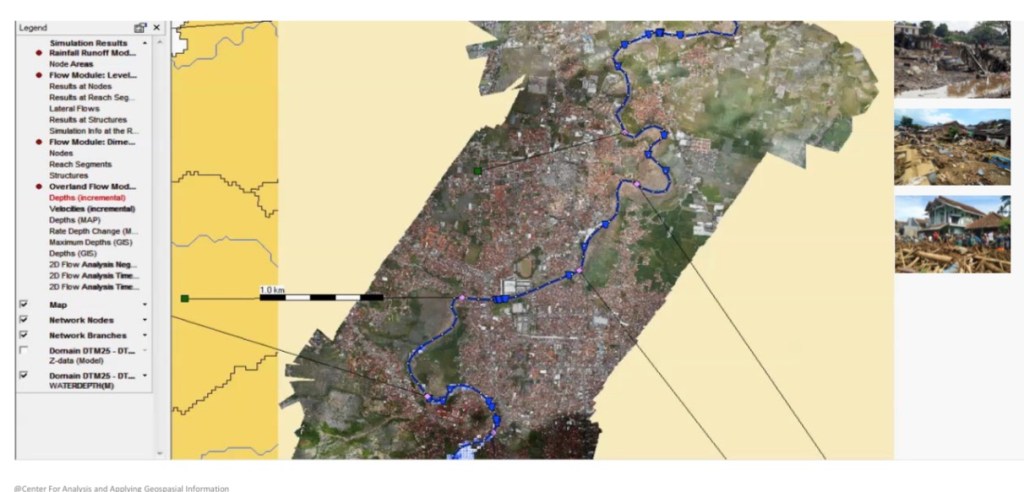

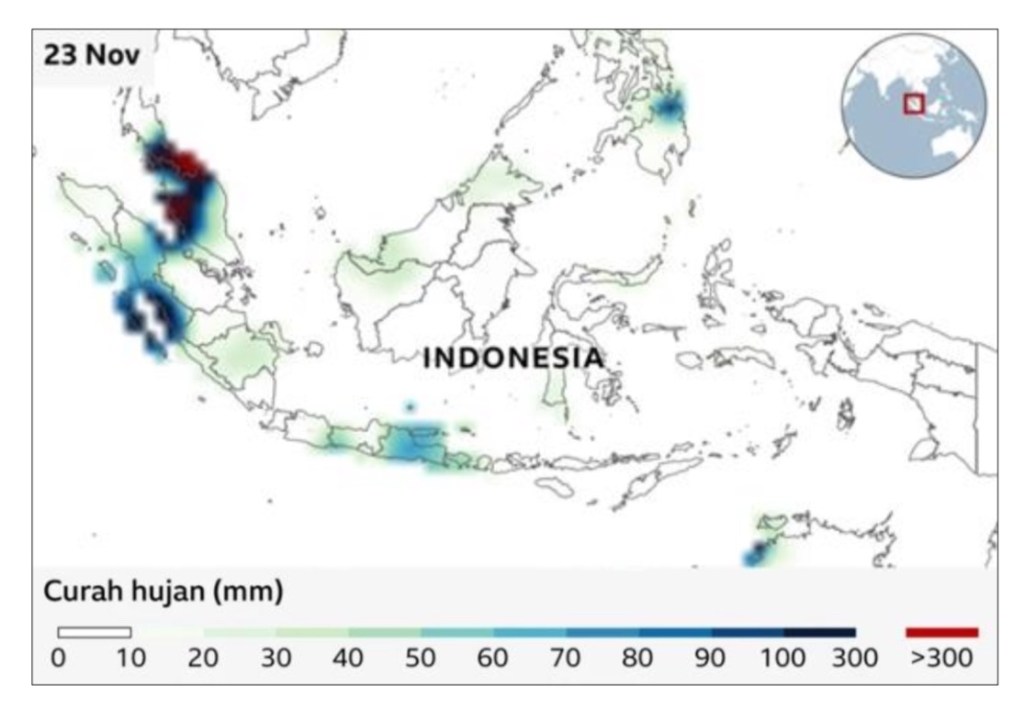


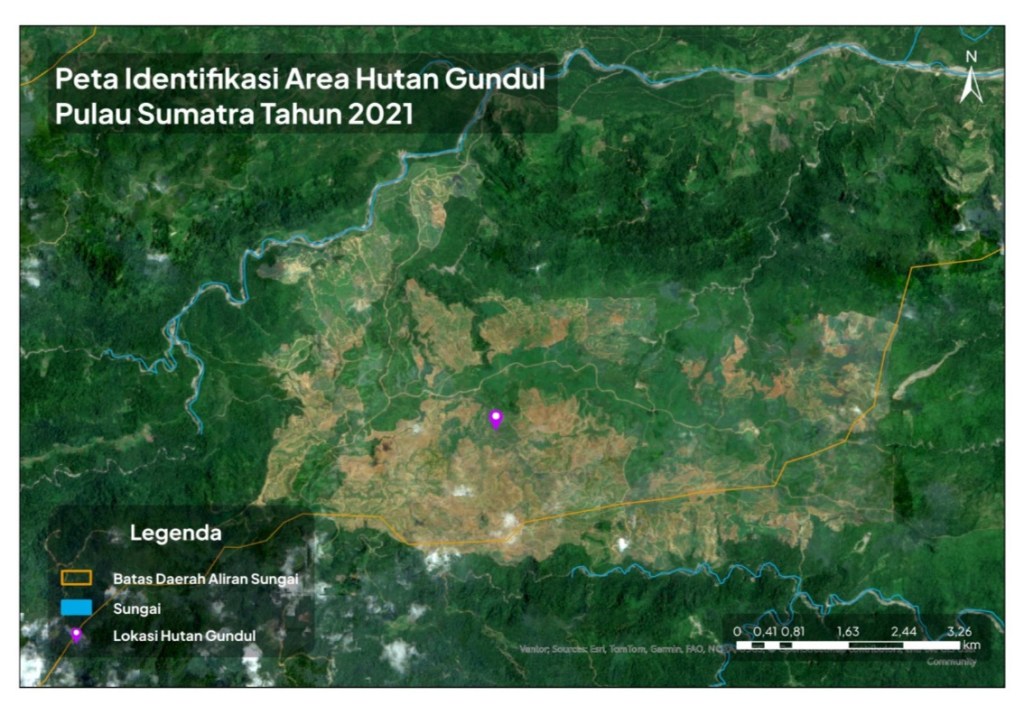

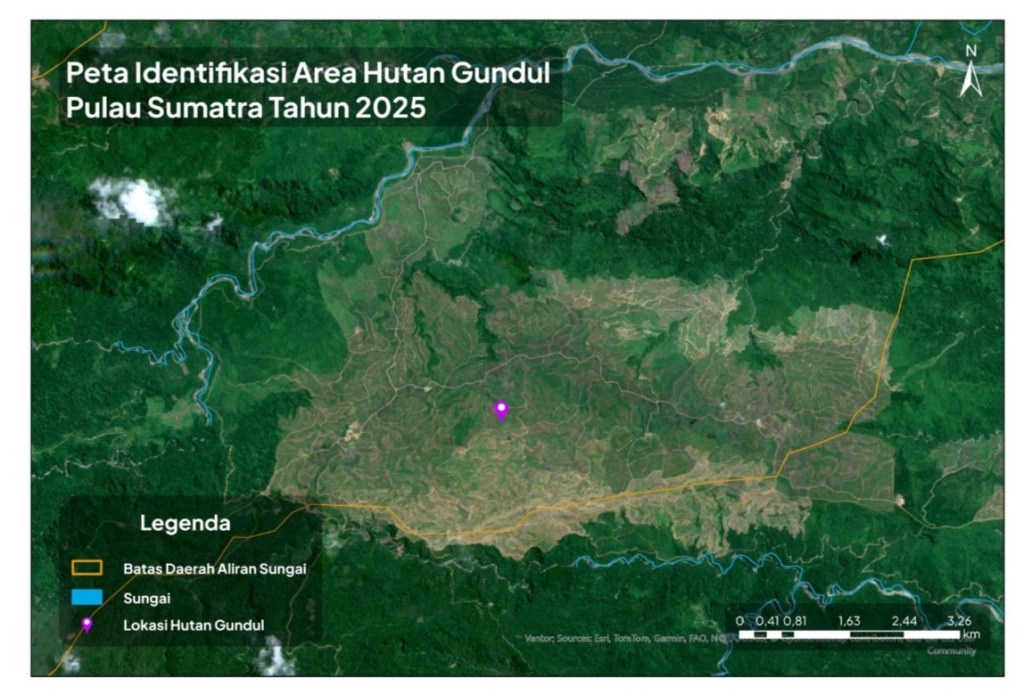

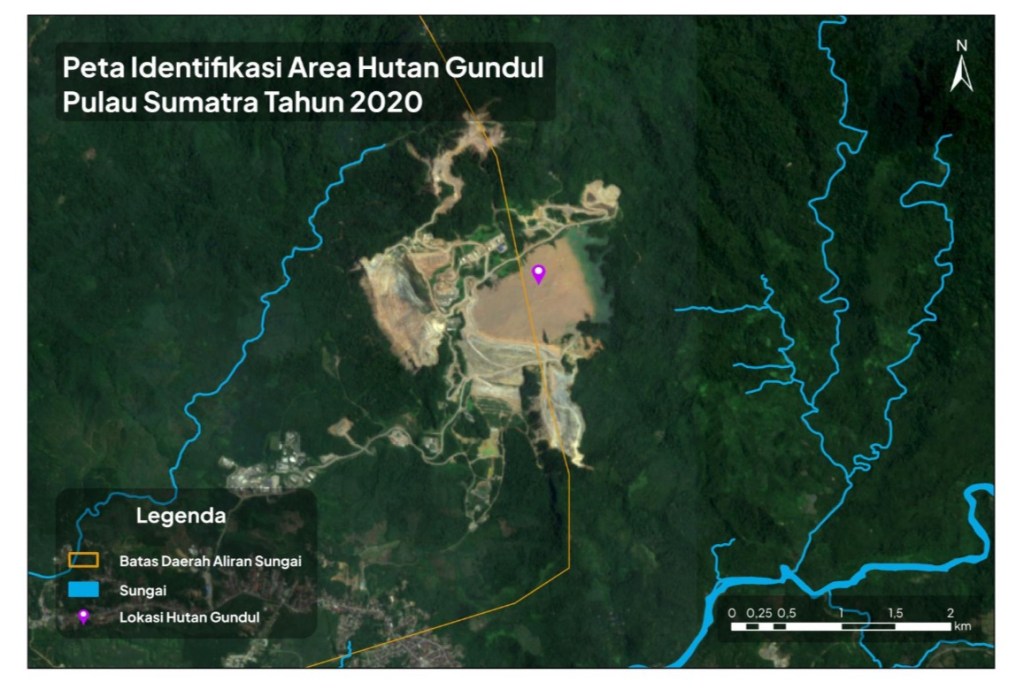

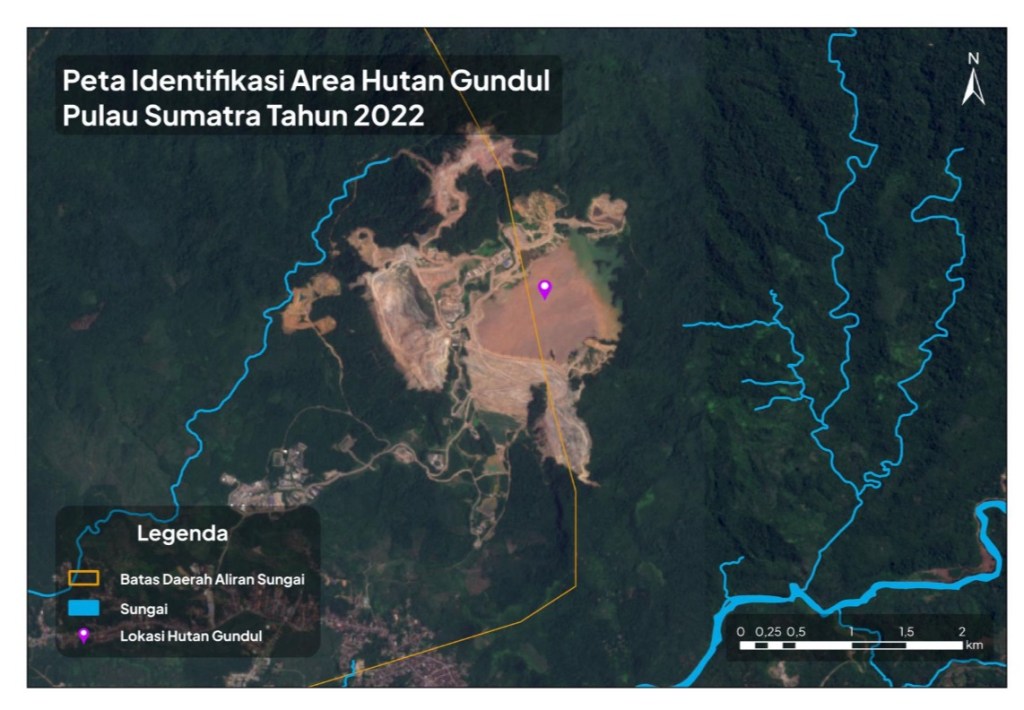


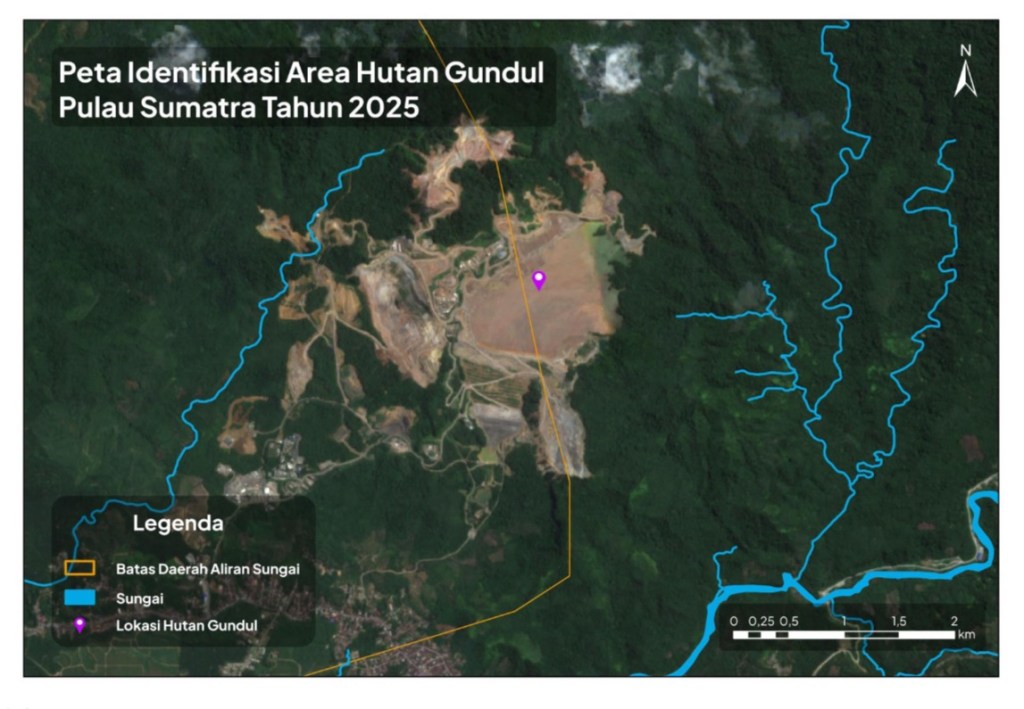
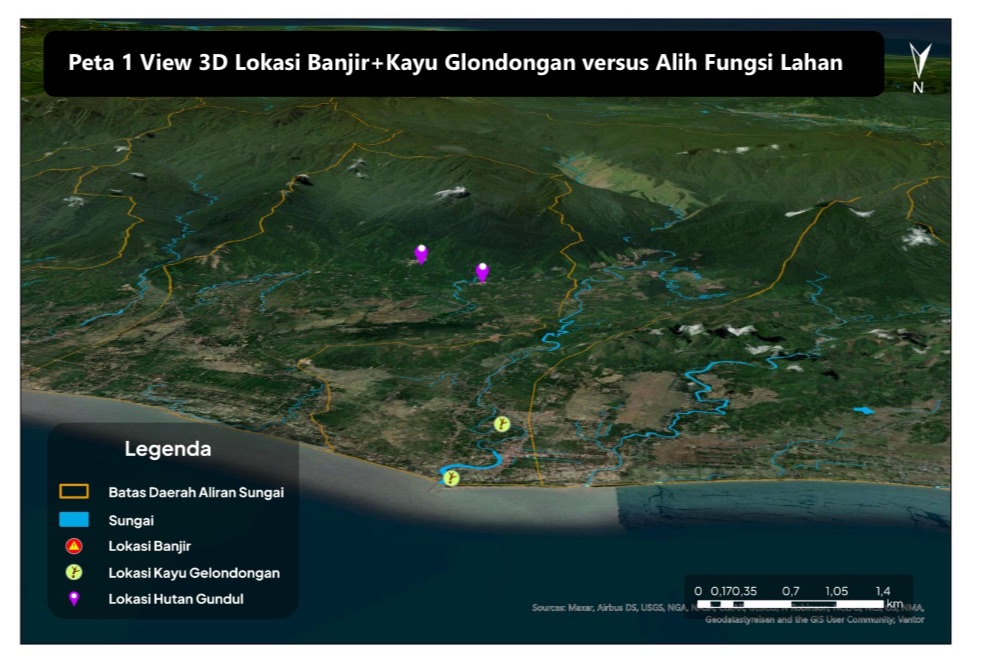
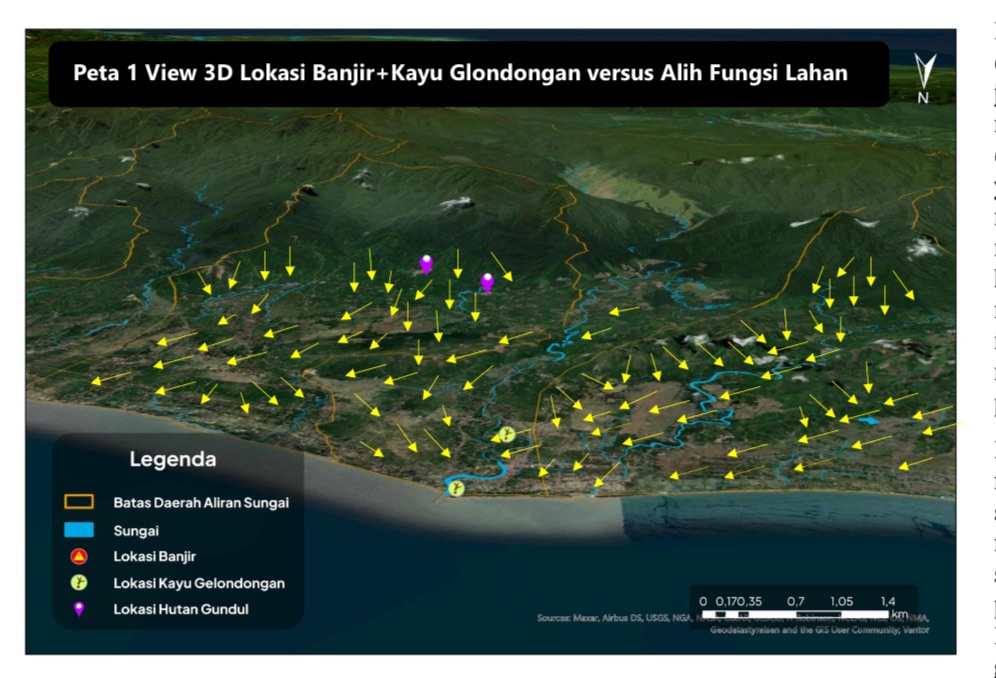
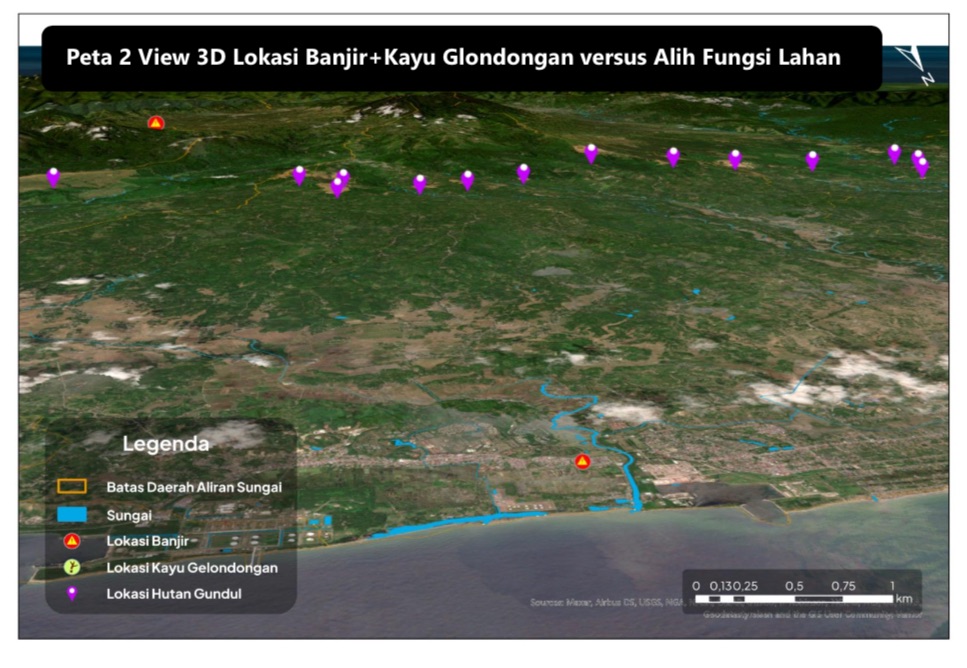

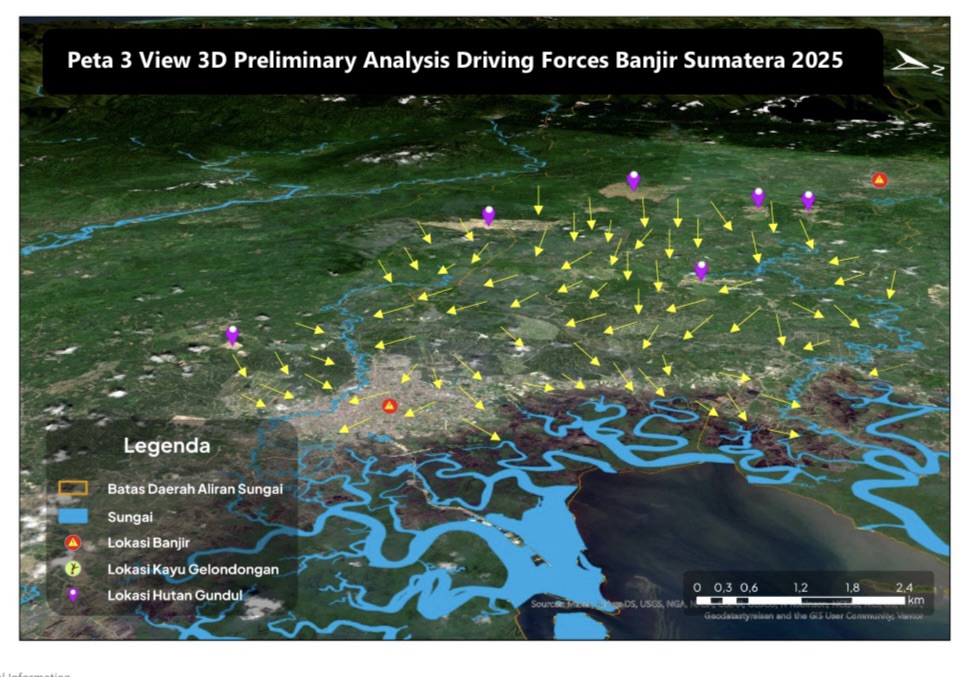
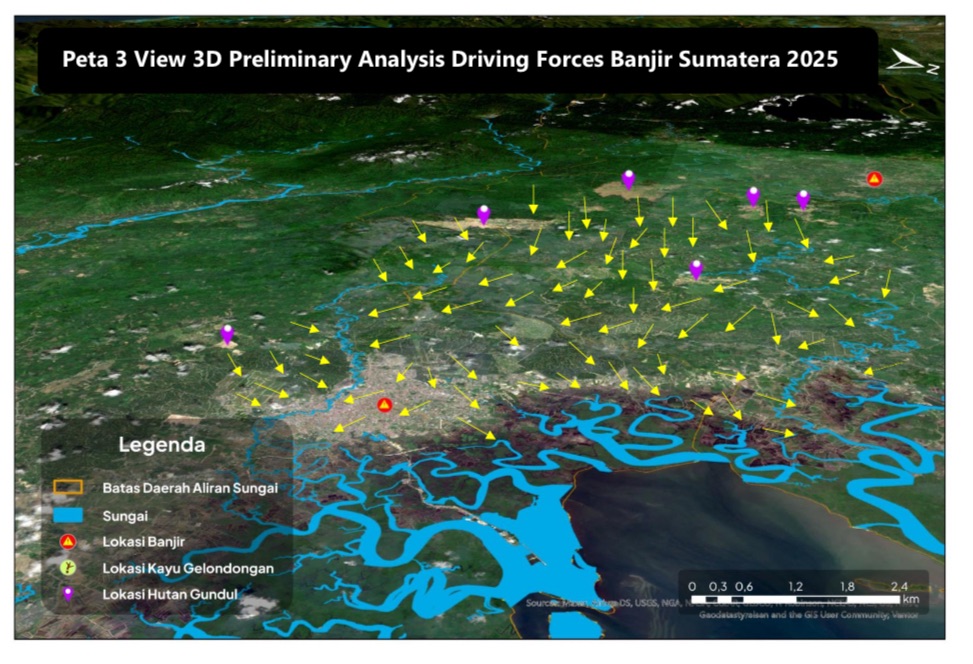
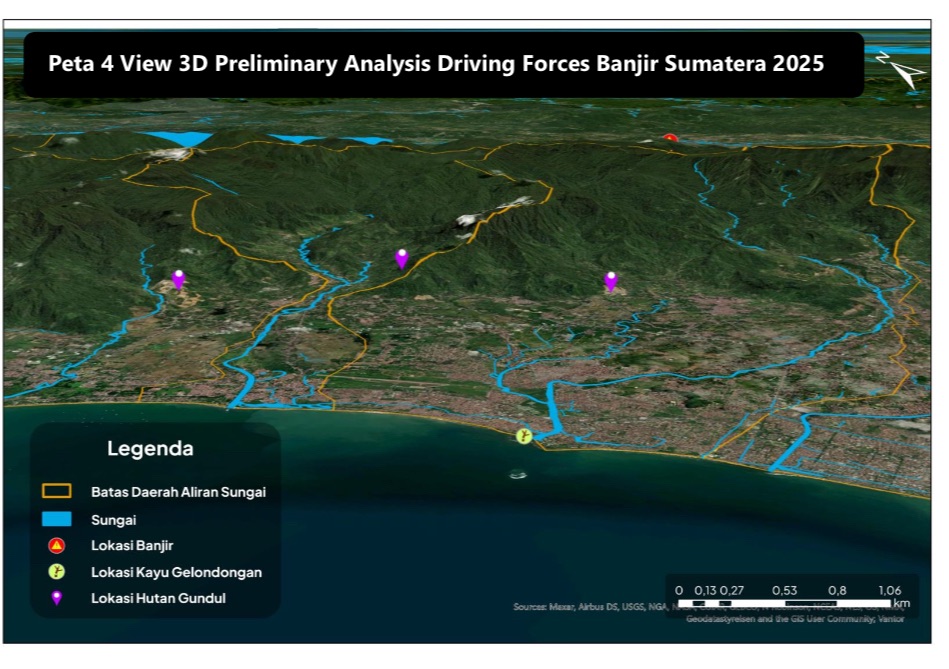
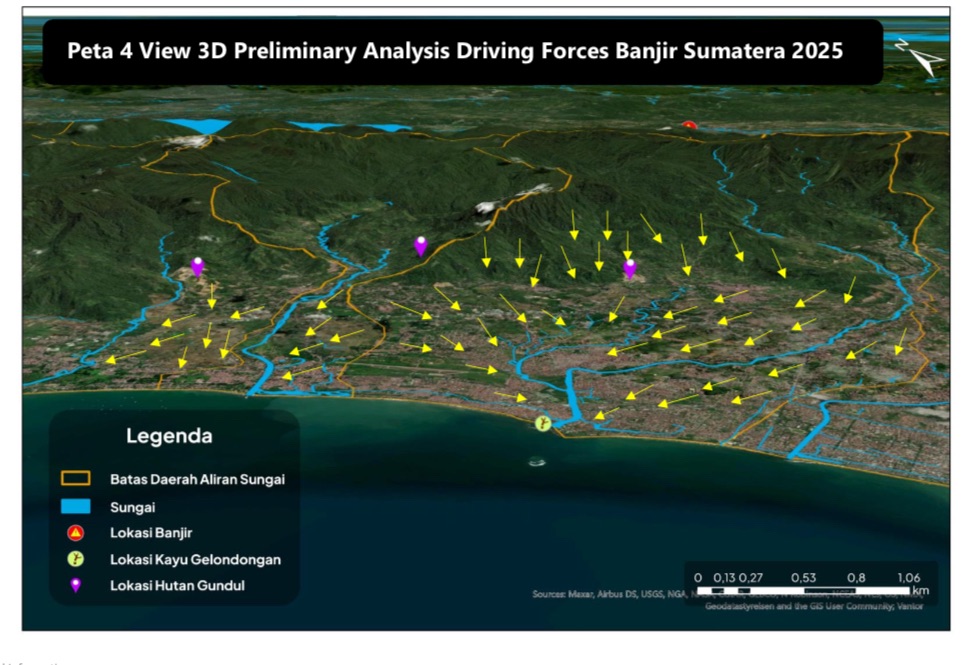
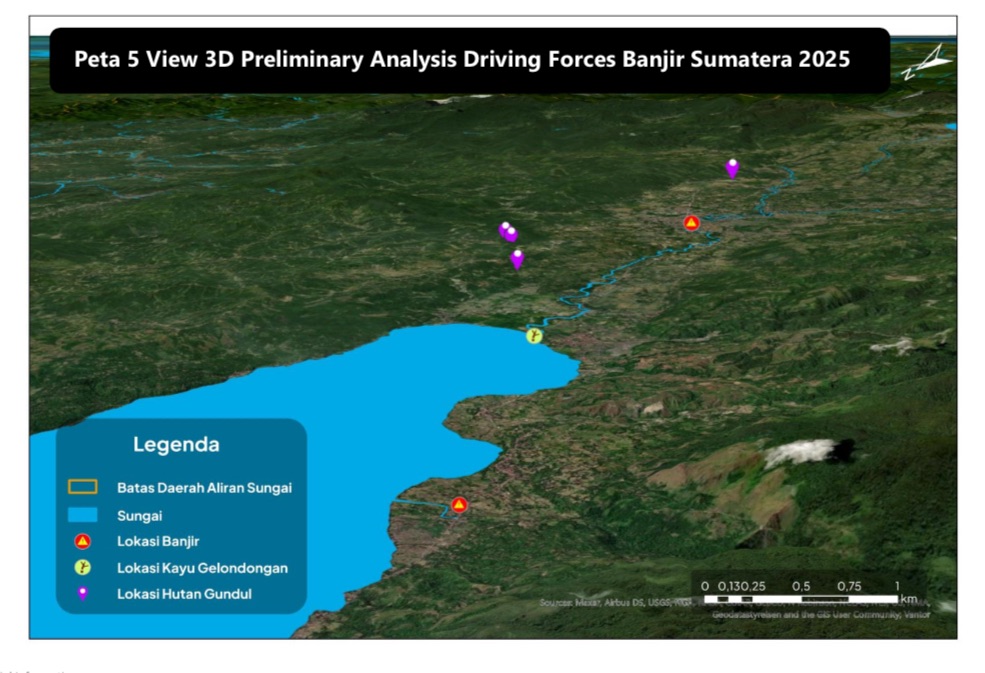
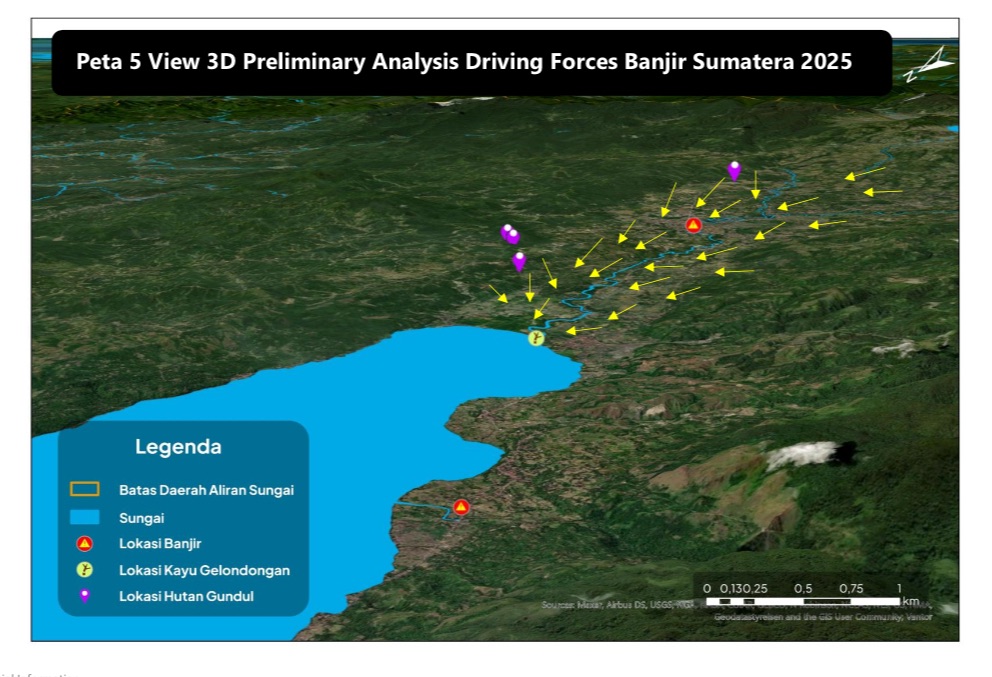
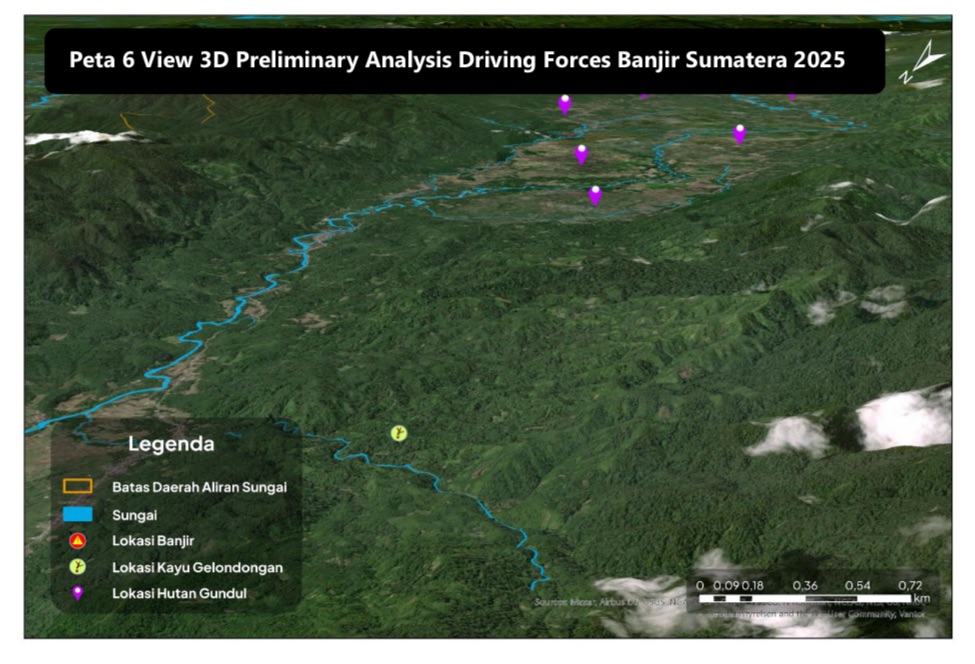
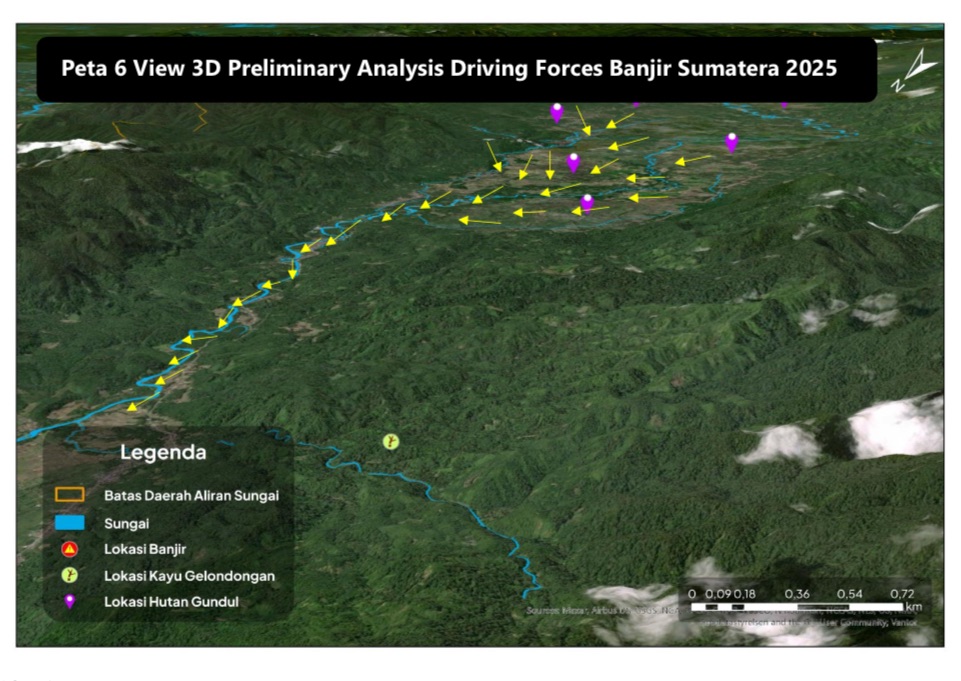
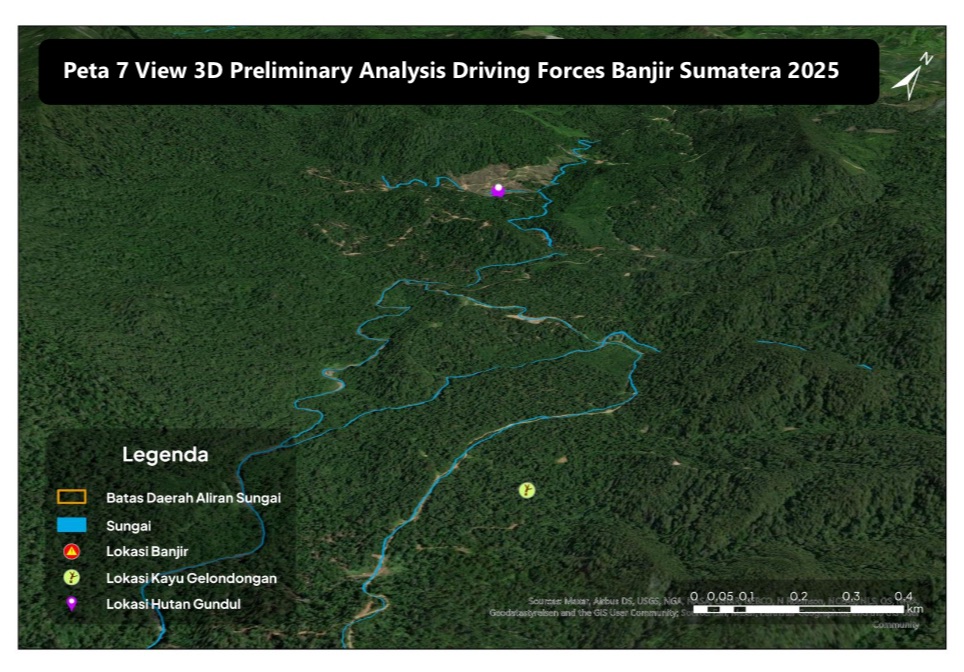

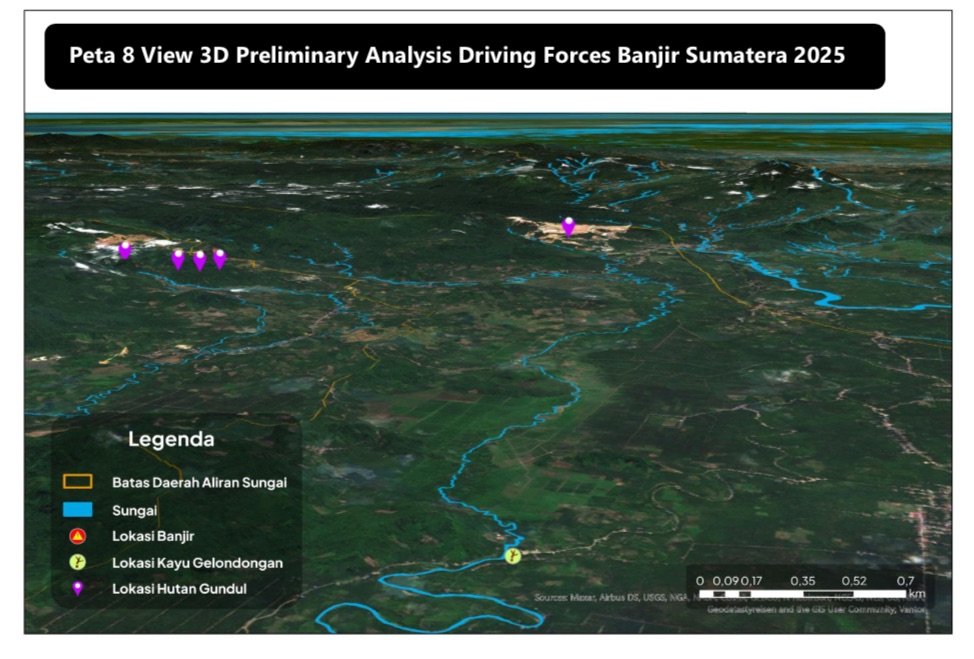
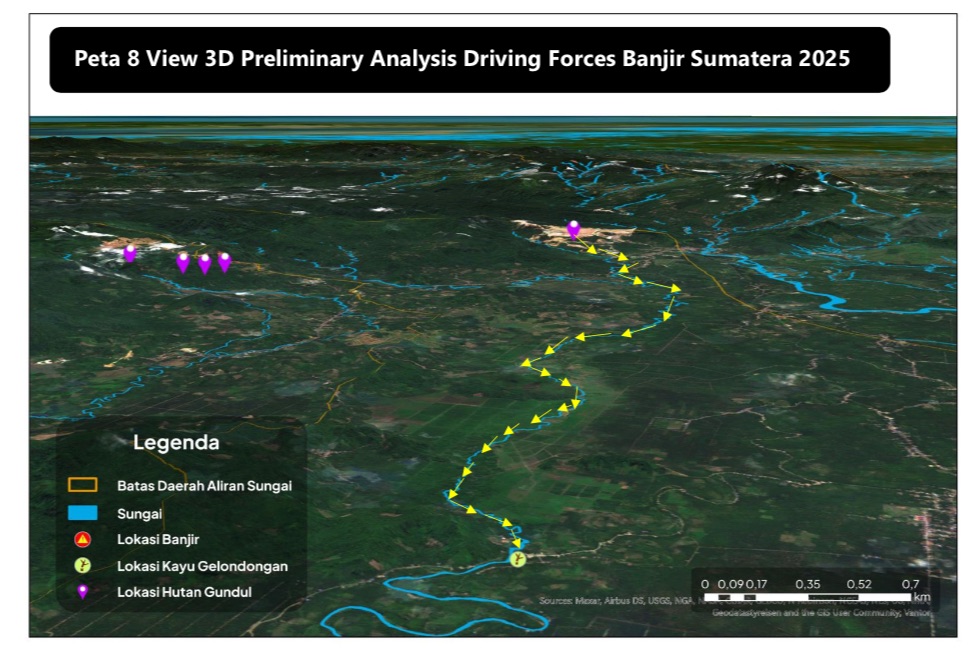
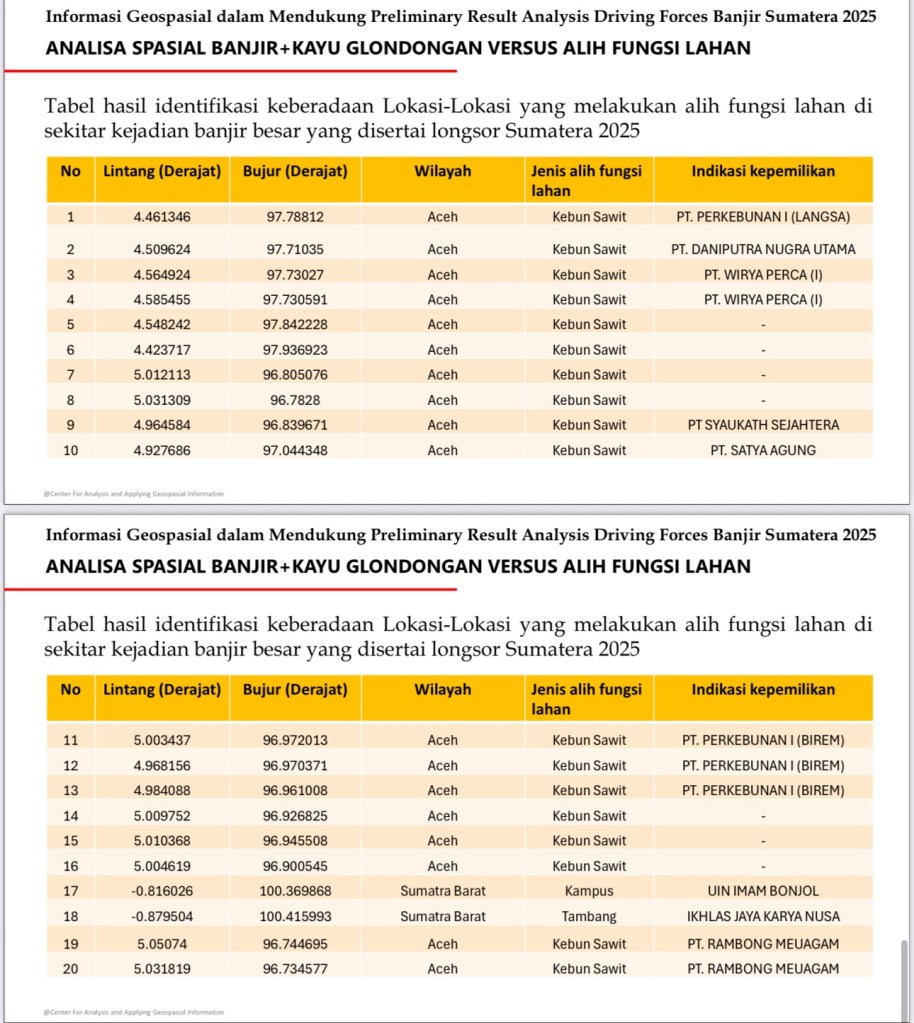
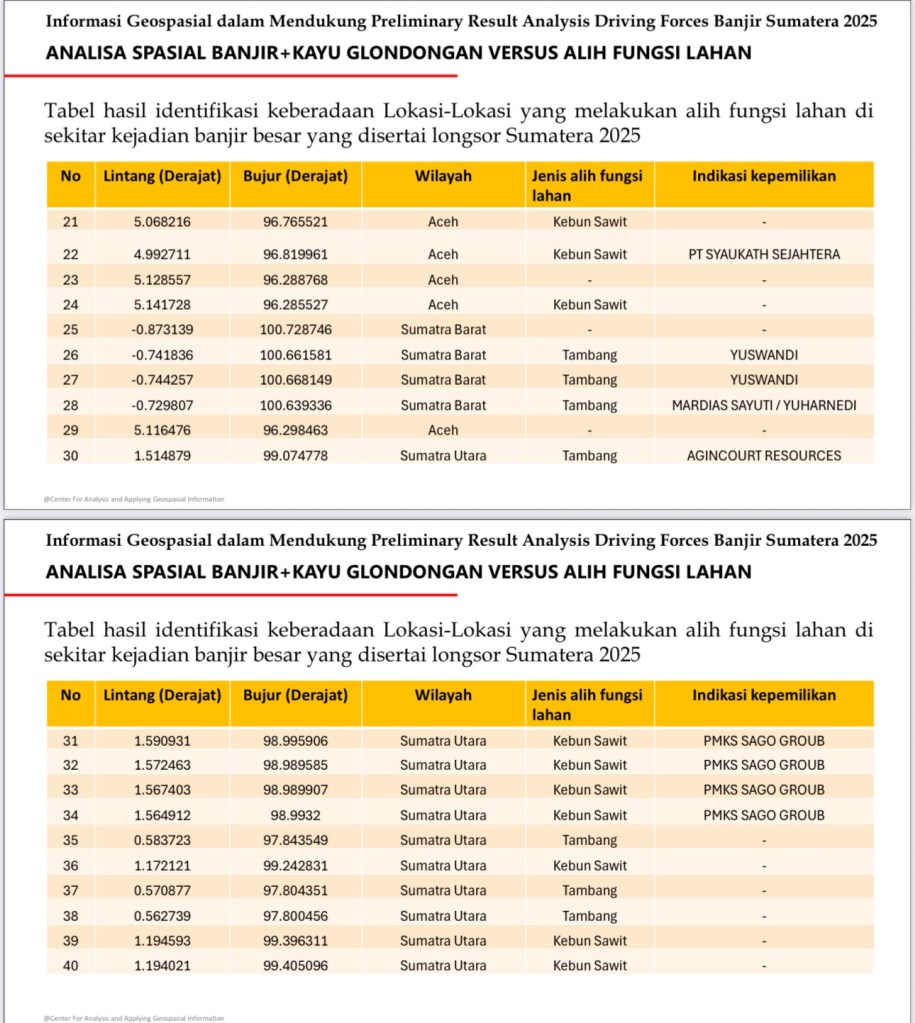
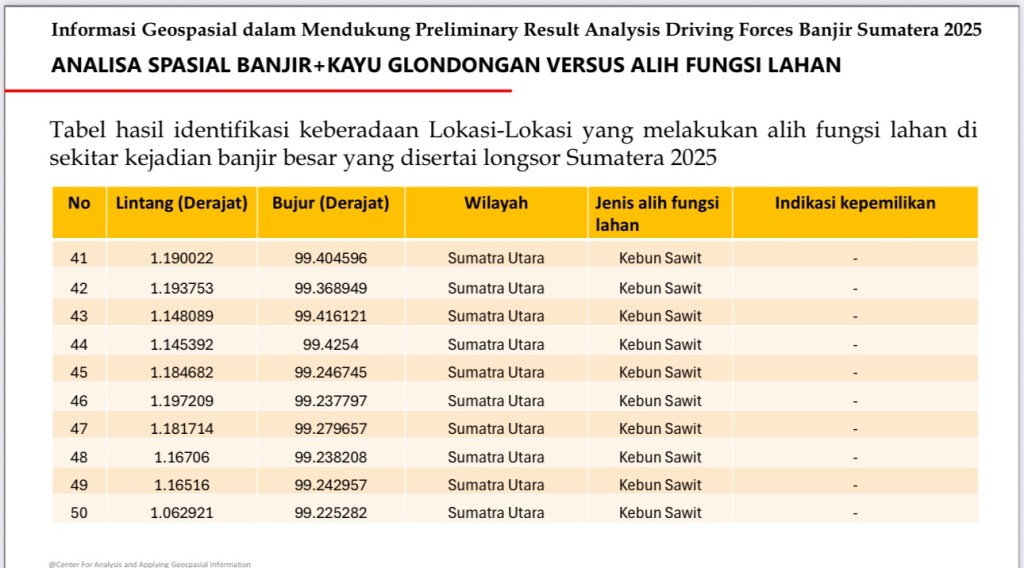







 Pemikiran Kebangsaan